Mastering Meta Ads: How to Measure and Improve Your Creative Performance

Category Archives: Ppc

Performance in Meta Ads

Introduction

Running Meta Ads isn’t just about setting budgets and targeting audiences — your creative is what truly captures attention and drives action. The image, video, or copy you use can make or break your campaign. But how do you know if your creative is really working? And what should you test to improve it? Let’s break it down in a simple way so you can analyze, test, and boost your Meta Ad results effectively.

Understanding Creative Performance in Meta Ads

Creative performance is all about how your visuals and ad copy connect with your audience. Even with the right targeting, a weak creative can fail to grab attention. Meta (Facebook and Instagram) rewards engaging content by giving it better reach and lower costs. So, understanding what kind of creative performs best helps you maximize your ad spend and achieve better ROI.

Why Creative Matters More Than Ever

Today’s users scroll fast, and attention spans are short. A creative that instantly hooks people can be the difference between a scroll and a sale. Meta’s algorithm favors ads that get engagement — likes, comments, clicks, or saves. That means a creative with a strong message and appealing design not only attracts attention but also improves your overall ad performance metrics like CTR and conversions.

Key Metrics to Measure Creative Success

To evaluate your creative performance, you need to look beyond vanity metrics. Start by checking engagement rate — this tells you how your audience is interacting with your ad. A high CTR (Click-Through Rate) shows that your visuals and message are resonating. Cost per result (like Cost per Click or Cost per Conversion) helps you see how efficiently your creative drives actions.

Watch your ad frequency too. If people are seeing the same creative too often, performance can drop — this is known as “creative fatigue.” When CTR decreases and cost per result increases, it’s time to refresh your creatives.

What to Test in Your Meta Ad Creatives

Testing different creatives is the best way to discover what your audience loves. You can experiment with various elements like ad formats, visuals, headlines, and calls to action. Try short videos against static images or experiment with different color tones and styles. Sometimes even a small change in copy can make a big difference in performance.

You can also test storytelling angles — emotional appeal versus product-focused messaging. For example, one ad might highlight how a product solves a problem, while another focuses on the feeling of using it. Track which approach brings better engagement and conversions.

How to Run Creative Tests the Right Way

When testing, focus on one creative element at a time so you can clearly see what’s making the difference. Don’t change everything at once. Let each creative run long enough to gather enough data before making decisions. Use Meta’s A/B testing tool to compare performance between different versions of the same ad.

Keep a close eye on audience feedback in comments and messages. Sometimes, qualitative insights reveal what your data can’t — like how your audience feels about your creative tone or message.

Refreshing and Scaling Your Winning Creatives

Once you identify which creatives perform best, scale them. Increase the budget for top-performing ads and refresh them slightly to maintain engagement. You can change background colors, update captions, or introduce seasonal themes while keeping the core message intact.

For underperforming creatives, don’t discard them right away. Analyze what didn’t work — maybe the copy was too long, or the visual didn’t stand out. Learn from the data to refine your next version.

Conclusion

Evaluating creative performance in Meta Ads isn’t just about numbers — it’s about understanding what connects with your audience emotionally and visually. Test, measure, and optimize your creatives regularly to stay ahead of fatigue and competition. The more you understand your audience’s preferences, the better your ads will perform.

In simple terms, creative testing isn’t guesswork — it’s smart marketing. Keep experimenting, stay consistent, and let data guide your creativity. That’s how you turn Meta Ads into a powerful growth engine for your business.

Best PPC Management Company

In the ever-evolving world of digital marketing, one thing has remained constant—Google Ads’ dominance in online advertising. But the way Google Ads works today is very different from how it used to operate a few years ago. The transformation from the old Google Ads to the new version reflects how technology, automation, and user behavior have reshaped online marketing. Many businesses now partner with the Best PPC Management Company in India to stay ahead of these changes and make the most of Google’s advanced advertising tools.

When Google Ads Was Simpler

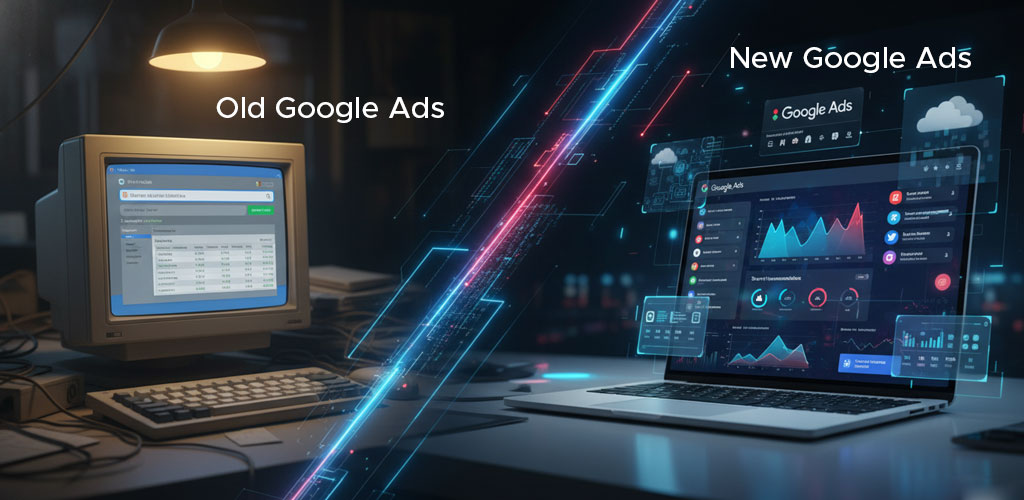
In the early days, Google Ads (then known as Google AdWords) was more manual and keyword-driven. Advertisers had full control over every aspect—choosing keywords, setting bids, writing multiple ad copies, and manually tracking performance. Campaigns relied heavily on human decisions and experience.

Advertisers spent hours analyzing which keywords worked best, adjusting bids daily, and creating different ad variations to test performance. While it offered complete control, it was also time-consuming and required deep marketing knowledge. Success depended on how well you understood keyword match types, bidding strategies, and manual optimizations.

The Rise of Smart Automation

The new Google Ads is powered by artificial intelligence and machine learning. It has evolved from being a simple advertising tool into a smart marketing platform that helps businesses grow faster with less manual effort. Google’s algorithms now handle a lot of the heavy lifting, from optimizing bids to improving ad placements and audience targeting.

Features like Performance Max, Smart Bidding, and Responsive Search Ads are at the heart of this new system. Instead of focusing on single keywords, advertisers can now rely on Google’s data-driven automation to reach the right users at the right time. It’s not just about showing ads anymore—it’s about predicting intent and delivering personalized experiences.

Shift from Keywords to Intent

Earlier, Google Ads revolved around selecting the right keywords. Today, it’s more about understanding user intent. The new system uses signals such as location, device, search history, and behavior patterns to decide when and where to show ads. This helps businesses reach people who are genuinely interested, improving both conversion rates and ad efficiency.

This shift has changed how marketers approach campaigns. Instead of obsessing over keyword lists, they focus on high-quality creative, audience insights, and automation settings. Google’s smart algorithms now make faster and more accurate decisions than manual optimization ever could.

Better Ad Experience for Users

The new Google Ads doesn’t just help advertisers—it improves the experience for users too. Ads today are more relevant, visually appealing, and closely aligned with what users are searching for. The integration of visuals, extensions, and dynamic elements makes ads feel more natural within the search experience, not intrusive.

This relevance benefits both sides: users find what they need faster, and advertisers see better engagement and return on investment.

The Role of Data and Machine Learning

The biggest difference between the old and new Google Ads lies in how data is used. Earlier, advertisers made decisions based on limited analytics. Now, Google uses billions of data points and machine learning to refine campaign performance automatically. It learns what works best and continuously optimizes without requiring constant manual input.

As a result, campaigns can scale more efficiently, reach broader audiences, and deliver measurable outcomes—something that was much harder to achieve in the old setup.

Final Thoughts

The evolution from the old Google Ads to the new Google Ads is more than just a platform upgrade—it’s a shift in mindset. The old system rewarded technical mastery and manual control, while the new one rewards creativity, strategy, and smart use of automation.

For marketers, this transformation means adapting to a future where data and AI play a leading role. The key to success now lies in trusting automation, crafting powerful creatives, and continuously learning from insights.

Google Ads has grown smarter, faster, and more efficient—and those who embrace this change will continue to win in the digital advertising game.

In today’s fast-paced digital marketing world, automation and data accuracy are key to success. Managing ad campaigns manually can be time-consuming and prone to human error. That’s where APIs come in. APIs, or Application Programming Interfaces, make it easier for marketers and developers to connect platforms, access real-time data, and automate repetitive tasks. Both Google Ads and Meta Ads offer powerful APIs that help businesses optimize their campaigns more efficiently.

Understanding What APIs Do

An API acts like a bridge that allows one software to communicate with another. In the context of advertising platforms, APIs help pull and send information between your ad account and other tools, such as analytics dashboards, CRMs, or reporting systems. This means you can manage and monitor campaigns without logging into the ad interface every time.

APIs in Google Ads

The Google Ads API allows advertisers to access campaign data programmatically. This gives more control over account management and data analysis. With the API, marketers can automate routine tasks such as adjusting bids, creating ads, or pausing underperforming campaigns. It also allows for deep integration with external tools, so agencies can generate custom reports or connect with data visualization platforms like Google Data Studio or Looker.

For large-scale advertisers and agencies, the Google Ads API is a game-changer. It saves hours of manual work by automating campaign changes, tracking conversions, and syncing data across systems. The result is better decision-making and faster optimization.

APIs in Meta Ads

Meta Ads (previously Facebook Ads) also provides a strong API that lets developers manage ad campaigns across Facebook, Instagram, and Audience Network. Through the Meta Marketing API, advertisers can automate tasks like creating ad sets, testing different audiences, or tracking performance metrics.

The API makes it possible to connect Meta Ads with other marketing tools. For instance, you can automatically update your ad creative when new products are added to your eCommerce store or sync customer data from a CRM to create lookalike audiences. This integration helps keep ads fresh, targeted, and data-driven.

Benefits of Using APIs for Advertising

APIs make campaign management smarter and more efficient. They provide real-time access to performance data, helping marketers make quick decisions. Automation through APIs reduces human errors and frees up time for strategy and creativity. Instead of manually checking performance or updating ads, everything can be managed through scripts or connected systems.

By integrating APIs, advertisers can also build custom dashboards to track metrics that matter most to their business. This level of control makes reporting faster, clearer, and more accurate.

The Future of Ads with APIs

As digital advertising continues to evolve, APIs will play a bigger role in how campaigns are managed and optimized. With increasing focus on data privacy and performance automation, APIs help ensure that data flows securely and efficiently between platforms.

In the coming years, we can expect more advanced automation and smarter integrations powered by AI through these APIs. Marketers who learn to use them effectively will have a strong competitive edge in performance marketing.

Conclusion

APIs in Google Ads and Meta Ads are transforming how businesses access and use their data. They simplify complex processes, increase efficiency, and open doors for innovation. By automating repetitive tasks and enabling real-time insights, APIs empower marketers to focus more on strategy and creativity — the true drivers of advertising success.

Local Services Ads and Search Ads

Introduction

When it comes to generating local leads online, businesses often struggle to decide between Google Local Services Ads (LSAs) and Google Search Ads. Both ad formats help connect you with potential customers, but they work differently and deliver unique results. Understanding how each one functions can help you choose the right option for your local marketing goals.

What Are Google Local Services Ads?

Google Local Services Ads are designed specifically for local businesses such as plumbers, electricians, cleaners, or real estate agents. These ads appear at the very top of Google search results when someone searches for a nearby service. The best part is that LSAs work on a “pay per lead” model — you only pay when someone contacts you through the ad.

Local Services Ads also include a “Google Guaranteed” badge that helps build trust among users. When people see that badge, they feel more confident about hiring your business. This extra layer of credibility makes LSAs especially powerful for service-based companies looking for quick local leads.

What Are Google Search Ads?

Google Search Ads, often known as Pay-Per-Click (PPC) ads, appear just below LSAs and above the organic results. These ads rely on keyword targeting and bidding strategies. You create text ads that show up when someone searches for specific terms related to your business.

Unlike LSAs, Search Ads charge you each time someone clicks your ad — even if they don’t become a lead. However, they offer more flexibility with ad copy, keywords, audience targeting, and landing page optimization. This means you can create highly customized campaigns to reach different types of users.

Which One Is Better for Local Leads?

The answer depends on your business type and marketing goals. If your main goal is to get phone calls or appointment requests from nearby customers, Google Local Services Ads are the smarter choice. They are simple to set up, trustworthy, and built for local intent.

On the other hand, if you want more control over your campaigns, better targeting, and detailed analytics, Google Search Ads might be the better option. They allow you to test different messages, track conversions, and optimize for long-term growth.

When to Use Local Services Ads

LSAs are perfect for businesses that rely heavily on local clients. For example, home repair services, beauty salons, and cleaning companies can benefit greatly from LSAs because potential customers usually look for quick, local help.

When to Use Search Ads

Search Ads are ideal if your services extend beyond local reach or if you want to promote multiple products or service categories. For instance, digital agencies, software companies, or eCommerce businesses can use Search Ads to attract specific audiences and drive traffic to their websites.

Combining Both for Maximum Results

Many successful businesses use both LSAs and Search Ads together. LSAs capture quick local leads, while Search Ads build long-term visibility and brand awareness. By combining them, you can appear in multiple spots on Google’s search results — increasing your chances of getting noticed and generating more leads.

Conclusion

Both Google Local Services Ads and Search Ads can deliver great results, but their effectiveness depends on your business goals and target audience. If you want fast, verified local leads — LSAs are your best bet. But if you’re aiming for more control, data insights, and long-term brand growth — Search Ads are the way to go. The smartest approach is to test both and see which one drives better local results for your business.

PPC-Marketing

In today’s digital world, businesses want quick results, and PPC (Pay-Per-Click) marketing has become one of the most effective ways to achieve that. Whether you run an online store or a service-based company, PPC can help you reach the right audience, drive qualified leads, and boost sales faster than organic marketing.

What Is PPC Marketing?

Pay-Per-Click, or PPC, is an online advertising strategy in which you only have to pay when a user clicks on your advertisement.  It’s like renting a top spot on search engines or social media platforms. Google Ads and Meta Ads are two of the most popular PPC platforms that allow advertisers to display ads to users who are actively searching or showing interest in similar products or services.

How PPC Works in Simple Terms

When you run a PPC campaign, you bid on specific keywords related to your business. Your advertisement shows up at the top of the results when someone searches for those keywords. You pay the platform a tiny fee if a user clicks on your advertisement. The main goal is to get high-quality traffic that converts into leads or sales. The better your ad and landing page are, the lower your cost per click and the higher your return on investment (ROI).

Why PPC Is Important for Businesses Today

PPC is not just about traffic—it’s about targeted visibility. In 2025, PPC has evolved with advanced audience targeting options, automation, and AI-driven insights. You can now target users by age, location, interests, device, or even behavior. This precision ensures that your ads are shown only to people who are most likely to convert.

Another big reason PPC is powerful is speed. PPC offers instant visibility, in contrast to SEO, which may take months to provide results. If your campaign is set up well, you can start generating leads or sales the same day your ads go live.

The Role of Data and Optimization

Modern PPC marketing relies heavily on data. Platforms like Google Ads now use AI and machine learning to optimize campaigns automatically. Advertisers can monitor metrics like Click-Through Rate (CTR), Conversion Rate, and Cost Per Acquisition (CPA) to understand what’s working and what’s not. Regular optimization—adjusting keywords, improving ad copy, and refining targeting—helps achieve better performance and higher ROI.

Common Platforms for PPC Advertising

While Google Ads remains the leader in PPC advertising, other platforms like Meta (Facebook and Instagram Ads), LinkedIn Ads, and Microsoft Ads also play a major role in digital marketing strategies. Each platform serves different business goals. For example, Google Ads works best for intent-based searches, while Meta Ads are great for building awareness and engaging audiences visually.

Future of PPC Advertising

The future of PPC looks even more intelligent and automated. AI-driven bidding, voice search targeting, and video-based ads are transforming how users interact with ads. In 2025, businesses are focusing more on personalization—showing the right message to the right user at the right time. PPC campaigns that blend creativity with data are outperforming traditional methods.

Final Thoughts

PPC marketing is no longer just an optional part of digital strategy—it’s a must-have. Whether you are a small business owner or a growing enterprise, investing in PPC can bring measurable results in less time. The key to success lies in continuous testing, optimizing, and adapting to platform updates. With the right approach, PPC can be your fastest path to visibility, leads, and long-term growth.