Turn Your Videos Into Sales: WooCommerce Meets YouTube Shopping

Category Archives: E-commerce Businesses


WooCommerce Meets YouTube Shopping

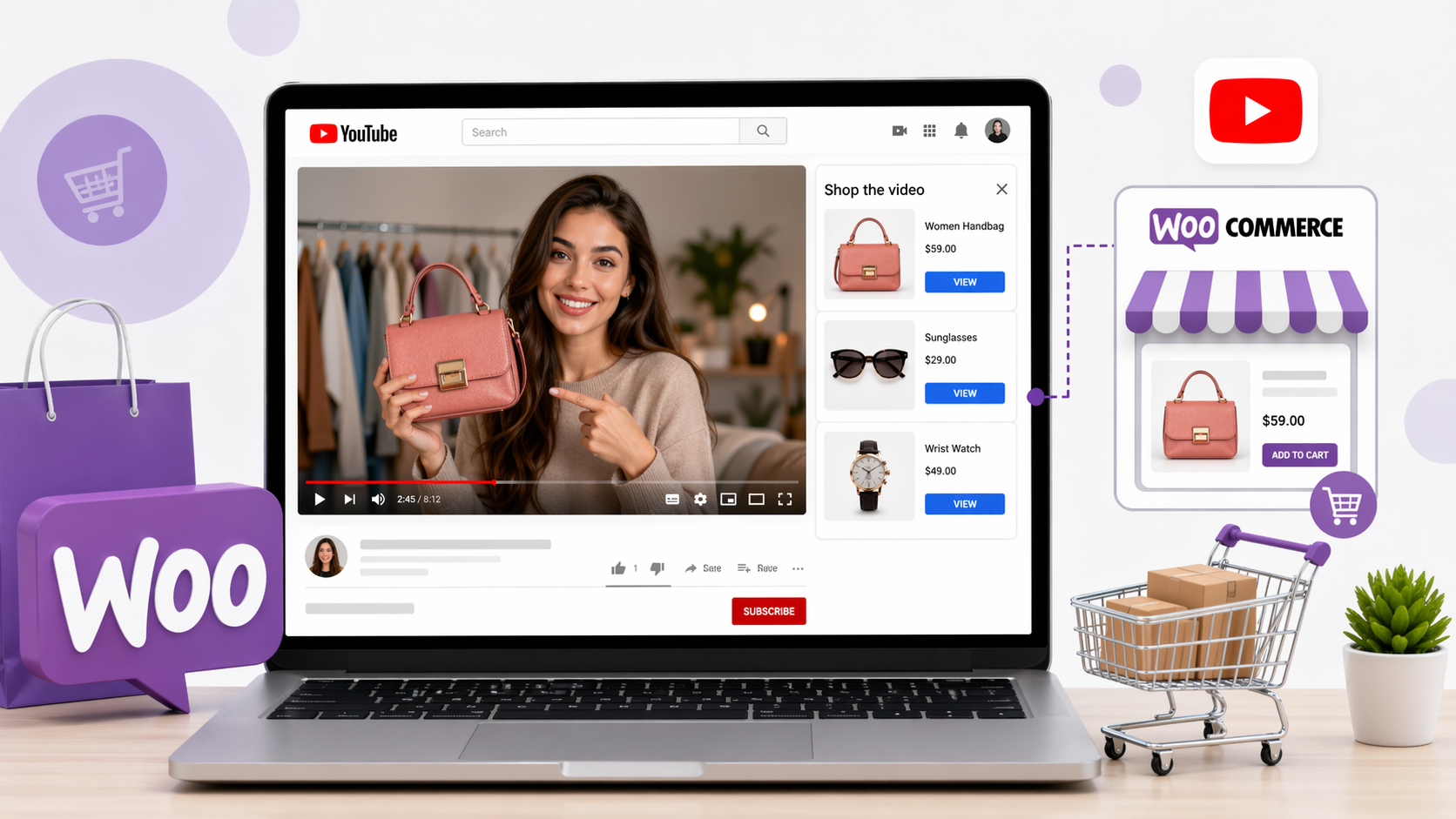
The way people shop online is changing fast. Instead of only browsing websites, many users now discover products while watching videos. This shift has opened a new door for online store owners. Now, WooCommerce users can connect their stores with YouTube and sell products directly through video content. It’s not just a new feature, it’s a new way of thinking about eCommerce.

A New Shopping Experience Through Video

Imagine watching a product review or tutorial on YouTube and being able to buy that product instantly without leaving the video. That’s exactly what this integration makes possible. Store owners can link their WooCommerce products directly to their YouTube videos. When viewers watch the content, they can see product details, pricing, and purchase options right there.

This removes extra steps in the buying process. Earlier, users had to search for the product separately, which often led to drop-offs. Now, everything happens in one place, making it easier and faster to convert viewers into customers.

Why This Matters for Online Businesses

For WooCommerce store owners, this is a powerful opportunity. Video content already plays a huge role in influencing buying decisions. People trust what they see, especially when products are demonstrated in real-life situations. By combining video and shopping, businesses can create a more engaging and convincing experience.

It also helps brands build stronger connections with their audience. Instead of just showing products on a website, they can tell stories, demonstrate usage, and answer questions through videos. This makes the shopping journey more interactive and human.

How It Works in Simple Terms

The process is quite straightforward. Store owners connect their WooCommerce store with their YouTube channel. Then, they can tag or link products in their videos. When someone watches the video, the products appear as clickable options.

This setup turns regular content into a sales channel. Whether it’s a product demo, unboxing video, or tutorial, every video becomes a chance to generate revenue.

Benefits Beyond Just Sales

While the main goal is to increase sales, this feature offers more than that. It improves product visibility because videos can reach a wider audience through YouTube’s algorithm. Even people who weren’t actively searching for your product might discover it while watching related content.

It also supports better marketing strategies. Businesses can create targeted content for different products and audiences. For example, a fashion store can post styling videos, while a tech store can share reviews and comparisons. Each video becomes a marketing tool as well as a sales opportunity.

Things to Keep in Mind

Even though this feature is powerful, success depends on how you use it. Simply linking products won’t guarantee sales. The content needs to be engaging, helpful, and relevant. Viewers should feel that they are gaining value from the video, not just being sold something.

Consistency also matters. Posting videos regularly helps build trust and keeps your audience engaged. Over time, this can lead to better brand recognition and higher sales.

The Future of eCommerce is Content-Driven

This move shows a bigger trend in online shopping. eCommerce is no longer limited to websites and product pages. It is becoming more integrated with content platforms where people spend most of their time.

For WooCommerce users, this is the perfect time to explore video-based selling. It’s not just about keeping up with trends, but about staying ahead in a competitive market.

Conclusion

Selling through YouTube videos is a smart step forward for WooCommerce stores. It simplifies the buying process, enhances customer experience, and opens new marketing possibilities. Businesses that adapt to this change early can gain a strong advantage.

In the end, it’s simple. People love watching videos, and now they can shop while doing it. That combination has the potential to transform how online stores grow and succeed.

SEO Powerhouse for eCommerce

What Are Product Feeds and Why They Matter

In eCommerce, most businesses focus heavily on website design, ads, and keywords, but often ignore one powerful asset — product feeds. A product feed is simply a structured file that contains all your product information like title, price, description, availability, and images. This data is used by platforms like Google Shopping, marketplaces, and even search engines.

Many store owners treat product feeds as a technical requirement rather than a marketing tool. But in reality, product feeds play a huge role in how your products appear in search results and how easily customers can find them.

Product Feeds and SEO: The Missing Link

Search engine optimization is not just about blogs and landing pages. For eCommerce websites, product-level visibility is just as important. This is where product feeds come in.

When your product feed is well-optimized, it helps search engines better understand your products. Clear titles, detailed descriptions, and accurate categories make it easier for your listings to appear in relevant searches. If your feed is poorly structured or incomplete, your products may not show up at all — even if your website is well optimized.

In simple terms, your product feed acts like a bridge between your store and search platforms.

Why Most Businesses Ignore Product Feeds

One major reason is lack of awareness. Many marketers don’t realize that product feed optimization can directly impact traffic and sales. They assume once the website is live, the job is done.

Another reason is complexity. Managing feeds can feel technical, especially for stores with hundreds or thousands of products. But ignoring it can lead to missed opportunities, poor ad performance, and low visibility.

Some businesses also rely too much on automation tools without reviewing the data quality. This leads to generic titles, missing attributes, and outdated information.

How Product Feed Optimization Improves Performance

Optimizing your product feed can improve both organic and paid results. Better product titles with relevant keywords increase the chances of appearing in search queries. High-quality images and accurate pricing improve click-through rates.

For paid campaigns like Google Shopping ads, a strong product feed directly affects performance. It can lower your cost per click and improve conversion rates because your ads become more relevant to users.

Even for organic listings, structured and clean product data increases your chances of appearing in rich results and shopping sections.

Key Elements of a Strong Product Feed

A good product feed starts with clear and descriptive titles. Instead of using short or vague names, include important details like brand, product type, and key features.

Descriptions should be informative but easy to read. Avoid keyword stuffing and focus on helping the customer understand the product.

Images should be high quality and properly formatted. Availability and pricing must always be accurate, as incorrect data can lead to disapproved listings or poor user experience.

Category mapping is another important factor. Assigning the correct category helps platforms show your products to the right audience.

The Competitive Advantage You’re Missing

In today’s competitive eCommerce market, small improvements can make a big difference. While many businesses focus only on ads or social media, optimizing product feeds gives you an edge that others often overlook.

It not only improves visibility but also ensures that your marketing efforts perform better across all channels. Whether it’s SEO, paid ads, or marketplace listings, everything becomes more effective with a strong product feed.

Final Thoughts

Product feeds should not be treated as a background task. They are a core part of your eCommerce SEO strategy. By investing time in optimizing your feed, you can improve search visibility, increase clicks, and drive more sales.

If you want better results without increasing your ad budget, start by fixing what many others ignore — your product feed.

AI Personalization is Transforming eCommerce

Rise of AI in eCommerce Platforms

In 2025, eCommerce platforms like Shopify, WooCommerce, and BigCommerce are integrating advanced AI features to improve user experiences. These platforms are now offering tools that personalize the shopping journey for every individual visitor based on behavior, preferences, and location.

What is AI-Powered Personalization

AI-powered personalization uses machine learning algorithms to analyze user data in real time. This data includes browsing patterns, purchase history, and product interests. The goal is to deliver customized content, product recommendations, offers, and emails that match each user’s intent.

Shopify and WooCommerce Lead the Way

Shopify has introduced new personalization apps that recommend products based on previous customer actions. These tools can modify homepage banners, suggest related items during checkout, and adjust offers based on user engagement. WooCommerce users are integrating similar personalization tools through plugins or third-party APIs to achieve the same effect.

Improved Product Recommendations

Instead of showing random or generic product suggestions, AI tools now provide highly accurate recommendations. These tools analyze which products a user viewed, added to cart, or skipped—and update the store layout accordingly. This increases the chances of a purchase and reduces bounce rates.

Dynamic Content on Websites

Content on eCommerce websites is becoming dynamic. Banners, product headlines, call-to-action buttons, and even blog sections are being customized in real time. This means two users may see completely different homepage content based on their previous interactions or current location.

Personalized Emails and Marketing Campaigns

AI is also improving email marketing. AI-driven segmentation is now available on platforms like Mailchimp and Klaviyo. Emails are automatically created with subject lines, product selections, and discount codes that are more relevant to each user. This improves open rates and conversions.

AI Chatbots for Guided Shopping

Modern AI chatbots are being used not just for support, but to guide customers through their purchase journey. These bots recommend products, answer questions in real time, and even offer discounts based on cart value or browsing behavior. Shopify merchants are increasingly using AI chatbots to increase sales and customer satisfaction.

Measurable Results for Online Stores

eCommerce stores using AI personalization have started seeing strong performance improvements. Reports from Q2 2025 show increases in conversion rates, higher average order values, and longer session durations on websites using real-time personalization features.

Adapting to User Expectations

Online shoppers now expect personalized experiences similar to platforms like Netflix or Amazon. If an eCommerce website shows irrelevant content or offers, users are likely to leave. Personalization has become a key factor in user retention and loyalty.

Future of Digital Marketing for eCommerce

AI will continue to play a larger role in shaping user journeys across digital platforms. In the future, personalization will include voice commerce, AR try-on experiences, and predictive shopping—where AI suggests products before users even search for them.

Ecommerce Thrives with PPC

The Power of PPC for Ecommerce Growth

In today’s competitive digital landscape, ecommerce businesses must find ways to stand out and reach their ideal customers. Pay-Per-Click advertising, commonly called PPC, offers a proven strategy to drive targeted traffic and generate sales faster than many organic methods. With the right approach, PPC becomes an engine that fuels consistent growth for online stores of any size.

Why PPC Works So Well for Ecommerce

PPC allows you to display ads to people who are already searching for products similar to yours. A key benefit of PPC is its ability to target specific audiences with precision. In contrast, with this type of advertising, you only incur costs when someone clicks on your ad, ensuring that your budget is allocated to reaching engaged prospects.Whether you use Google Ads, Bing Ads, or social media platforms like Facebook and Instagram, PPC helps you get in front of motivated buyers at the moment they are ready to shop.

Targeting the Right Audience

A key benefit of PPC is its ability to target specific audiences with precision. You can choose keywords relevant to your products, define location preferences, set demographic filters, and even retarget people who previously visited your website but did not make a purchase. This level of control means your campaigns can be tailored to match buyer intent and maximize your return on ad spend.

Creating Compelling Ads That Convert

Effective PPC campaigns depend on creating ads that are clear, relevant, and persuasive. Ecommerce ads that succeed showcase unique selling propositions, special promotions, and compelling calls to action. Eye-catching headlines and product images encourage users to click and learn more. A well-designed landing page that matches the ad’s promise further increases the chances of turning visitors into customers.

Managing Budgets for Sustainable Results

While PPC can deliver quick wins, it’s essential to manage your budget carefully to avoid overspending. Set daily or monthly caps that align with your marketing goals. Monitor the performance of different campaigns to see which keywords, products, or audiences bring the best results. Over time, optimizing your bids and refining your targeting can help you stretch your budget and achieve a lower cost per conversion.

Measuring Performance and Improving Campaigns

Tracking performance metrics is crucial for long-term success with PPC. Pay attention to impressions, click-through rates, conversion rates, and return on ad spend. These insights show what’s working and what needs adjustment. Testing different ad variations, adjusting keywords, and refining landing pages can lead to steady improvements in campaign performance.

The Role of Retargeting in Ecommerce PPC

Many visitors don’t buy the first time they land on your site. Retargeting campaigns give you another opportunity to reconnect with these potential customers. When they visit other websites or social media, you can keep your products fresh in their minds and motivate them to come back and finish their purchase by displaying customized advertisements for your products. Retargeting often delivers higher conversion rates because the audience already knows your brand.

Combining PPC with Other Marketing Efforts

PPC works best when it complements other marketing strategies. Pairing paid campaigns with search engine optimization, email marketing, and social media engagement creates a stronger overall presence. PPC, for example, can generate instant traffic while your organic search rankings develop gradually. Together, these channels build trust and bring in steady streams of new customers.

Final Thoughts

Ecommerce success depends on visibility and connecting with the right shoppers at the right time. PPC offers a direct path to reach motivated buyers, showcase your products, and grow your online store. When you plan strategically, monitor your campaigns closely, and keep refining your approach, PPC becomes a powerful tool that fuels both short-term sales and long-term business growth.

Ecommerce SEO

Introduction to Ecommerce Marketing in Today’s Digital Landscape

In the digital-first era, ecommerce has become more than just a convenient alternative to physical retail—it is now a competitive, data-driven space where strategic marketing can define success. Businesses selling online, particularly through platforms like Shopify, need to implement tailored ecommerce marketing strategies to attract, engage, and retain customers. As consumer behavior continues to evolve, understanding and executing the right digital tactics can directly impact online sales and long-term brand growth.

Why Ecommerce Marketing Is the Driving Force Behind Sales

Ecommerce marketing blends traditional marketing principles with digital innovation to drive traffic, conversions, and repeat purchases. It leverages platforms such as search engines, email, social media, and paid advertising to put products in front of the right audience at the right time. This makes marketing a foundational pillar for any online store that aims to grow in revenue and visibility.

Unlike physical retail, where location might naturally attract foot traffic, ecommerce relies heavily on discoverability and brand presence online. This makes smart marketing essential for converting casual browsers into loyal buyers. The approach must be multifaceted, including both organic and paid strategies, to cover all touchpoints in the buyer’s journey.

Effective Marketing Strategies That Drive Shopify Sales

For ecommerce stores built on Shopify, the potential for rapid growth is high—provided the right marketing techniques are in place. Shopify is user-friendly, scalable, and integrates easily with various marketing tools. However, the platform alone doesn’t guarantee sales; businesses must apply a targeted marketing approach to fully capitalize on its capabilities.

One key strategy is search engine optimization. Optimizing product pages, category descriptions, and blog content with relevant keywords helps increase organic traffic. This is particularly important for Shopify websites where most product discovery begins with a search query. Ecommerce SEO ensures your store ranks higher on search engines, bringing in users with a high intent to purchase.

Content marketing is another proven method. Informative blogs, product tutorials, and storytelling around brand values can build trust with potential buyers. For Shopify stores, integrating content within the site not only improves engagement but also boosts SEO performance. Email marketing also plays a crucial role by nurturing leads and encouraging repeat purchases through personalized offers and cart abandonment reminders.

Social media marketing contributes significantly to brand awareness and sales. Platforms like Instagram and Facebook offer a visual space for product showcasing, influencer collaborations, and paid promotions. Shopify easily integrates with these channels, making it simpler to run and track performance of campaigns that directly drive product sales.

Retargeting ads are highly effective in ecommerce. When a potential buyer visits your Shopify store but doesn’t convert, retargeting ads can remind them of their interest and bring them back to complete the purchase. This lowers the cost of acquiring new customers while enhancing conversion efficiency.

Benefits of Ecommerce Marketing for Shopify Businesses

One of the biggest advantages of ecommerce marketing is measurable results. Shopify users can connect marketing campaigns directly with performance metrics like traffic, click-through rates, conversion rates, and revenue generated. This data helps refine future campaigns and maximize ROI.

Marketing also improves customer loyalty. Email newsletters, loyalty programs, and personalized communication foster long-term relationships, encouraging customers to buy again. Shopify supports loyalty apps and automation tools that streamline this process, making customer retention easier to manage.

Ecommerce marketing also empowers small businesses to compete with larger brands. With the right marketing strategy, a Shopify store run by a small team can reach global audiences, establish authority in a niche, and build a community of engaged customers. Paid advertising platforms like Google Ads and Meta Ads allow even limited budgets to target ideal customers based on behavior, interest, and demographics.

Scalability is another important benefit. As your Shopify business grows, your marketing efforts can scale with it. Advanced targeting, A/B testing, and campaign automation make it possible to handle thousands of customers without losing personalization or efficiency.

Conclusion: Marketing as a Catalyst for Ecommerce Growth

Ecommerce marketing is not optional—it’s a critical component of running a successful Shopify store. From SEO to email campaigns, from social media ads to content strategy, every effort contributes to a broader goal of increased visibility and higher sales. Shopify makes it easier to implement and measure these strategies, but the success of any store ultimately lies in how well it connects with customers through effective marketing.

For TechIndia and other service providers supporting ecommerce brands, staying updated with these strategies ensures better outcomes for clients looking to grow their online presence. By focusing on impactful, results-driven marketing tactics, ecommerce businesses can not only boost short-term sales but also lay the foundation for long-term digital success.