

Managing SEO for multiple locations can feel like a tug-of-war where your own pages compete against each other instead of helping your business grow. If not handled properly, this internal competition can confuse search engines and reduce your visibility. But with the right strategy, you can turn multiple locations into a powerful advantage rather than a problem.
Why Multi-Location SEO Often Fails
Many businesses make the mistake of creating similar pages for different locations with almost identical content. While the intention is to rank in multiple cities, search engines struggle to understand which page is most relevant. As a result, rankings fluctuate, and sometimes none of the pages perform well.
Another common issue is keyword cannibalization. This happens when multiple pages target the same keywords without clear differentiation. Instead of boosting your presence, you end up splitting your authority across pages.
Build Unique Pages for Each Location
The key to success is creating dedicated pages for every location with truly unique content. Avoid copying and pasting the same structure with just the city name changed. Instead, focus on what makes each location different.
Include details like local services, customer preferences, team information, and even location-specific offers. Talk about the area in a natural way so that both users and search engines can clearly understand the page’s purpose.
Use Smart Keyword Targeting
Instead of targeting the same keywords across all pages, refine your keyword strategy. Combine your main service with location-based terms. For example, rather than using one generic keyword everywhere, tailor it to each city or region.
Also, consider long-tail keywords that reflect how people search locally. This reduces competition between your own pages and helps you rank for more specific queries.
Optimize Google Business Profiles for Each Location
Each physical location should have its own optimized Google Business Profile. Make sure the name, address, and phone number are accurate and consistent across all platforms.
Encourage each location’s patrons to submit reviews.These reviews not only build trust but also improve local rankings. Adding photos and regular updates to each profile can further boost visibility.
Strengthen Internal Linking Structure
Internal linking plays a big role in preventing content competition. Link your location pages strategically so search engines understand their relationship.
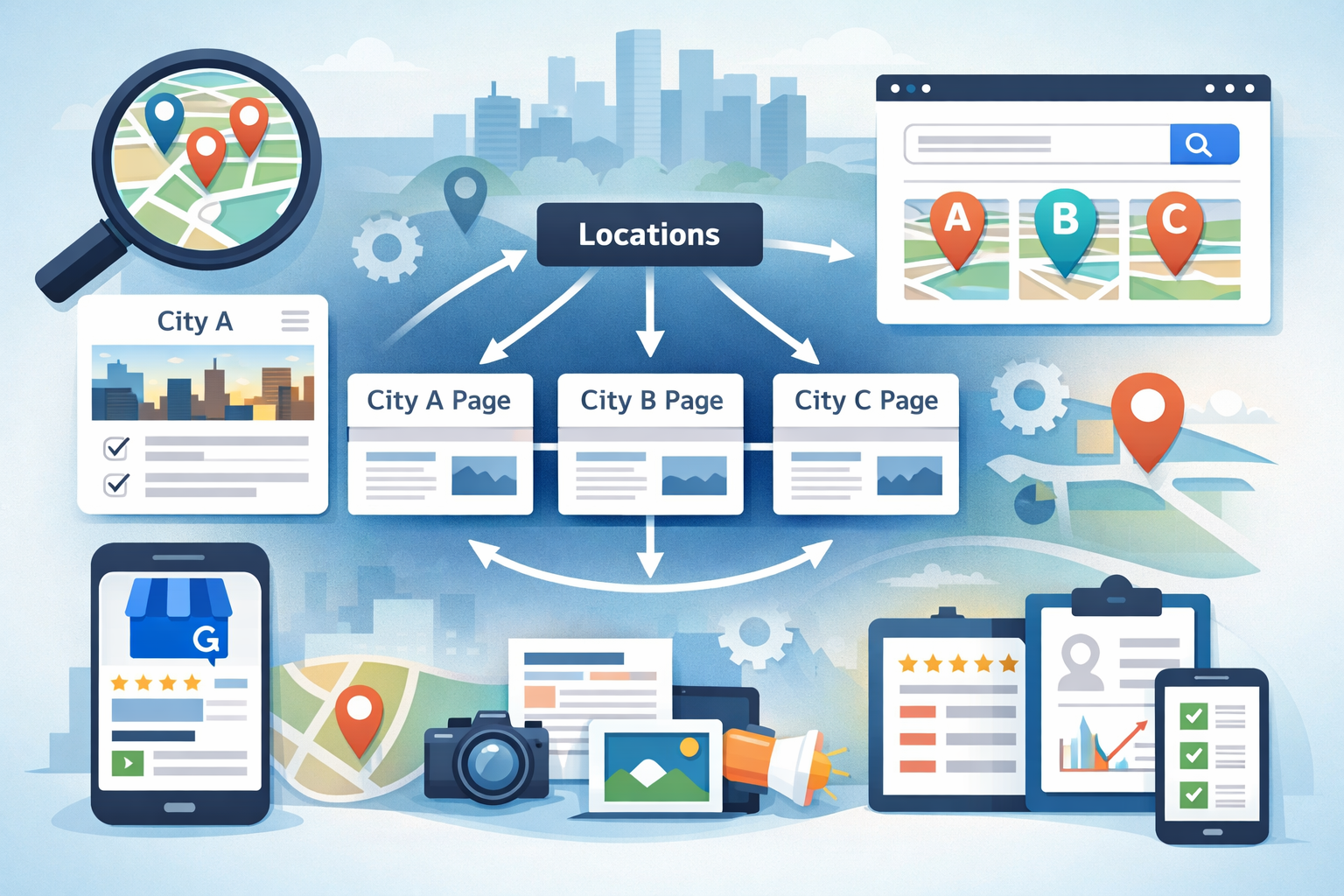
For example, create a main “Locations” page that links to all individual location pages. From each location page, you can link back to the main page or related services. This structure helps distribute authority and improves navigation.
Create Location-Specific Content Beyond Pages
Don’t limit yourself to just location pages. Expand your content strategy by creating blogs, case studies, or updates related to each area.
For instance, you can write about local events, customer success stories, or industry trends in a specific city. This builds topical relevance and signals to search engines that your business is actively engaged in those locations.
Maintain Consistent Business Information
Consistency is critical for multi-location SEO. Your business details should be the same across your website, directories, and social platforms.
Even small differences in address formatting or phone numbers can create confusion and affect rankings. Make sure your listings are accurate by auditing them on a regular basis.
Focus on User Experience
SEO is ultimately about more than just search engines. Each location page should provide real value to users. Make it easy for visitors to find contact details, directions, and services relevant to them.
A clean layout, fast loading speed, and mobile-friendly design can significantly improve engagement and conversions.
Conclusion
Multi-location SEO doesn’t have to mean competing with your own content. By creating unique, well-structured, and locally relevant pages, you can strengthen your online presence across multiple areas.
When done right, each location supports the others instead of holding them back. The result is better visibility, stronger rankings, and more qualified leads from every region you serve.