

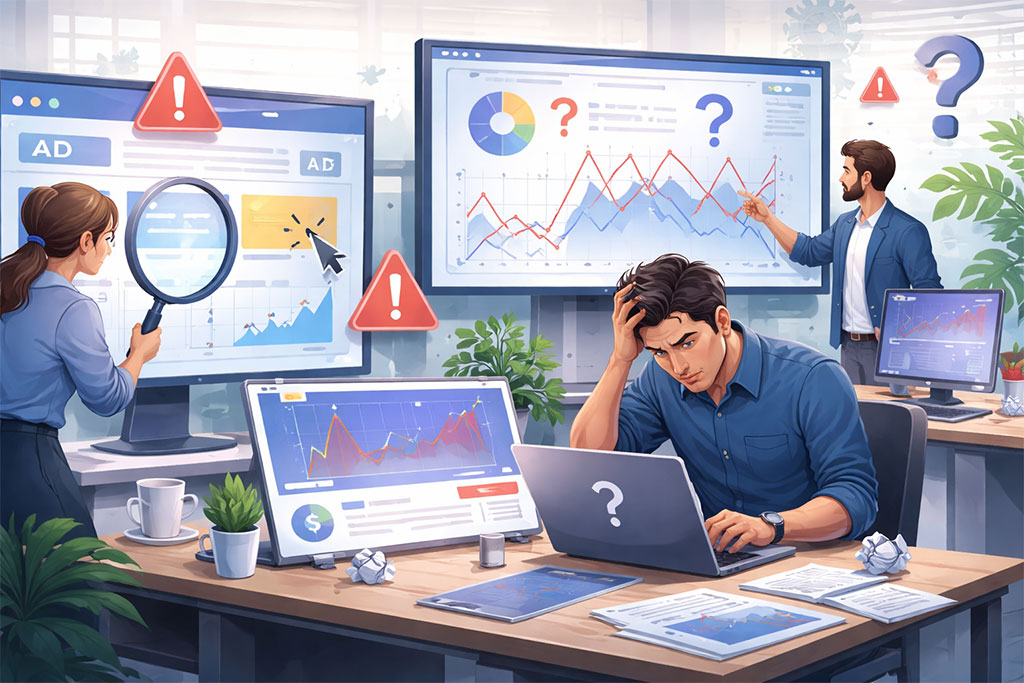
Pay-per-click advertising has always been built on numbers. Clicks, impressions, conversions, return on ad spend — everything is measurable. That is why many businesses love PPC. It promises clarity. But recently, many advertisers feel frustrated. Conversion numbers don’t match analytics. Meta reports different results than Google. Sales happen, but tracking tools don’t show them properly. It starts to feel like PPC measurement is broken.
The truth is simple. PPC measurement is not broken. It has just changed.
The Illusion of Perfect Tracking
In the early days of digital advertising, tracking felt clean and accurate. Cookies followed users across websites. Attribution models were simple. A click happened, a purchase happened, and platforms took credit for it. Marketers believed they were seeing the full picture.
But even then, tracking was never perfect. It only appeared that way because users moved between fewer devices and privacy rules were minimal. As technology evolved, user behavior became more complex. Now people browse on mobile, purchase on desktop, research on tablets, and sometimes complete transactions inside apps. Tracking that journey perfectly is difficult.
What feels broken today is actually a shift from “easy tracking” to “realistic tracking.”
Privacy Changes Changed the Game
One of the biggest reasons advertisers feel confused is privacy regulation. Laws like GDPR and POPIA, along with iOS privacy updates, limit how platforms collect and share data. When users opt out of tracking, platforms lose visibility.
This does not mean conversions are not happening. It simply means not every action can be tracked the way it used to be. Instead of 100 percent visibility, advertisers now see modeled data. Platforms use machine learning to estimate missing conversions based on patterns.
When numbers look smaller than expected, it is often because tracking visibility is reduced, not because performance has collapsed.
Attribution Is No Longer Simple
Another reason PPC measurement feels unreliable is attribution confusion. A user might click a Meta ad, later search on Google, then directly type the website URL before purchasing. Which platform should get credit?
Different tools use different attribution models. Meta may claim a conversion within a 7-day click window. Google Analytics may attribute the same sale to organic search or direct traffic. The business owner sees conflicting numbers and assumes something is wrong.
Nothing is broken. The platforms are simply using different rules to assign credit. Understanding attribution windows and models is more important than chasing perfect alignment between tools.
The Gap Between Platform Data and Reality
Many businesses compare platform-reported conversions with actual sales and panic when numbers do not match exactly. It is important to remember that no analytics system captures every action perfectly.
Ad blockers, cookie restrictions, browser limitations, and cross-device behavior all create small data gaps. Instead of expecting identical numbers everywhere, focus on trends. If spend increases and revenue increases consistently, the system is working even if tracking reports slightly lower conversions.
Measurement should guide decisions, not create fear.
Performance Marketing Is Now About Signals, Not Certainty
Modern PPC works on signals. Platforms optimize campaigns based on patterns they detect in user behavior. Even when tracking is partial, machine learning still understands which audiences are likely to convert.
This is why campaigns can still perform well even when reported conversions appear lower. The algorithm uses broader behavioral signals beyond what you see in your dashboard.
Trusting the system does not mean ignoring data. It means understanding that dashboards show part of the story, not the entire customer journey.
Why It Feels More Stressful Than Before
The reason measurement feels broken is psychological. When marketers cannot see every step clearly, they feel a loss of control. PPC used to feel predictable. Now it feels abstract.
But performance marketing has matured. Instead of micro-managing every metric, advertisers must focus on bigger indicators like overall return, blended revenue, and customer acquisition cost across channels.
Clarity does not come from perfect tracking. It comes from consistent patterns.
What Smart Advertisers Do Instead
Smart advertisers adapt. They compare trends month over month instead of obsessing over daily fluctuations. They analyze funnel drop-offs. They use server-side tracking and enhanced conversions to improve data quality. Most importantly, they measure business growth, not just platform metrics.
When purchases rise alongside ad spend, campaigns are working. When revenue scales sustainably, PPC is doing its job.
Measurement is not broken. Expectations are outdated.
The Real Perspective
PPC today operates in a privacy-first world. That means partial visibility, modeled data, and cross-channel attribution complexity. Instead of trying to force perfect measurement, businesses must accept that marketing is probabilistic.
The goal is not to track every click with absolute certainty. The goal is to drive profitable growth.
If your revenue is increasing, your cost per acquisition is stable, and your audience engagement is strong, your PPC measurement is not failing you. It is simply evolving.
Understanding this shift removes frustration and replaces it with strategy. The advertisers who succeed are not the ones demanding perfect numbers. They are the ones who interpret imperfect data intelligently and make confident decisions anyway.
PPC measurement is not broken. It has just grown up.