

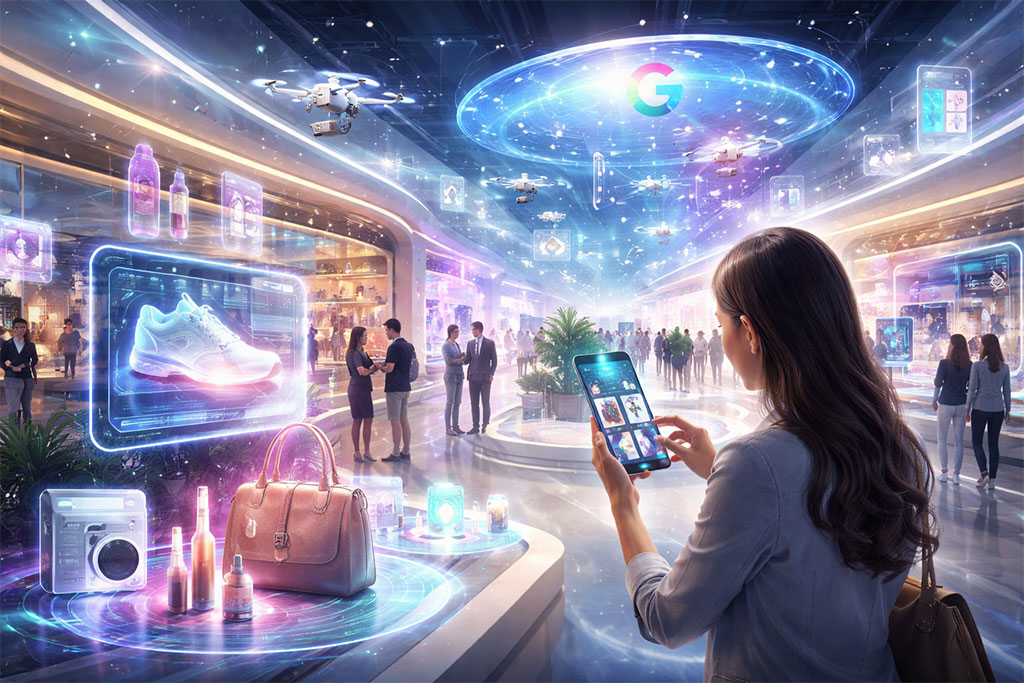
The way people shop online is changing fast. What once started with simple keyword searches and product listings is now evolving into a smarter, more personalized experience powered by artificial intelligence. Google has recently shared its vision for 2026, and it clearly shows a shift toward an AI-powered, agent-driven future for shopping and advertising. This transformation will not only change how consumers buy products but also how businesses run ads and connect with customers.
A New Era of AI-Powered Shopping
In the coming years, shopping will become more conversational and intuitive. Instead of typing basic keywords like “running shoes for men,” users will interact with AI systems that understand detailed requests. For example, someone might say, “I need lightweight running shoes for daily jogging that are good for flat feet and under $150.” AI will analyze this request, compare products, check reviews, and provide tailored recommendations instantly.
This means search engines will move beyond showing a list of blue links. AI will act more like a personal shopping assistant. It will understand context, preferences, and even previous buying behavior to deliver highly personalized suggestions. For consumers, this creates a faster and smoother buying journey. For brands, it increases the importance of providing accurate product data and strong online visibility.
The Rise of Agent-Driven Experiences
One of the biggest changes expected by 2026 is the rise of AI agents. These agents will not just answer questions but take action on behalf of users. Imagine telling your AI assistant to find the best flight and book it within your budget. Or asking it to compare smartphones and complete the purchase once a price drops.
In shopping, AI agents will help users track deals, compare features, and even complete transactions. Instead of users visiting multiple websites, the AI will gather and analyze information in seconds. This shifts the power from manual browsing to intelligent automation.
This presents a challenge as well as an opportunity for advertisers. Brands will need to optimize not just for human users, but also for AI systems that evaluate products and services. Clear product feeds, strong reviews, accurate pricing, and reliable shipping details will become more important than ever.
Advertising in an AI-First World
As shopping becomes smarter, advertising will also transform. Traditional ads focused heavily on keywords and manual targeting. In the AI-driven future, machine learning will handle most of the decision-making. Campaigns will automatically adjust bids, audiences, and creatives based on performance data.
Google’s AI systems will better predict user intent. Instead of targeting someone just because they searched for a product once, AI will analyze patterns, interests, and buying signals across different platforms. Ads will feel more relevant and less intrusive.
For businesses running Google Ads, this means automation will play a bigger role. Tools like Performance Max campaigns are early examples of this shift. These campaigns use AI to show ads across multiple placements including Search, Display, YouTube, and Shopping. By 2026, this level of automation will likely become the standard rather than the exception.
However, this does not mean marketers will lose control. Instead, their role will evolve. Instead of manually managing every keyword and bid, marketers will focus more on strategy, creative quality, audience insights, and data analysis.
Personalization at Scale
AI-powered systems will allow brands to deliver personalized experiences to millions of users at the same time. Ads will adapt based on location, behavior, interests, and even real-time intent signals. Someone searching for winter jackets in a cold region may see a different message compared to someone browsing casually in a warm city.
This level of personalization increases conversion rates and improves user satisfaction. When ads feel helpful instead of random, users are more likely to engage. Businesses that understand their audience deeply and provide strong creative content will benefit the most.
The Importance of Data and Trust
With more AI involvement comes greater responsibility around data usage and privacy. Users want personalized experiences, but they also expect transparency and security. Google’s future strategy emphasizes responsible AI development, ensuring that systems are safe, fair, and privacy-focused.
Brands will need to build trust with their customers. Clear communication about data usage and delivering real value through ads will become essential. Companies that misuse data or create misleading ads may lose visibility in an AI-driven ecosystem that prioritizes quality and relevance.
What This Means for Businesses
For businesses and digital marketers, the shift toward AI-powered shopping is not something to fear. It is something to prepare for. The focus should move toward high-quality product content, strong branding, authentic reviews, and smart automation strategies.
Companies should start investing in structured product data, strong creatives, and conversion-focused landing pages. Understanding how AI systems interpret content will become as important as understanding customer psychology.
The brands that adapt early will have a competitive advantage. As AI agents take a bigger role in decision-making, visibility will depend on clarity, accuracy, and overall customer experience.
Conclusion
By 2026, shopping and advertising will look very different from today. Google’s vision of an AI-powered, agent-driven future highlights a world where intelligent systems guide users through discovery, comparison, and purchase. Ads will become more personalized, automation will increase, and AI agents will act on behalf of consumers.
For businesses, this transformation is an opportunity to build smarter campaigns and stronger customer relationships. The future belongs to brands that combine creativity with technology and embrace the power of AI to deliver meaningful shopping experiences.