

In today’s fast-moving online world, businesses often hear two terms again and again—digital marketing and performance marketing. While they may sound similar, they are not the same. Understanding the difference between them can help you invest your budget wisely and get better results from your marketing efforts.
What is Digital Marketing?
Digital marketing is a broad term that includes all marketing efforts done through online channels. This can include social media marketing, search engine optimization (SEO), email marketing, content marketing, and paid advertising.
The main goal of digital marketing is to build brand awareness, attract potential customers, and create a strong online presence. It focuses on long-term growth rather than immediate results. For example, when a company posts regularly on social media or writes blog content, it may not see instant sales, but it builds trust and visibility over time.
Digital marketing is important because it helps businesses stay connected with their audience and remain visible in a competitive market.
What is Performance Marketing?
Performance marketing is a more focused approach where businesses pay only for specific results. These results could be clicks, leads, sales, app installs, or any measurable action.
In performance marketing, everything is tracked and measured. You can clearly see how much you spent and what results you got in return. Platforms like paid ads on search engines or social media are commonly used for performance marketing.
The biggest advantage of performance marketing is that it is highly result-driven. If a campaign is not performing well, it can be quickly adjusted or stopped, helping save money and improve efficiency.
The main distinction between performance marketing and digital marketing
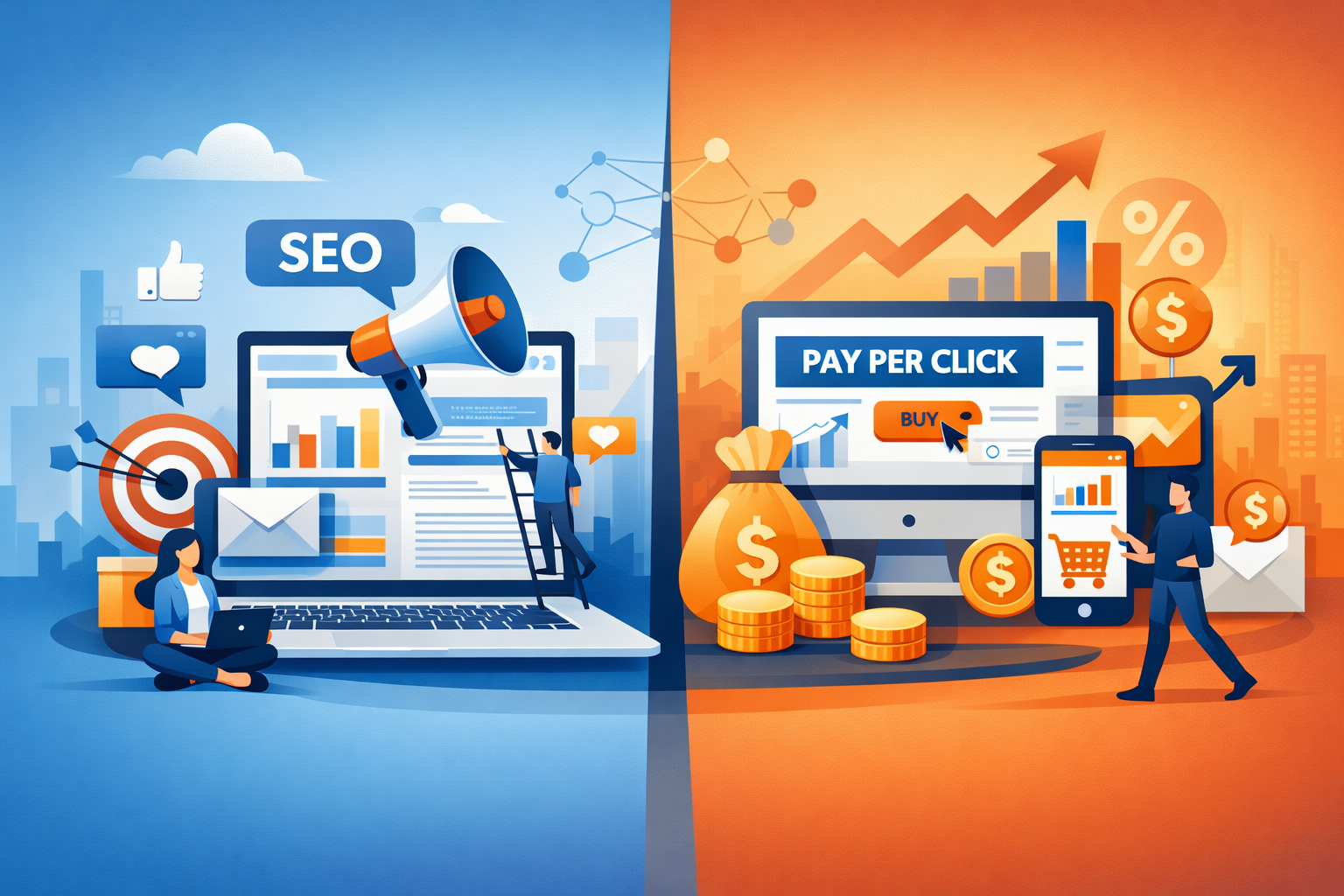
Their methods and objectives are where they diverge most. Digital marketing focuses on building a brand and creating long-term value, while performance marketing focuses on achieving quick and measurable results.
Digital marketing includes both paid and unpaid strategies. For example, SEO and organic social media are part of digital marketing but not performance marketing. On the other hand, performance marketing is always tied to paid campaigns where results are directly measurable.
Another major difference is in tracking. While digital marketing efforts can be measured, they are not always directly linked to immediate revenue. Performance marketing, however, is completely data-driven and focused on ROI.
Which One Should You Choose?
Your company’s objectives will determine whether you should use performance marketing or digital marketing.
If your goal is to build brand awareness and establish trust, digital marketing is the right choice. It helps you create a strong foundation for long-term success.
If your goal is to generate leads or sales quickly, performance marketing is more effective. It allows you to target the right audience and track every action they take.
In reality, the best strategy is to use both together. Digital marketing builds your brand, while performance marketing drives immediate results. When combined, they create a powerful marketing system that supports both short-term and long-term growth.
Why Understanding This Difference Matters
Many businesses make the mistake of focusing only on one approach. Relying only on digital marketing can delay results, while focusing only on performance marketing can limit brand growth.
By understanding the difference, you can balance your strategy. You can invest in building your brand while also generating consistent leads and sales.
Conclusion
Digital marketing and performance marketing are both essential, but they serve different purposes. One builds your brand over time, while the other delivers measurable results quickly.
To succeed in today’s competitive market, businesses should not choose one over the other. Instead, they should combine both strategies to create a complete and effective marketing plan that drives real growth.