

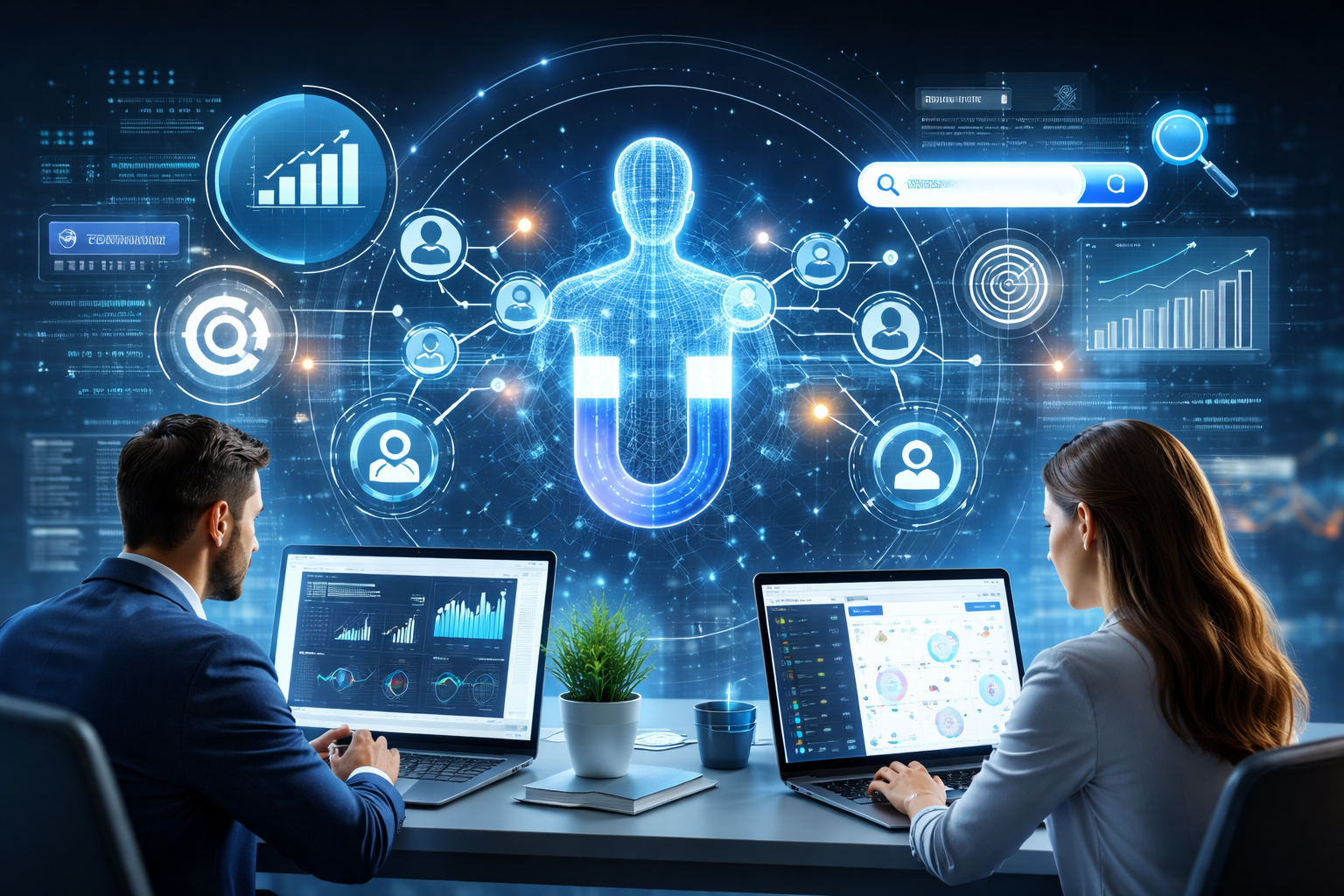
Artificial Intelligence is no longer just a trend in digital marketing. It is actively changing how businesses generate leads, attract customers, and optimize campaigns. From smarter search engines to automated ad targeting, AI is making marketing faster, more precise, and more competitive. For SEO and PPC teams, this shift means adapting quickly or falling behind.
The Rise of Smarter Search and User Intent
Search engines are becoming more intelligent with the help of AI. They now understand user intent better than ever before. Instead of focusing only on keywords, search engines analyze what users actually mean when they type a query. This has changed how content should be created.
SEO teams need to move beyond keyword stuffing and focus on creating meaningful, helpful content. Content should answer real questions and provide value. When users find exactly what they are looking for, search engines reward that content with better rankings. AI tools can also help identify trending topics and user behavior, making it easier to create content that attracts the right audience.
Automation is Changing PPC Campaigns
AI is also transforming PPC campaigns by automating many tasks that were once done manually. Bidding strategies, audience targeting, and ad placements are now handled by machine learning algorithms. This allows marketers to run more efficient campaigns with better results.
However, relying completely on automation is not enough. PPC teams must guide AI by providing the right data and clear goals. Campaign structure, audience signals, and creative quality still matter. The role of marketers is shifting from manual work to strategic decision-making. Understanding how AI works within ad platforms helps teams get the best performance from their campaigns.
Personalization is the New Standard
One of the biggest advantages of AI is its ability to deliver personalized experiences. Users now expect ads and content that match their interests and needs. AI analyzes user behavior, preferences, and past interactions to show highly relevant ads.
SEO teams should create content that speaks to different stages of the buyer journey. PPC teams should focus on creating multiple ad variations to test what works best. Personalization increases engagement, improves conversion rates, and ultimately generates more qualified leads.
Adapting to the AI-Driven Future
To succeed in this new environment, SEO and PPC teams must be flexible and willing to learn. AI tools can provide valuable insights, but human creativity and strategy are still essential. Teams should regularly analyze performance data, test new approaches, and refine their strategies.
Learning how to use AI tools effectively can give businesses a strong competitive advantage. Whether it is content optimization, keyword research, or campaign management, AI can enhance every part of lead generation when used correctly.
Conclusion
AI is reshaping lead generation in powerful ways. It is making search smarter, automating advertising, and enabling deeper personalization. For SEO and PPC teams, the key to success lies in adapting to these changes. By focusing on user intent, guiding automation, and creating personalized experiences, businesses can generate better leads and achieve long-term growth in an AI-driven world.