4 Reasons Your Google Ads Clicks Are Down and What You Can Do About It

Category Archives: Digital Marketing

Reasons Your Google Ads Clicks

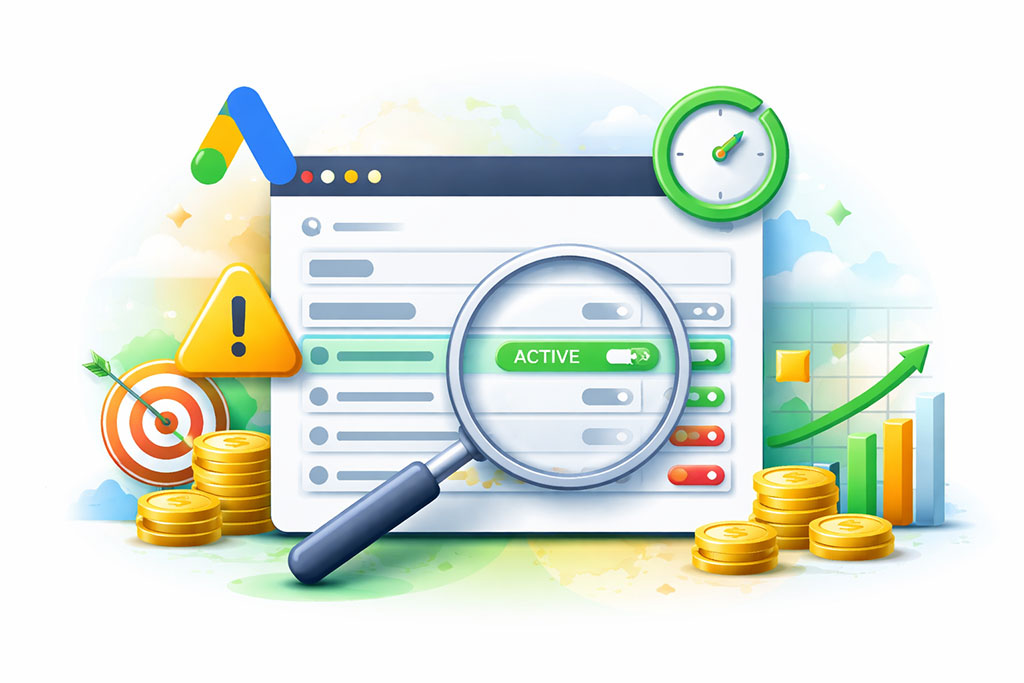
If your Google Ads campaign was getting clicks earlier and suddenly the numbers have dropped, it can feel confusing and frustrating. Many businesses assume something is “broken,” but in most cases, the drop happens because of small changes in the account, market, or audience behavior. The good news is that clicks can be recovered once you understand what’s causing the issue.

Let’s look at the most common reasons why Google Ads clicks go down and what you can do to fix them.

Increased Competition in Your Industry

One of the biggest reasons for a drop in clicks is increased competition. More advertisers may be bidding on the same keywords as you. When this happens, your ads might appear lower on the page or show less frequently. Even if your ads are still running, fewer people see them, which directly reduces clicks.

To improve this, start by checking your auction insights in Google Ads. This shows how often your ads appear compared to competitors. You may need to adjust your bids, focus on more specific keywords, or improve your ad quality so Google prefers your ads over others.

Lower Ad Relevance or Quality Score

Google considers more than simply your bid amount. It also checks how relevant your ad is to the user’s search. If your ads haven’t been updated in a long time or no longer match what people are searching for, Google may show them less often. A lower Quality Score means fewer impressions and fewer clicks.

To fix this, review your ad copy and keywords. Make sure your ads clearly match the search intent. Refresh headlines, improve descriptions, and ensure your landing page actually answers what the user is looking for. Here, minor adjustments can have a significant impact..

Changes in Search Behavior

User behavior changes all the time. People may start using different search terms, new trends may appear, or demand for your product or service may reduce during certain months. Even if your campaign settings haven’t changed, search volume might be lower than before.

The best way to handle this is to regularly check your search terms report. Look for new queries that users are typing and add them as keywords if they are relevant. At the same time, pause keywords that are no longer getting searches or clicks. Keeping your keyword list updated helps maintain steady traffic.

Budget or Bid Limitations

Sometimes clicks drop simply because your budget or bids are too low. If your daily budget is getting exhausted early in the day, your ads stop showing, which limits clicks. Similarly, if bids are too low, your ads may lose auctions and appear less often.

Check your campaign status messages in Google Ads. If you see warnings like “limited by budget,” it’s a clear sign. You can either increase the budget, reduce wasted spend by adding negative keywords, or shift budget to high-performing campaigns so your ads show consistently throughout the day.

What You Should Do Next

When Google Ads clicks go down, the worst thing you can do is panic or make random changes. Start by reviewing performance data calmly. Look at impressions, Quality Score, auction insights, and search terms. Each of these tells a different part of the story.

By improving relevance, adjusting bids smartly, updating keywords, and watching competition, you can bring clicks back without wasting money. Google Ads performance isn’t about constant spending—it’s about constant optimization.

Website Traffic

Introduction

One of the most common and confusing situations in SEO is when traffic looks flat, but all the SEO work is actually moving in the right direction. Clients and business owners often feel worried when they don’t see a clear rise in visitors, even after months of optimization. The truth is that SEO success does not always show up immediately in traffic graphs. In many cases, flat traffic can hide strong performance underneath.

Flat Traffic Does Not Mean SEO Failure

Flat traffic simply means the number of visitors is stable, not decreasing. If your website is holding its ground while competitors are fighting for the same audience, that is already a positive sign. Search engines are constantly changing results, and keeping traffic steady in a competitive space often means your SEO foundation is strong. Losing traffic would be a warning sign, but stability shows that your website still has search engine trust.

Rankings and Visibility Often Improve Before Traffic

SEO usually works in stages. First, search engines crawl and understand your content better. Then rankings slowly improve for important keywords. Traffic comes later. Many websites rank higher but don’t see big traffic growth immediately because keywords are moving from page three to page two, or from the bottom of page one to the middle. These improvements are real progress, even if traffic numbers look unchanged.

Search Intent and Quality Matter More Than Volume

Another reason traffic stays flat is because SEO is attracting more relevant users, not just more users. If your pages are targeting better search intent, you may get fewer visits but higher-quality ones. These visitors stay longer, explore more pages, and convert better. SEO working correctly often improves engagement and conversions before it boosts raw traffic numbers.

Seasonal and Market Factors Affect Traffic

Traffic numbers are not controlled by SEO alone. Seasonality, industry demand, and market trends play a big role. If search demand drops or stays stable across the industry, even the best SEO cannot create extra traffic out of nowhere. In such cases, maintaining traffic means your SEO is protecting your website from losing visibility during slow periods.

Technical and Content Improvements Take Time to Show Results

When SEO work focuses on technical fixes, content updates, or internal linking, results are not instant. Search engines need time to recrawl pages, reassess quality, and adjust rankings. During this phase, traffic may look flat, but behind the scenes, your website is becoming stronger and more competitive for future growth.

Better Metrics Can Prove SEO Is Working

Instead of only looking at traffic, it helps to check other SEO signals. Improved keyword rankings, higher impressions, better click-through rates, longer time on site, and more conversions all indicate progress. Flat traffic with improving engagement usually means SEO is working exactly as it should.

How to Explain This Clearly to Clients or Stakeholders

The best way to explain flat traffic is to shift the conversation from numbers to performance. Show how visibility is improving, how keywords are moving up, and how user quality is getting better. Explain that SEO is a long-term process and that stable traffic today often leads to strong growth tomorrow.

Conclusion

Flat traffic does not automatically mean SEO is failing. In many cases, it means your website is building authority, improving relevance, and preparing for future growth. When SEO is done right, traffic growth is just one outcome, not the only sign of success. Patience and the right metrics help reveal the real impact of SEO over time.

Search and Shopping Ads

Understanding the Scaling Problem in Paid Ads

Search Ads and Shopping Ads are often seen as the fastest way to drive sales or leads. Many businesses believe that increasing the budget will automatically increase results. In reality, these ads depend heavily on existing demand. When demand is limited, scaling becomes difficult no matter how good the campaign setup is. This is where many advertisers get stuck and feel that ads have stopped working.

How Search and Shopping Ads Actually Work

Search and Shopping ads work on user intent. They show ads only when people actively search for a product or service. If users are not searching, your ads have nowhere to appear. Unlike social media ads, these campaigns cannot create demand from scratch. They can only capture demand that already exists in the market.

This means growth is directly tied to how many people are searching for your keywords. When search volume hits a limit, your ads hit a limit too.

What Happens When Demand Is Low

When demand is low, advertisers usually try to scale by increasing bids or daily budgets. This often leads to higher cost per click without a matching increase in conversions. You may start paying more for the same users, while overall sales or leads remain flat.

In Shopping ads, this problem becomes more visible. Once your products are already showing for most relevant searches, there is very little room left to grow. The platform keeps recycling the same audience, making scaling inefficient and expensive.

Why More Budget Doesn’t Always Mean More Results

Many businesses assume that budget is the main growth lever. In demand-driven campaigns, budget only helps until demand is fully captured. After that point, additional spending only increases competition within the same audience pool.

This is why brands sometimes see great results initially and then hit a plateau. The ads didn’t fail. The market demand simply reached its maximum for that product or category at that time.

The Missing Piece: Demand Creation

To scale Search and Shopping ads long-term, demand creation is essential. Demand creation means making more people aware of your brand, product, or problem before they search for it. Without this step, search-based campaigns remain limited.

Channels like social media ads, video ads, influencer content, and content marketing play a key role here. They introduce your brand to new audiences and build interest. Over time, this increases branded searches and category searches, which Search and Shopping ads can then capture.

How Brand Awareness Supports Performance Ads

When people already know your brand, they are more likely to click your ads and convert. This improves click-through rates, quality scores, and conversion rates. As a result, Search and Shopping ads become more efficient and easier to scale.

Branded demand also protects you from aggressive competitors. Instead of competing only on price or bids, you benefit from recognition and trust built earlier in the customer journey.

A Smarter Way to Scale Paid Advertising

True scaling happens when demand generation and demand capture work together. Search and Shopping ads should focus on capturing high-intent users. At the same time, awareness and consideration campaigns should consistently feed new demand into the system.

When this balance is missing, performance campaigns feel stuck. When it is present, scaling becomes stable, predictable, and profitable.

Final Thoughts

Search and Shopping ads are powerful, but they are not magic. They cannot grow beyond the demand available in the market. If your campaigns stop scaling, it is often a demand issue, not a platform or strategy failure. Businesses that invest in building demand first unlock the full potential of their paid search efforts and achieve sustainable growth over time.

Introduction

SEO in 2026 is no longer just about rankings and traffic numbers. Search engines are smarter, users move across multiple platforms before converting, and privacy rules are stricter than ever. In this changing environment, marketers need a clearer way to understand where a customer journey actually begins. This is where first-touch analytics becomes extremely important. It helps businesses see the real starting point of user interest, instead of only focusing on the final click.

What First-Touch Analytics Really Means

First-touch analytics tracks the very first interaction a user has with your brand. This could be a Google search, a blog post, a landing page, or even an organic social visit. Instead of giving all credit to the last page a user visits before converting, first-touch analytics shows what originally attracted the user. For SEO, this insight is powerful because it reveals which content and keywords are truly driving awareness.

Why Traditional SEO Tracking Is No Longer Enough

In earlier years, SEO success was measured mainly by keyword rankings, sessions, and last-click conversions. In 2026, this approach misses the bigger picture. Users rarely convert on their first visit. They research, compare, and return multiple times. If you only look at the last interaction, you undervalue early-stage SEO content that plays a major role in building trust and interest. First-touch analytics fills this gap by highlighting the true contribution of SEO at the beginning of the journey.

The Impact of Privacy Changes on SEO Measurement

With cookie restrictions, consent rules, and data loss across platforms, tracking users accurately has become more difficult. First-touch analytics works well in this new privacy-focused environment because it relies on the earliest available data point. This makes attribution more stable and reliable. For SEO teams, it means better decision-making even when complete user paths are harder to track.

How First-Touch Data Improves Content Strategy

When you know which pages or keywords first bring users to your site, you can create content more strategically. First-touch analytics helps identify top-of-funnel content that attracts the right audience. This allows SEO professionals to invest more in informative blogs, guides, and search-driven landing pages that introduce users to the brand. Over time, this leads to higher quality traffic and better long-term results.

Better SEO Budget and Resource Planning

In 2026, businesses want proof of value before increasing budgets. First-touch analytics helps SEO teams show how organic search initiates customer journeys. Even if SEO is not the final conversion source, it often plays the most important role at the start. This data helps justify SEO investment and supports smarter allocation of time and resources.

The Role of First-Touch Analytics in Multi-Channel SEO

SEO no longer works alone. It supports paid ads, email marketing, social media, and remarketing campaigns. First-touch analytics shows how SEO feeds other channels by introducing users to the brand. This makes SEO a core part of the overall digital marketing strategy rather than just a traffic source.

Conclusion

As SEO continues to evolve in 2026, understanding user behavior from the very first interaction is essential. First-touch analytics gives clarity in a complex digital landscape where traditional tracking methods fall short. By focusing on how users first discover your brand, SEO professionals can create better content, prove real value, and build strategies that drive long-term growth. In the future of SEO, knowing where the journey begins matters more than ever.

Meta Rolls Out Threads Ads

Meta has recently announced a major update: Threads, the social platform under Meta, will now allow ads for all users around the globe. This move marks a significant step in Meta’s plan to expand its advertising ecosystem beyond Facebook and Instagram. By making Threads ads available worldwide, Meta is aiming to give businesses new ways to reach audiences in real time.

What This Means for Businesses

For businesses, this update opens up fresh opportunities to promote their products and services. With ads now integrated into Threads, companies can engage users directly within the platform’s feed. This can lead to better brand visibility, more website traffic, and potentially higher sales. Threads ads are designed to blend naturally with user content, creating a less intrusive experience compared to traditional ads.

How Threads Ads Work

Threads ads operate similarly to ads on Instagram or Facebook. Brands can target specific audiences based on interests, demographics, and behavior. This precise targeting helps ensure that ads reach the right people, improving the chances of engagement. For creators and small businesses, Threads ads also provide an affordable way to expand their reach globally.

Why This Expansion Matters

The global rollout of Threads ads shows Meta’s continued focus on diversifying its advertising channels. With millions of users already active on Threads, businesses now have a new platform to showcase their products and build stronger connections with potential customers. As social media usage continues to grow worldwide, staying ahead with new advertising opportunities becomes crucial for brands.

Conclusion

Meta’s decision to expand Threads ads to all users globally is a game-changer for businesses and marketers. It provides a new avenue for reaching audiences in a more engaging way and keeps brands at the forefront of social media trends. Companies that leverage Threads ads early can gain an advantage, connecting with users in a fresh and interactive environment.