The Battle of the Future: SEO vs AI Search – What’s Really Changing?

Category Archives: Digital Marketing

SEO vs AI Search

In the digital world, search is the heartbeat of the internet. For years, Search Engine Optimization (SEO) has been the key to helping websites appear on top of Google results. Marketers learned how to use keywords, backlinks, and content strategies to stay visible. But with Artificial Intelligence (AI) now stepping into the world of search, everything we once knew is being rewritten. The rise of AI-driven search tools has left marketers and creators with endless questions — and sometimes sleepless nights — about what the future of SEO really looks like.

Understanding Traditional SEO

Traditional SEO is about understanding how search engines like Google index and rank web pages. It focuses on optimizing content through proper keyword placement, meta descriptions, backlinks, and user experience. The goal has always been to create valuable content that matches what users are searching for. When done right, SEO brings organic traffic, builds authority, and helps brands grow without paying for ads. For years, this method was the foundation of online success.

But now, things are shifting fast. AI tools are not only helping people search differently but also changing how search engines interpret information.

The Rise of AI-Powered Search

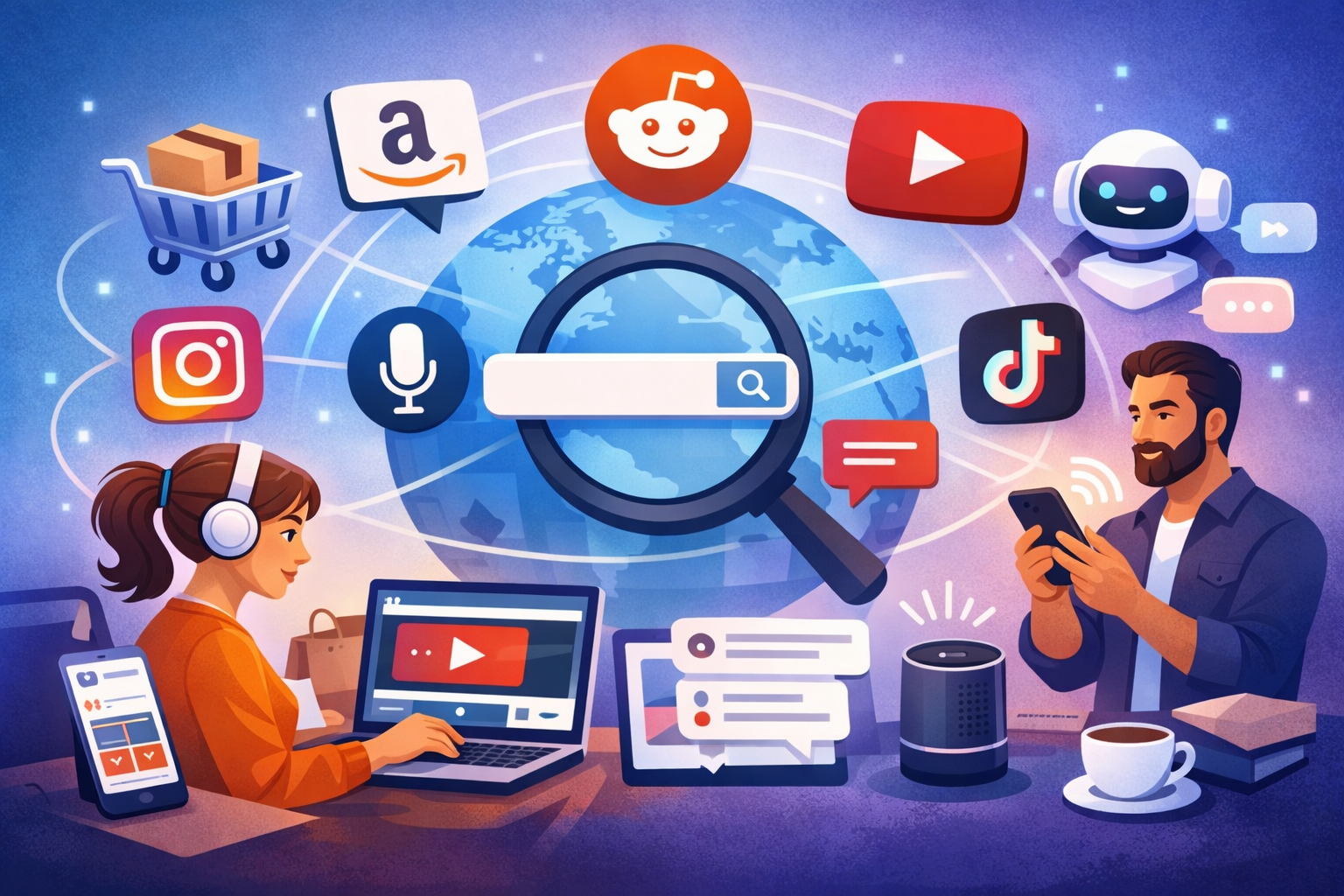
AI search tools like ChatGPT, Google’s Gemini, and Microsoft’s Copilot are changing how people find answers online. Instead of clicking through pages of results, users can now ask one question and get a direct, conversational response. This saves time and feels more natural — but it also means users are spending less time on traditional search results. For website owners, this raises an important question: if AI can summarize information instantly, will people still visit their sites?

AI search engines learn from massive amounts of data and user behavior. They understand context, intent, and even tone — which means content written just for keywords no longer works. It’s about meaning and experience now, not just optimization.

Will SEO Still Matter in an AI World?

Yes, in a nutshell, but it’s changing. SEO is not dying; it’s adapting. AI search still needs accurate and high-quality information, which means well-written content remains valuable. However, the way content is created and presented must change. Instead of focusing only on ranking for specific keywords, creators need to focus on relevance, depth, and authority.

AI systems prefer content that answers questions clearly, is well-structured, and reflects expertise. This means human insight, creativity, and storytelling are becoming more important than ever. Search optimization is no longer just about pleasing algorithms — it’s about helping AI understand and trust your content.

The New SEO Strategy: Human + Machine

The future of SEO will rely on collaboration between humans and AI. Writers and marketers must use AI tools for data insights, content ideas, and optimization — but the creativity and emotional intelligence of humans will remain irreplaceable. Successful brands will blend both worlds: human authenticity with AI efficiency.

For example, AI can help identify trending topics or analyze what users are asking online. But only a human can write in a voice that connects emotionally with readers. The smartest strategy is to let AI guide the structure, while humans craft the story.

What the Future Might Look Like

The coming years will bring a complete transformation of search. Traditional blue links on Google might slowly fade as conversational AI becomes the main way people find answers. Websites that focus on providing genuine value, factual accuracy, and user experience will still win — but the metrics for success will change. Instead of measuring clicks, we might soon measure how much our content influences AI responses.

Marketers and business owners should stay flexible and ready to evolve. The shift from SEO to AI-driven discovery isn’t a threat — it’s an opportunity to rethink how we connect with audiences. Those who adapt early will lead the next generation of search visibility.

Conclusion

The debate between SEO and AI search isn’t about who wins; it’s about how they work together. AI is reshaping how people find and consume information, while SEO continues to ensure that the right content is available and accessible. The future belongs to those who understand both worlds — those who can combine human creativity with AI intelligence to build meaningful digital experiences.

As we step into this new era of search, one thing is clear: it’s not about fighting change — it’s about mastering it.

Best PPC Management Company

In the ever-evolving world of digital marketing, one thing has remained constant—Google Ads’ dominance in online advertising. But the way Google Ads works today is very different from how it used to operate a few years ago. The transformation from the old Google Ads to the new version reflects how technology, automation, and user behavior have reshaped online marketing. Many businesses now partner with the Best PPC Management Company in India to stay ahead of these changes and make the most of Google’s advanced advertising tools.

When Google Ads Was Simpler

In the early days, Google Ads (then known as Google AdWords) was more manual and keyword-driven. Advertisers had full control over every aspect—choosing keywords, setting bids, writing multiple ad copies, and manually tracking performance. Campaigns relied heavily on human decisions and experience.

Advertisers spent hours analyzing which keywords worked best, adjusting bids daily, and creating different ad variations to test performance. While it offered complete control, it was also time-consuming and required deep marketing knowledge. Success depended on how well you understood keyword match types, bidding strategies, and manual optimizations.

The Rise of Smart Automation

The new Google Ads is powered by artificial intelligence and machine learning. It has evolved from being a simple advertising tool into a smart marketing platform that helps businesses grow faster with less manual effort. Google’s algorithms now handle a lot of the heavy lifting, from optimizing bids to improving ad placements and audience targeting.

Features like Performance Max, Smart Bidding, and Responsive Search Ads are at the heart of this new system. Instead of focusing on single keywords, advertisers can now rely on Google’s data-driven automation to reach the right users at the right time. It’s not just about showing ads anymore—it’s about predicting intent and delivering personalized experiences.

Shift from Keywords to Intent

Earlier, Google Ads revolved around selecting the right keywords. Today, it’s more about understanding user intent. The new system uses signals such as location, device, search history, and behavior patterns to decide when and where to show ads. This helps businesses reach people who are genuinely interested, improving both conversion rates and ad efficiency.

This shift has changed how marketers approach campaigns. Instead of obsessing over keyword lists, they focus on high-quality creative, audience insights, and automation settings. Google’s smart algorithms now make faster and more accurate decisions than manual optimization ever could.

Better Ad Experience for Users

The new Google Ads doesn’t just help advertisers—it improves the experience for users too. Ads today are more relevant, visually appealing, and closely aligned with what users are searching for. The integration of visuals, extensions, and dynamic elements makes ads feel more natural within the search experience, not intrusive.

This relevance benefits both sides: users find what they need faster, and advertisers see better engagement and return on investment.

The Role of Data and Machine Learning

The biggest difference between the old and new Google Ads lies in how data is used. Earlier, advertisers made decisions based on limited analytics. Now, Google uses billions of data points and machine learning to refine campaign performance automatically. It learns what works best and continuously optimizes without requiring constant manual input.

As a result, campaigns can scale more efficiently, reach broader audiences, and deliver measurable outcomes—something that was much harder to achieve in the old setup.

Final Thoughts

The evolution from the old Google Ads to the new Google Ads is more than just a platform upgrade—it’s a shift in mindset. The old system rewarded technical mastery and manual control, while the new one rewards creativity, strategy, and smart use of automation.

For marketers, this transformation means adapting to a future where data and AI play a leading role. The key to success now lies in trusting automation, crafting powerful creatives, and continuously learning from insights.

Google Ads has grown smarter, faster, and more efficient—and those who embrace this change will continue to win in the digital advertising game.

SEO Audit Tool Scores

When it comes to improving a website’s visibility, SEO audit tools are often the first choice for marketers and website owners. These tools promise quick insights into your site’s health, performance, and optimization level. However, Google has made it clear that relying only on SEO audit scores can be misleading. While these tools can be useful, they should not be treated as the final word on your website’s SEO performance.

Understanding What SEO Audit Tools Do

SEO audit tools like Ahrefs, SEMrush, Moz, and others analyze your website for technical and on-page issues. They check for broken links, page speed, metadata, mobile-friendliness, and keyword usage. Based on these factors, they give a numerical score — often out of 100 — that represents how “optimized” your website is. This score can give a general idea of where improvements are needed, but it doesn’t tell the full story.

What Google Says About SEO Tool Scores

According to Google, audit tools don’t have access to all the data and ranking factors that the search engine uses. The algorithms behind Google Search are highly complex and involve hundreds of ranking signals that no tool can fully replicate. So, even if an SEO tool gives your website a high score, it doesn’t guarantee that Google will rank your pages higher. In other words, these scores are estimates — not absolute truths.

Why Relying Only on Audit Scores Can Be Misleading

A high SEO score might make you feel confident, but it could hide underlying issues. For example, a tool may not accurately measure user experience, content quality, or search intent — all of which are critical to ranking. Similarly, a low score might not mean your website is performing poorly if you are already getting good traffic and engagement. Focusing too much on tool-generated numbers can shift attention away from real-world performance and user satisfaction.

The Right Way to Use SEO Audit Tools

SEO audit tools are valuable when used as guides rather than decision-makers. You should use them to identify potential problems, such as missing tags or slow pages, and then combine their insights with your own data from Google Search Console and Google Analytics. Understanding user behavior, traffic sources, and keyword performance gives a more realistic view of your site’s SEO health than any automated score can.

Focus on What Truly Matters

Instead of chasing perfect SEO scores, focus on improving user experience and delivering high-quality, relevant content. Make sure your website loads quickly, works well on mobile devices, and offers value that keeps visitors engaged. These factors are far more important to Google’s ranking systems than any numerical score from third-party tools.

Conclusion

SEO audit tools are helpful companions but not final authorities. Google’s warning serves as a reminder that no automated system can fully understand how search rankings work. The best approach is to use these tools for direction, not dependence. True SEO success comes from a balance of data, creativity, and a deep understanding of your audience — not just from chasing tool-generated numbers.

In today’s fast-paced digital marketing world, automation and data accuracy are key to success. Managing ad campaigns manually can be time-consuming and prone to human error. That’s where APIs come in. APIs, or Application Programming Interfaces, make it easier for marketers and developers to connect platforms, access real-time data, and automate repetitive tasks. Both Google Ads and Meta Ads offer powerful APIs that help businesses optimize their campaigns more efficiently.

Understanding What APIs Do

An API acts like a bridge that allows one software to communicate with another. In the context of advertising platforms, APIs help pull and send information between your ad account and other tools, such as analytics dashboards, CRMs, or reporting systems. This means you can manage and monitor campaigns without logging into the ad interface every time.

APIs in Google Ads

The Google Ads API allows advertisers to access campaign data programmatically. This gives more control over account management and data analysis. With the API, marketers can automate routine tasks such as adjusting bids, creating ads, or pausing underperforming campaigns. It also allows for deep integration with external tools, so agencies can generate custom reports or connect with data visualization platforms like Google Data Studio or Looker.

For large-scale advertisers and agencies, the Google Ads API is a game-changer. It saves hours of manual work by automating campaign changes, tracking conversions, and syncing data across systems. The result is better decision-making and faster optimization.

APIs in Meta Ads

Meta Ads (previously Facebook Ads) also provides a strong API that lets developers manage ad campaigns across Facebook, Instagram, and Audience Network. Through the Meta Marketing API, advertisers can automate tasks like creating ad sets, testing different audiences, or tracking performance metrics.

The API makes it possible to connect Meta Ads with other marketing tools. For instance, you can automatically update your ad creative when new products are added to your eCommerce store or sync customer data from a CRM to create lookalike audiences. This integration helps keep ads fresh, targeted, and data-driven.

Benefits of Using APIs for Advertising

APIs make campaign management smarter and more efficient. They provide real-time access to performance data, helping marketers make quick decisions. Automation through APIs reduces human errors and frees up time for strategy and creativity. Instead of manually checking performance or updating ads, everything can be managed through scripts or connected systems.

By integrating APIs, advertisers can also build custom dashboards to track metrics that matter most to their business. This level of control makes reporting faster, clearer, and more accurate.

The Future of Ads with APIs

As digital advertising continues to evolve, APIs will play a bigger role in how campaigns are managed and optimized. With increasing focus on data privacy and performance automation, APIs help ensure that data flows securely and efficiently between platforms.

In the coming years, we can expect more advanced automation and smarter integrations powered by AI through these APIs. Marketers who learn to use them effectively will have a strong competitive edge in performance marketing.

Conclusion

APIs in Google Ads and Meta Ads are transforming how businesses access and use their data. They simplify complex processes, increase efficiency, and open doors for innovation. By automating repetitive tasks and enabling real-time insights, APIs empower marketers to focus more on strategy and creativity — the true drivers of advertising success.

Shopify Development Company in India

In today’s fast-paced digital market, launching an online store has become a necessity for businesses that want to reach a wider audience and increase their revenue. Among all e-commerce platforms, Shopify stands out as a game-changer. It empowers entrepreneurs to build, manage, and scale their online stores effortlessly. Whether you’re a startup or an established brand, Shopify offers everything you need to create a powerful online presence. Many businesses today rely on the expertise of a Shopify Development Company in India to make the most of this platform’s potential.

Ease of Use and Quick Setup

Shopify’s ease of use is one of its main benefits. To start your internet store, you don’t have to be an expert in technology. Shopify provides an intuitive interface where anyone can set up a fully functional e-commerce site within hours. The platform handles hosting, security, and maintenance, allowing business owners to focus on sales rather than technical challenges. For businesses that prefer professional assistance, a Shopify Development Company in India can help set up a customized store tailored to their brand’s needs.

Customization and Scalability

Shopify is not just user-friendly—it’s also highly flexible. Businesses can choose from thousands of themes and apps to design a store that reflects their brand identity. Shopify expands along with your company. Whether it’s adding new products, integrating payment gateways, or scaling to international markets, Shopify offers seamless scalability. Partnering with a Shopify Development Company in India ensures you get a store that not only looks great but also performs efficiently on all devices.

Secure and Reliable Platform

Security is a major concern in e-commerce. Shopify takes care of this by offering built-in SSL certification and PCI compliance, ensuring that all transactions are safe and encrypted. With 24/7 monitoring and automatic updates, business owners can trust Shopify to keep their store running smoothly. This level of reliability makes it one of the most trusted platforms worldwide, giving both merchants and customers peace of mind.

SEO and Marketing Capabilities

Shopify comes equipped with strong SEO features that help your store rank higher on search engines. It allows easy editing of meta titles, descriptions, and URLs, which improves visibility and drives organic traffic. Additionally, Shopify supports marketing integrations like email campaigns, social media ads, and Google Shopping. A Shopify Development Company in India can further optimize your store for better SEO performance and higher conversions.

Mobile Optimization for Modern Shoppers

In today’s world, most shoppers use their smartphones to browse and buy products online. Shopify’s themes are fully responsive, ensuring a smooth shopping experience across all devices. This mobile-first approach not only improves customer satisfaction but also increases sales. Businesses that collaborate with a Shopify Development Company in India can benefit from customized mobile optimization that enhances user engagement and retention.

Seamless Payment and Shipping Options

Shopify simplifies the checkout process by offering multiple payment gateways, including PayPal, Stripe, and Shopify Payments. It also integrates easily with major shipping carriers to automate delivery and tracking. These features help businesses manage orders efficiently and provide customers with a hassle-free shopping experience.

24/7 Support and Community

Another reason Shopify is so popular is its exceptional support. From live chat to community forums and tutorials, help is always available. When businesses work with a Shopify Development Company in India, they gain not only technical support but also expert guidance on store management, updates, and strategy.

Conclusion

Shopify has revolutionized the e-commerce industry by providing an all-in-one platform that combines ease of use, flexibility, and powerful features. It enables entrepreneurs to create online stores that are visually appealing, secure, and scalable. For any business planning to build or enhance its e-commerce presence, partnering with a Shopify Development Company in India is a smart decision. These experts can help you design a professional Shopify store that attracts customers, drives conversions, and builds long-term success in the competitive online marketplace.