Google Ads Introduces a New Account-Level Setting for Political Content

Category Archives: Digital Marketing

Best PPC Management Company in India

Google Ads has rolled out a new update that adds an account-level political content setting. This change is important for advertisers, especially those running campaigns across multiple regions or handling sensitive categories. Understanding this update is crucial for agencies and brands that want to stay compliant while maintaining smooth ad performance. As the advertising landscape keeps evolving, companies like the Best PPC Management Company in India must stay updated to help businesses run transparent and well-structured campaigns.

Why Google Added This New Setting

Political advertising has always been closely regulated on digital platforms. Over the years, Google has introduced restrictions, verification requirements, and transparency reports to ensure responsible advertising. With political content rising worldwide, Google needed a better system to handle such ads in a controlled manner. The account-level political content setting allows Google to automatically detect whether an account is trying to run political ads and apply relevant rules accordingly. This gives advertisers more clarity and helps Google maintain global advertising standards.

What This New Setting Actually Means

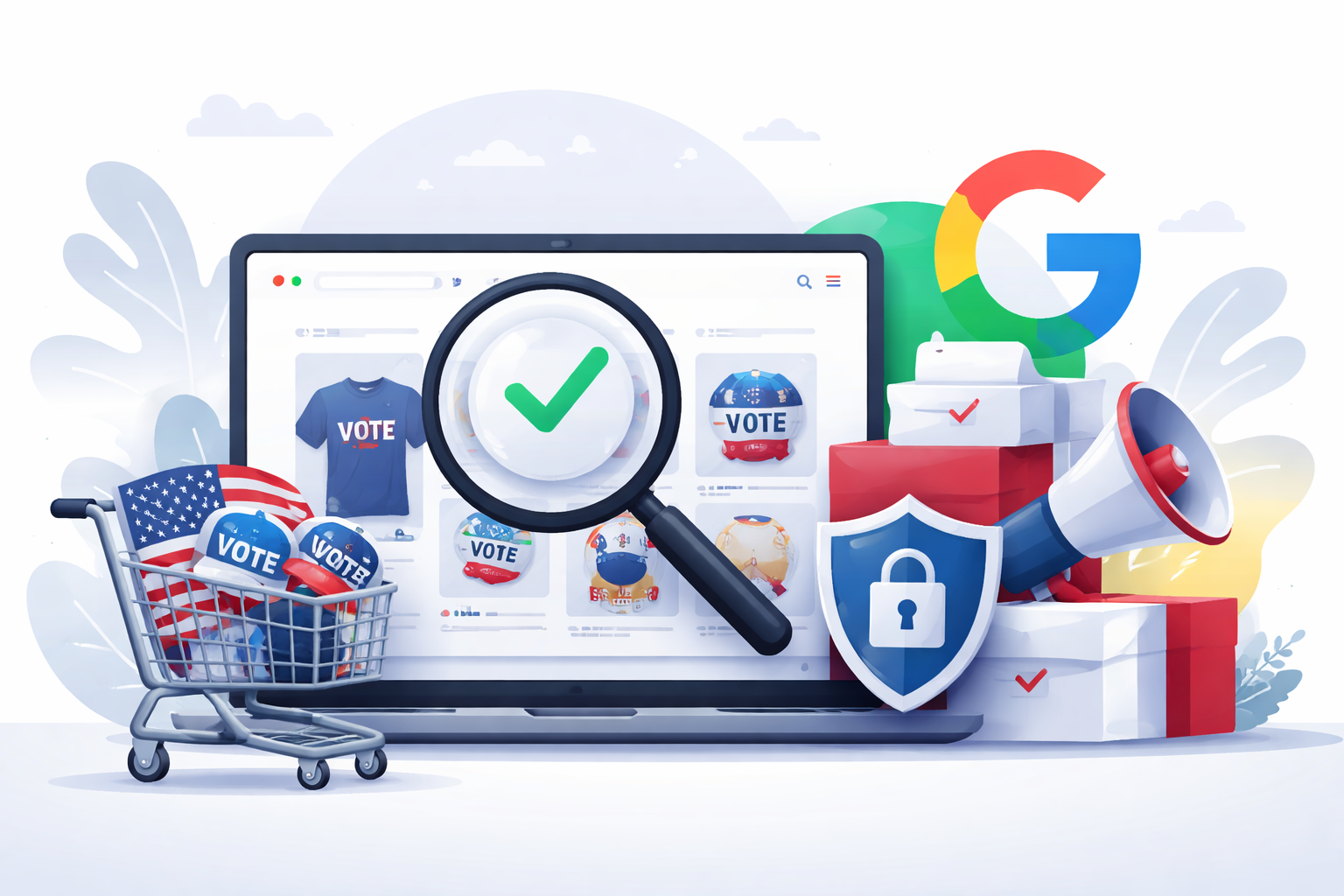
The new setting allows advertisers to specify whether their ad content includes political messaging. Instead of setting political content at the campaign or ad level, Google now lets you manage it at the account level. This means the platform will treat your entire account under political rules if you mark it as containing political content. If you select that your account does not run political ads, Google may restrict or flag ads that appear political based on its automated systems. This helps reduce mistakes and ensures that political ads are only run by verified, authorized advertisers.

How This Update Helps Advertisers

This update simplifies compliance for advertisers. If an agency handles political campaigns, it no longer needs to mark every ad manually. The account-level option saves time and ensures consistency. For non-political advertisers, this update helps avoid accidental disapprovals. Sometimes ads get flagged due to content related to governance, public policies, or election-related keywords even when the intention is not political. With the new setting, advertisers can clarify their intent in advance. Agencies like the Best PPC Management Company in India can use this update to manage political and non-political clients separately and reduce unnecessary disruptions in campaigns.

Why This Update Matters for Agencies and Brands

Political ads require verification, ID checks, and region-specific approvals. Many advertisers unknowingly create ads related to causes, social issues, or public discussions that fall under political categories. The new setting eliminates confusion and prevents unwanted delays. Brands can focus solely on their campaigns without worrying about political restrictions unless they intentionally choose that category. At the same time, advertisers who genuinely need to run political ads can activate the setting and prepare for Google’s verification process. This clarity is extremely valuable for agencies managing multiple accounts.

Impact on Ad Approvals and Delivery

Google Ads uses automated systems to review content and assign categories. With the new update, the approval process becomes more predictable. If you declare your account as political, Google’s system will review your ads with stricter guidelines but allow them to run once verified. If you declare your account as non-political, Google may block ads that seem political, preventing any accidental violation. This structure protects advertisers from compliance issues and ensures that ad delivery stays consistent. Agencies offering PPC services can use this update to create safer, more reliable advertising environments for their clients.

How Businesses Should Respond to This Change

Businesses should review their ad messaging and decide whether it contains any political content, directly or indirectly. Educational ads, public awareness messages, or issue-based content may fall into these categories even if the intention is not political. It is better to analyze the ad theme before activating or deactivating the political content setting. Companies working with the Best PPC Management Company in India can get guidance on whether their campaigns fall under political rules. Proper classification ensures that ads don’t get rejected or paused due to sudden policy checks.

The Future of Advertising Transparency

This update is part of Google’s effort to make advertising more transparent. With growing concerns around misinformation and election influence, the platform wants to ensure that political ads follow strict rules. The account-level setting makes political advertising more structured and less confusing for advertisers. It also supports a healthier digital ecosystem where policies are clearer and easier to follow. As more platforms adopt similar standards, advertisers will benefit from clean, compliant, and more predictable ad environments.

Shopify’s AI Store Builder
Launching an online store used to take days or even weeks. You had to choose a theme, write product descriptions, design banners, adjust layouts, and figure out what would look good for your brand. Shopify has now changed this entire process with one powerful innovation: the AI Store Builder. This new tool shows how artificial intelligence can simplify ecommerce and help both beginners and experienced sellers launch beautiful, functional stores in record time.

The idea behind the AI Store Builder is simple but game-changing. Instead of manually building a store from scratch, business owners can type a few keywords describing their brand, and Shopify automatically generates complete store designs. This means you can move from idea to launch much faster, without needing design or coding skills.

What Is the Shopify AI Store Builder?

Shopify’s AI Store Builder is an intelligent tool that creates a full online store based on simple text input. You just describe your business using keywords like “minimal skincare brand,” “sporty streetwear,” or “eco-friendly kitchen products.” In seconds, the AI produces ready-made store layouts that include color schemes, images, text sections, and design blocks tailored to the style you described.

Shopify generates multiple design options so you can choose the one that feels closest to your brand identity. Once the layout is created, you can customize any part of it just like a normal Shopify theme. The tool does not lock you in. Instead, it gives you a strong starting point, saving you hours of setup work.

How the AI Store Builder Works

The AI tool uses trained models to understand design patterns, branding styles, color psychology, and content structure. When you enter your keywords, it matches your theme with the most relevant layouts and generates a visually aligned design.

For example, if you enter “luxury jewelry store,” it may create a clean, premium design with gold accents and elegant typography. If you mention “fitness gear store,” the AI may choose energetic colors and bold fonts. The goal is not just to build a store but to build a store that matches the mood and personality of your brand.

The AI Store Builder also integrates with Shopify’s new theme foundation called Horizon. This allows the AI to generate individual design blocks as well, such as hero banners, feature sections, or product highlights. You simply describe the type of section you want, and the AI builds it for you.

Why This Tool Matters for New Entrepreneurs

Starting a business is already stressful. Many small business owners struggle with design, content writing, and layout decisions. Shopify’s AI Store Builder removes that barrier. You do not need to hire a designer, developer, or copywriter to create your first version of the store. The AI does most of the heavy lifting, letting you focus on your product and customers.

It also helps people who have ideas but do not know where to begin. With this tool, anyone can create a store within minutes. The simplicity of the process encourages more people to try ecommerce without fear of complexity.

How Established Brands Can Benefit

Even experienced ecommerce brands can use the AI Store Builder to experiment with new layouts faster. If a business wants to launch a new product line, seasonal store, or landing page, the AI can instantly create fresh concepts. Instead of starting with a blank canvas, teams can begin with AI-generated designs and then fine-tune them.

It also helps brands test multiple styles quickly. Since Shopify generates several design options, marketers and designers can compare different visuals and decide which one fits the campaign or audience better.

AI and Creativity: A Helpful Partner, Not a Replacement

Some people worry that AI tools will replace designers and creators. In reality, Shopify’s AI Store Builder works more like a creative partner. It gives you a strong foundation, but you still have full control. You can edit colors, images, fonts, sections, and content. The AI simply accelerates the initial setup, helping you avoid the time-consuming blank-page stage.

Designers can also use the AI tool to generate inspiration or mock-ups when working on new client projects. Instead of spending hours drafting ideas, they can allow the AI to produce options and then refine them according to the brand’s vision.

Improving Productivity and Reducing Costs

One of the biggest advantages of the AI Store Builder is cost reduction. Many new entrepreneurs cannot afford expensive web designers or branding agencies. With this tool, they get a professional-quality store without paying large upfront fees.

Time is another important benefit. What used to take several days can now be done in minutes. This allows business owners to launch faster, test ideas quickly, and respond to trends instantly. The tool fits perfectly into today’s fast-moving ecommerce world, where speed and agility matter.

The Future of Ecommerce Is Smarter

Shopify’s AI Store Builder is not just a feature; it’s a signal of where ecommerce is heading. More store-building tasks will become automated. More content will be generated instantly. More design decisions will be supported by AI insights. This does not reduce the importance of creativity. Instead, it makes creativity easier and more accessible to everyone.

As AI continues to evolve, we can expect Shopify to introduce even more intelligent tools that help with product descriptions, SEO, inventory suggestions, and marketing content. The AI Store Builder is simply the beginning of a smarter, faster, and more intuitive ecommerce ecosystem.

SEO Success in the Future

Introduction

For a long time, businesses believed that publishing more and more content was the key to achieving higher Google rankings. Although content still plays an important role, the SEO world is changing rapidly. Modern search engines no longer reward websites simply because they upload a lot of blogs or articles. Instead, they reward websites that are well-managed, well-structured, trustworthy, and consistently maintained. This shift clearly shows that the future of SEO is not just about creating content; it is about strong governance.

SEO governance refers to the systems, rules, and processes you follow to ensure your website always remains optimized, updated, error-free, and aligned with search engine expectations. In simple words, content helps you show up, but governance helps you stay, grow, and rank steadily.

Why Content Alone Is No Longer Enough

There was a time when publishing frequent content could quickly boost visibility. But Google’s algorithms today are far more intelligent. They understand search intent better, they analyze website quality deeply, and they prioritize authenticity over volume. Even a large library of content cannot help a website if the pages are outdated, slow, conflicting, or poorly maintained.

Most websites today suffer from problems like old information, repeated topics, broken pages, unfocused keywords, and weak technical performance. When these issues pile up, content loses value. Google evaluates the overall health of your website, not just the number of articles you publish. That is why governance is becoming more powerful than content creation.

What SEO Governance Really Means

SEO governance is the discipline that keeps your website organized and optimized. It is not a one-time activity but an ongoing process that gives your website structure, direction, and consistency. It involves defining responsibilities, maintaining accuracy, controlling quality, and ensuring every change supports your long-term SEO goals.

Strong governance means your team knows exactly who is responsible for updating content, who fixes technical errors, who monitors rankings, who reviews on-page improvements, and who approves new changes. Without this clarity, SEO becomes random, inconsistent, and unpredictable. Governance brings order to the entire strategy and creates a stable foundation for growth.

How Governance Improves SEO More Than Publishing Content

Governance helps your SEO performance in ways that raw content cannot. When you update old articles instead of ignoring them, search engines see your website as more credible. When you fix technical issues quickly, your pages load faster and provide a better experience. When your website structure stays clean and your information remains accurate, Google develops trust. This trust directly influences your rankings.

Governance also prevents the most common SEO problems. It reduces duplicate topics, eliminates outdated blogs, avoids keyword cannibalization, and ensures that only strong and relevant pages remain on your site. All these improvements have a bigger impact on rankings than publishing a new blog each week. Instead of adding content that may or may not perform, governance helps you build a website that consistently performs well.

The Role of Website Authority and User Trust

Search engines reward websites that deliver reliable, helpful, and up-to-date information. When your website is governed properly, it becomes more authoritative because every page meets a certain quality standard. Users also trust websites that load quickly, look organized, and offer accurate information. This positive user behavior is a strong signal to Google, which improves your rankings naturally.

Governance strengthens E-E-A-T — Expertise, Experience, Authoritativeness, and Trustworthiness — because it ensures that your website presents clear, correct, and expert-backed information. As search engines continue to evolve, this trust factor will matter more than content frequency.

Why the Future of SEO Depends on Governance

Google is shifting towards an AI-driven search model. With features like Search Generative Experience (SGE), search engines no longer focus only on matching keywords. They analyze the reliability of your website, the depth of your information, the freshness of your updates, and the consistency of your structure. This new era demands strong governance.

AI-based search models rely on clean architecture, accurate data, structured content, proper linking, and stable website performance. Content alone cannot deliver these results. Only governance can ensure that your website meets all of these criteria continuously. This is why governance is becoming the heart of modern SEO.

Building Strong SEO Governance for Your Website

You do not need a huge team to build SEO governance. You need a clear system. The starting point is defining a routine where your website is checked regularly for broken links, outdated pages, irrelevant content, and technical errors. This routine ensures that issues never pile up and your website always stays healthy.

Another important part of governance is updating old content. Many times, refreshing an existing article brings better results than publishing a new one. Revising titles, improving explanations, optimizing keywords, and adding new information can significantly boost performance.

Governance also includes clear guidelines. Every heading, title, meta description, URL, and article format should follow a consistent structure. When your entire website follows one standard, search engines understand your content easily and reward you with better visibility.

Making Governance a Long-Term Strategy

SEO governance should not be treated as a quick fix. It should be a long-term approach that shapes how your team manages content, handles updates, and maintains technical quality. When governance becomes part of your workflow, your website becomes more stable, your rankings become more predictable, and your growth becomes more sustainable.

Governance saves time and money because you focus on improvements that matter. Instead of producing unnecessary content, you invest in maintaining what already works, strengthening what needs improvement, and removing what does not add value. This creates a powerful and efficient SEO strategy.

Conclusion

The future of SEO is shifting from content-heavy strategies to governance-driven systems. Content will always matter, but strong governance will matter more. It is the structure that keeps your website healthy, the discipline that enhances your credibility, and the foundation that supports long-term SEO success. Businesses that embrace governance will outrank those that rely only on content production. If you want stable rankings, better visibility, and sustainable growth, begin building your SEO governance framework today.

Avoid Costly Errors in AI Search

AI search has quickly become one of the most powerful tools for businesses that want better visibility, faster growth, and smarter customer experiences. But with so many new platforms and promises, many brands make simple mistakes that slow down results instead of improving them. Understanding these mistakes makes your AI search strategy stronger and helps you get better returns from your investment. This is especially important for agencies offering the Best White Label SEO Reseller Services in India, because clients expect modern solutions that work.

Relying Only on Automation Without Human Insight

AI search tools are strong, but they are not magic. Many businesses depend only on automation and ignore human thinking. AI can analyze data, understand patterns, and improve performance, but it still needs human creativity, real-world understanding, and strategy.

When brands rely only on automated suggestions, the content becomes generic, and the search experience feels robotic. Successful AI search needs a balance. Let AI handle data and analysis, and let humans guide messaging, creativity, and decision-making. Agencies that offer the Best White Label SEO Reseller Services in India know that human input keeps AI-powered strategies unique and effective.

Ignoring User Intent and Focusing Only on Keywords

Another common mistake is thinking AI search is only about adding keywords. But modern search is driven by user intent—what the user actually wants to find. If the content doesn’t match the user’s real purpose, AI systems won’t show it at the top.

Businesses that ignore user intent create content that feels shallow, confusing, or irrelevant. AI search engines like Google’s SGE focus on meaning, context, and usefulness. When your content answers real questions, offers value, and solves problems, AI systems automatically trust it more. This is why many SEO agencies, especially those known for providing the Best White Label SEO Reseller Services in India, now prioritize intent-based content over keyword count.

Not Updating Content and Data Regularly

AI search systems evolve fast. What worked last month may not work today. Many companies publish content once and forget about it, which is one of the biggest mistakes in the AI search era. Outdated content leads to low rankings, reduced traffic, and poor user experience.

AI algorithms prefer fresh, accurate, and updated information. When your content is updated regularly, the system recognizes it as useful and trustworthy. Whether it is product information, blog updates, FAQs, or service pages, staying up to date is essential. This is also why agencies offering the Best White Label SEO Reseller Services in India keep their clients’ websites updated to match new AI search trends.

Final Thoughts

Investing in AI search is a smart decision, but only when done correctly. By avoiding these common mistakes—depending too much on automation, ignoring user intent, and forgetting to update content—you create a stronger and more reliable search presence. AI search isn’t just a trend; it’s the future of how people discover businesses. With the right strategy, you stay ahead of competitors and build long-term digital success.

Performance in Meta Ads

Introduction

Running Meta Ads isn’t just about setting budgets and targeting audiences — your creative is what truly captures attention and drives action. The image, video, or copy you use can make or break your campaign. But how do you know if your creative is really working? And what should you test to improve it? Let’s break it down in a simple way so you can analyze, test, and boost your Meta Ad results effectively.

Understanding Creative Performance in Meta Ads

Creative performance is all about how your visuals and ad copy connect with your audience. Even with the right targeting, a weak creative can fail to grab attention. Meta (Facebook and Instagram) rewards engaging content by giving it better reach and lower costs. So, understanding what kind of creative performs best helps you maximize your ad spend and achieve better ROI.

Why Creative Matters More Than Ever

Today’s users scroll fast, and attention spans are short. A creative that instantly hooks people can be the difference between a scroll and a sale. Meta’s algorithm favors ads that get engagement — likes, comments, clicks, or saves. That means a creative with a strong message and appealing design not only attracts attention but also improves your overall ad performance metrics like CTR and conversions.

Key Metrics to Measure Creative Success

To evaluate your creative performance, you need to look beyond vanity metrics. Start by checking engagement rate — this tells you how your audience is interacting with your ad. A high CTR (Click-Through Rate) shows that your visuals and message are resonating. Cost per result (like Cost per Click or Cost per Conversion) helps you see how efficiently your creative drives actions.

Watch your ad frequency too. If people are seeing the same creative too often, performance can drop — this is known as “creative fatigue.” When CTR decreases and cost per result increases, it’s time to refresh your creatives.

What to Test in Your Meta Ad Creatives

Testing different creatives is the best way to discover what your audience loves. You can experiment with various elements like ad formats, visuals, headlines, and calls to action. Try short videos against static images or experiment with different color tones and styles. Sometimes even a small change in copy can make a big difference in performance.

You can also test storytelling angles — emotional appeal versus product-focused messaging. For example, one ad might highlight how a product solves a problem, while another focuses on the feeling of using it. Track which approach brings better engagement and conversions.

How to Run Creative Tests the Right Way

When testing, focus on one creative element at a time so you can clearly see what’s making the difference. Don’t change everything at once. Let each creative run long enough to gather enough data before making decisions. Use Meta’s A/B testing tool to compare performance between different versions of the same ad.

Keep a close eye on audience feedback in comments and messages. Sometimes, qualitative insights reveal what your data can’t — like how your audience feels about your creative tone or message.

Refreshing and Scaling Your Winning Creatives

Once you identify which creatives perform best, scale them. Increase the budget for top-performing ads and refresh them slightly to maintain engagement. You can change background colors, update captions, or introduce seasonal themes while keeping the core message intact.

For underperforming creatives, don’t discard them right away. Analyze what didn’t work — maybe the copy was too long, or the visual didn’t stand out. Learn from the data to refine your next version.

Conclusion

Evaluating creative performance in Meta Ads isn’t just about numbers — it’s about understanding what connects with your audience emotionally and visually. Test, measure, and optimize your creatives regularly to stay ahead of fatigue and competition. The more you understand your audience’s preferences, the better your ads will perform.

In simple terms, creative testing isn’t guesswork — it’s smart marketing. Keep experimenting, stay consistent, and let data guide your creativity. That’s how you turn Meta Ads into a powerful growth engine for your business.