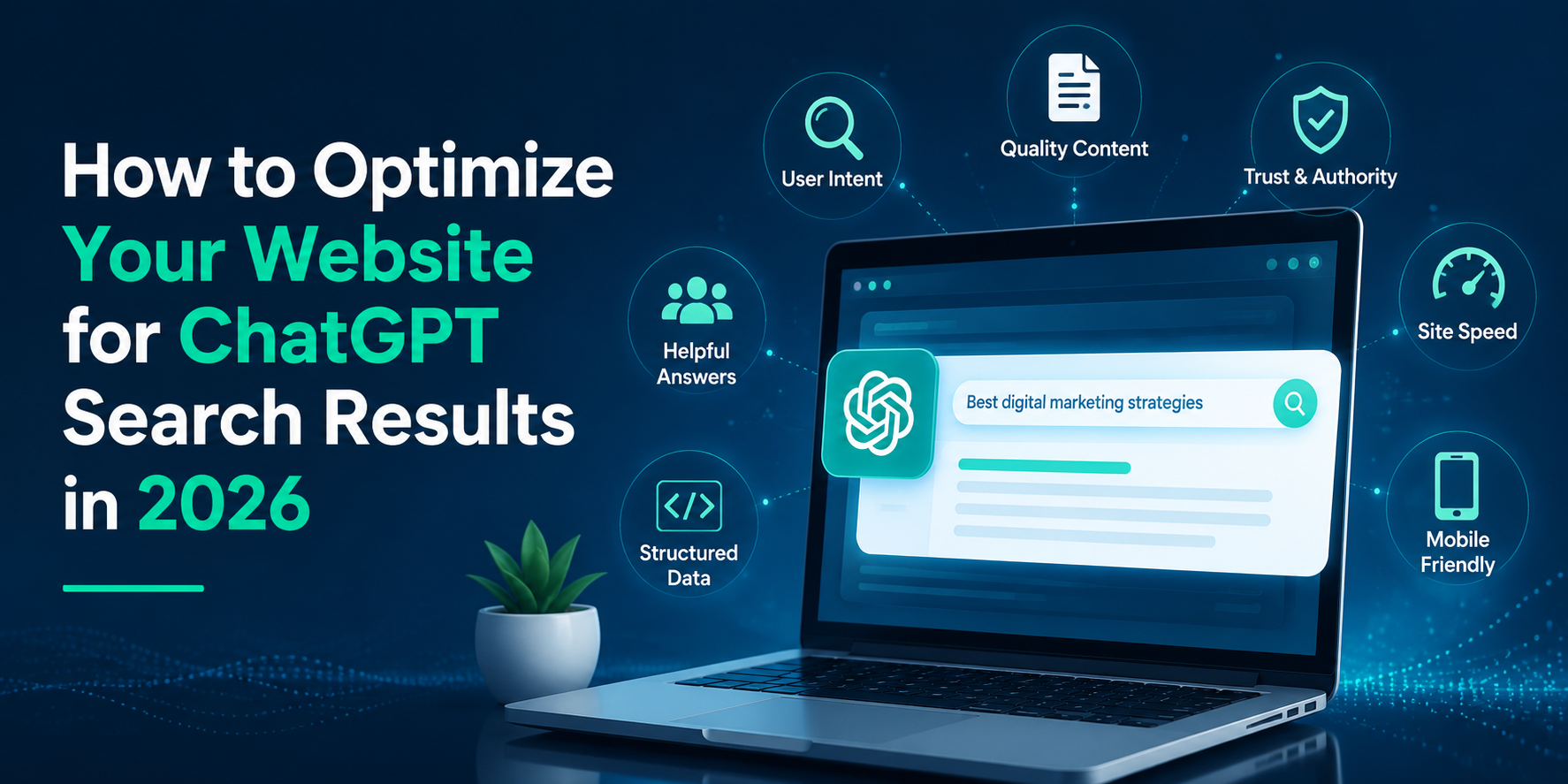
Search is changing faster than ever. In 2026, many people don’t just use traditional search engines—they also ask AI assistants like ChatGPT to find information, recommend businesses, and answer questions. If your website isn’t optimized for AI-driven search, you could miss valuable traffic and potential customers.
The good news is that optimizing for ChatGPT isn’t completely different from traditional SEO. The focus has simply shifted toward creating content that is helpful, trustworthy, and easy for AI systems to understand.
Create Content That Solves Real Questions
People ask AI assistants questions in a natural way. Instead of typing a few keywords, they ask complete questions like, “Which digital marketing agency is best for small businesses?” or “How can Improve my website’s SEO?”
Create pages that answer these questions clearly. Write in a conversational style, use simple language, and provide complete answers instead of short paragraphs filled with keywords.
Build Topical Authority
Rather than publishing random blog posts, focus on becoming an expert in your industry. Cover your main topic from different angles by creating detailed guides, how-to articles, FAQs, and case studies.
When your website consistently provides useful information on a specific subject, AI models are more likely to recognize it as a reliable source.
Keep Your Content Updated
AI systems prefer accurate and current information. Review your important pages regularly and update them with new insights, industry trends, and relevant examples. Fresh content signals that your website remains active and trustworthy.
Improve Website Performance
A fast and mobile-friendly website creates a better user experience. Compress images, reduce unnecessary code, and ensure pages load quickly on all devices. A technically strong website makes it easier for both search engines and AI systems to access your content.
Use Clear Content Structure
Organize every page with descriptive headings, short paragraphs, and logical sections. This makes your content easier for readers to understand and helps AI identify important information.
Adding FAQ sections can also improve your chances of being referenced in AI-generated answers because they directly address common user questions.
Demonstrate Trust and Expertise
Show visitors who created the content and why they should trust it. Include author information, company details, customer testimonials, and real-world experience wherever relevant. Reliable and transparent websites are more likely to earn visibility in AI search results
Add Structured Data
Schema markup helps search engines understand your content more accurately. Structured data offers more context about your pages, products, services, and company information, but it does not ensure AI visibility.
Focus on User Experience
Visitors should have easy access to the information they need. Use clear navigation, readable fonts, internal links, and meaningful calls to action. When users spend more time engaging with your content, it sends positive quality signals.
Final Thoughts
Optimizing for ChatGPT search results in 2026 is about providing genuine value instead of chasing algorithms. Publish original content, answer real user questions, maintain a fast website, and demonstrate your expertise. Businesses that consistently create helpful, trustworthy content will have the best opportunity to appear in AI-powered search experiences as they continue to evolve.