Are AI Clicks Really Better? Here’s What Your Campaign Data Might Reveal

Category Archives: Digital Marketing

Campaign Data Might Reveal

Introduction

In the evolving world of digital advertising, artificial intelligence (AI) is taking center stage. From smart bidding to automated targeting, AI is powering many aspects of how ads are shown and clicked. Recently, Google made a bold statement—AI-generated ad clicks are better and more valuable. But before marketers jump on the AI bandwagon without question, it’s important to take a step back and ask: does your actual data support this claim?

AI is indeed transforming how ads perform, but not every account, campaign, or industry will see the same results. While Google promotes AI-based clicks as more cost-efficient, relevant, and conversion-driven, advertisers must rely on performance data to confirm whether that’s truly the case. Let’s dive into the story behind AI clicks and what your metrics might be trying to tell you.

What Google Means by “Better” AI Clicks

When Google says AI clicks are better, it’s referring to how machine learning improves user targeting, bidding, and timing to generate more meaningful interactions. Google’s AI, especially through Performance Max campaigns and smart bidding strategies, analyzes thousands of signals to predict the right time and place to show your ad.

The promise is that AI can do a better job than humans at predicting who will click—and more importantly, who will convert. Better clicks, in this context, means lower bounce rates, higher conversion rates, and more efficient ad spend. But are these claims valid for all advertisers?

The Shift Toward Automation in Google Ads

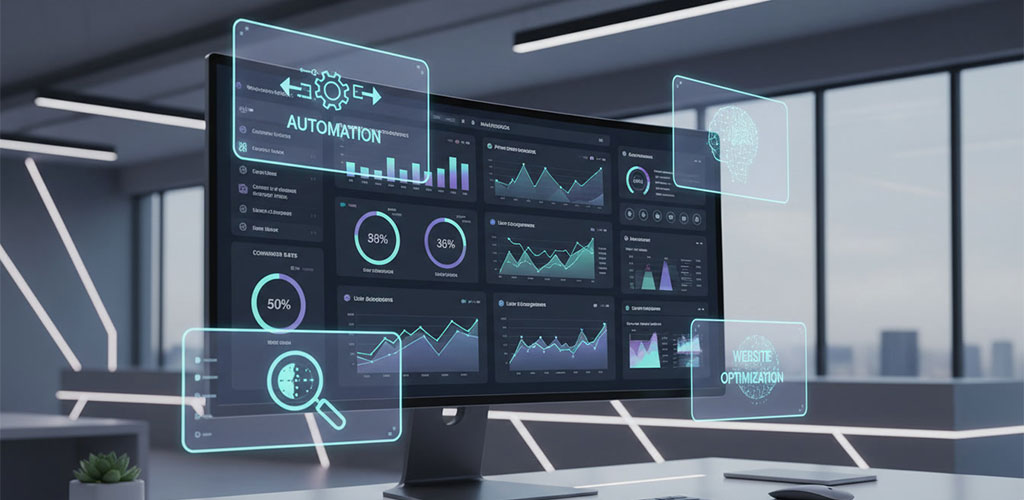
With campaigns like Performance Max and Dynamic Search Ads, manual control is shrinking while automation is expanding. Advertisers now give Google their goals and creatives, and the AI takes care of the rest—from placements to audiences.

This shift is convenient but not always transparent. While some campaigns may show improved results in terms of cost per conversion or click-through rate, it’s often hard to understand exactly why or how the results came about. This is where your own data plays a crucial role.

Why You Should Look at Your Own Metrics

It’s tempting to trust Google’s recommendations at face value, especially when the platform reports improved results. However, blindly following AI suggestions can sometimes lead to inflated metrics that don’t align with your business goals.

Start by digging into your actual performance data. Compare AI-powered campaigns (like Performance Max) with manually managed campaigns over a defined time frame. Check the bounce rates, average session durations, and post-click behavior from Google Analytics or other analytics tools. Are users from AI campaigns truly engaging more deeply, or just clicking more?

In many cases, AI might optimize for easier wins—users who are likely to click but not necessarily those who are likely to buy or sign up. Your job is to look beyond surface-level performance and track meaningful outcomes.

Understanding Click Quality vs. Click Quantity

AI can drive a large number of clicks quickly, but not all clicks are created equal. Click quality is determined by what users do after clicking your ad. Do they stay on your site? Do they add products to the cart? Do they convert?

You might notice that some campaigns have low cost-per-click (CPC) but also low conversion rates. This could mean that AI is prioritizing cheaper clicks rather than more valuable ones. Conversely, a slightly higher CPC from a manual campaign might yield a better return on investment if those users are more likely to convert.

When AI Clicks Work Well

AI works best when it has enough data to learn from. If your account has a history of strong conversion tracking, defined goals, and clear audience signals, AI can truly improve your performance. Many eCommerce businesses with large inventories see great success with Performance Max campaigns because AI can match the right product with the right customer at scale.

Additionally, when you’re testing new markets or keywords, AI can help discover untapped opportunities by analyzing patterns too complex for humans to recognize. In these cases, AI clicks often do outperform traditional campaigns—but only when the inputs (ad copy, landing pages, tracking setup) are strong.

When AI Clicks Fall Short

On the flip side, AI campaigns can fail when conversion tracking is poorly set up or business goals are unclear. If Google doesn’t have the right signals, it may optimize for irrelevant clicks that don’t drive real business results. This often happens with lead generation campaigns, where AI may prioritize form fills over qualified leads.

Small businesses or niche markets may also find that AI doesn’t understand their target audience as well as a human marketer would. In such cases, manual targeting and bidding can still outperform automated solutions.

A Balanced Approach Is Key

Rather than choosing between AI and manual strategies, a hybrid approach is often best. Use AI tools where they make sense—such as bidding or targeting—and combine them with manual insights about your audience, brand message, and goals.

Test AI campaigns against traditional campaigns using A/B testing or campaign experiments. This helps you identify what’s truly working for your business rather than relying on generic platform claims.

Final Thoughts

Google’s AI is powerful, but it’s not infallible. While the platform may advertise that AI-generated clicks are better, it’s your data that ultimately tells the truth. You should always monitor key metrics, understand your customer behavior, and validate AI performance with real outcomes.

Don’t assume that automation equals optimization. Use your own campaign data to guide decisions, and treat AI as a helpful assistant—not the final decision-maker. By doing so, you’ll ensure that your ad budget is spent wisely and your marketing goals are achieved more effectively.

Ecommerce SEO Services in India

In the fast-moving world of online shopping, visibility on Google can make or break an ecommerce business. Over the past year, Google has introduced subtle yet significant changes to its ecommerce Search Engine Results Page (SERP) features. These updates are designed to improve user experience while reshaping how ecommerce brands position themselves in search rankings. If you’re in the business of selling online or providing Ecommerce SEO Services in India, understanding these updates is critical to staying competitive.

The search landscape is no longer just about ranking in the top 10 blue links. It’s about owning rich results, image packs, shopping carousels, product grids, and local listings—all of which are part of the evolving SERP features.

Let’s explore what’s changed in Google’s ecommerce SERP features between 2024 and 2025, and why businesses need to adapt fast.

The Shift Towards Visual Shopping Experiences

Google is prioritizing visuals like never before. While 2024 saw a growing emphasis on image packs and product thumbnails, 2025 has taken it further. Product results are now shown in richer formats with larger images, enhanced price badges, and even live stock availability.

For ecommerce brands, this means that structured data implementation is not optional anymore. Schema markup, high-quality product photos, and accurate stock levels directly influence whether your product shows up in these visual spaces.

Integration of AI-Powered Shopping Guides

In 2025, Google’s SERP features have started incorporating AI-generated shopping guides based on user behavior and preferences. These guides summarize reviews, compare products, and suggest alternatives—all without the user leaving the search page.

Compared to 2024, when users had to manually compare options or rely on ads, the current version allows for deeper user engagement directly in the SERP. This makes it more important than ever for ecommerce businesses to optimize product pages not just for keywords, but for value-added content like FAQs, reviews, and unique selling points.

Enhanced Product Listings and Local Integration

Google has made a serious push towards connecting online and local retail. In 2024, product listings were mostly focused on online merchants. But in 2025, more “nearby” filters and maps are integrated with product availability.

If you’re selling online in India and targeting local customers, this is a great opportunity. Local ecommerce brands can now show product availability in their physical stores via Google’s Merchant Center and Business Profile integration. For agencies providing Ecommerce SEO Services in India, this feature allows clients to dominate both local and national search results.

The Rise of Zero-Click Ecommerce

Another major shift in 2025 is the increase in zero-click searches. With Google showcasing more complete product information right on the search page, users are completing their buyer journey without ever clicking through to a website.

In 2024, ecommerce websites still had a better chance of getting traffic from organic search. But now, unless your brand appears in featured snippets, product cards, or knowledge panels, you might lose out. To stay visible, ecommerce businesses must focus on appearing in these smart features by providing detailed, structured content and submitting accurate feeds to Google Merchant Center.

More Emphasis on User-Generated Content and Trust Signals

Google now gives more weight to authentic reviews, ratings, and user-generated photos. Compared to 2024, when reviews were mostly supplemental, in 2025 they are often featured directly in shopping carousels and knowledge panels.

Encouraging customers to leave honest feedback and upload product images now impacts your SERP visibility directly. Ecommerce sites should also highlight trust signals like free shipping, return policies, and verified brand status—all of which Google now displays in enhanced listings.

Mobile SERP Evolution and the Role of Page Experience

With mobile-first indexing still dominant, Google’s 2025 SERPs are even more tailored to mobile users. Compared to the 2024 design, today’s mobile results show sticky carousels, quick comparison boxes, and AI-powered product summaries.

This means your mobile site must load fast, be easy to navigate, and offer seamless checkout. Poor mobile experience could mean your product doesn’t show up at all, even if it ranks well on desktop. This shift highlights the importance of technical SEO and responsive design for ecommerce platforms.

Final Thoughts

The evolution of Google’s ecommerce SERP features from 2024 to 2025 reflects a broader change in how people shop online. Google is trying to reduce friction in the buyer journey, and that means offering more information upfront.

For ecommerce businesses and SEO professionals alike, the takeaway is clear: the SERP is no longer just a path to your site—it is the shopping experience. To thrive, you must treat every element of the search results page as your storefront.

If you’re looking to grow your online visibility and compete in this changing landscape, working with an expert team offering Ecommerce SEO Services in India could be your smartest investment in 2025.

Magento Development in India

Introduction to Magento Development

Magento is one of the most powerful open-source platforms used for creating feature-rich and scalable eCommerce websites. Businesses that aim to expand their online presence and improve customer experience often choose Magento because of its flexibility, robust functionality, and customization capabilities. In India, the demand for Magento development services is growing rapidly as more companies shift towards online retail.

Why Choose a Magento Development Company in India

India has become a global hub for IT services, and Magento development is no exception. With a vast pool of experienced developers, cost-effective pricing, and a deep understanding of eCommerce trends, Indian Magento companies are preferred by clients worldwide. These companies offer end-to-end services—from planning and design to development and maintenance—ensuring your eCommerce store performs efficiently across all devices.

Expertise That Drives Results

A good Magento development company in India doesn’t just build a website. It constructs a platform aimed at increasing conversions and generating sales. From creating responsive designs to integrating secure payment gateways and optimizing site performance, the focus is always on delivering value. With Magento, businesses can manage multiple stores, use advanced marketing tools, and access detailed customer reports—all within a single platform.

Customized Solutions for Every Business

Every business has unique requirements, and that’s why customization is key in Magento development. Whether it’s building custom modules, integrating third-party APIs, or developing mobile-friendly features, a Magento development company in India tailors each solution based on the client’s goals. This approach ensures the final product is not only functional but also aligns with the brand’s identity and target audience.

Ongoing Support and Maintenance

Building a Magento store is just the beginning. A trustworthy Indian company provides continuous support and maintenance to ensure your website remains secure and up-to-date. This includes regular performance checks, bug fixes, security patches, and feature upgrades. Continuous support helps businesses stay ahead of competitors and maintain a smooth shopping experience for their customers.

Affordable Yet High-Quality Services

One of the main reasons businesses choose an Indian Magento development company is the cost advantage. While prices are competitive, there is no compromise on quality. Skilled developers follow international standards and best practices, delivering top-notch Magento solutions that match client expectations.

Conclusion

If you are considering constructing or enhancing your online store, collaborating with a Magento development company in India is a wise decision. With their technical expertise, commitment to quality, and customer-centric approach, you can launch a high-performing eCommerce store that drives growth and builds lasting customer relationships. By selecting the appropriate Magento partner, you can guarantee that your business is prepared for the future in a constantly changing digital environment.

Locations of Interest

Introduction

Google Ads has taken another step forward in improving campaign precision by introducing a new feature called “Locations of Interest” targeting to its AI-powered Search campaigns — particularly within Performance Max for Search. This update is designed to help advertisers better understand and reach potential customers based on where they are or what places they are interested in. As the digital advertising landscape evolves rapidly with AI integration, this feature adds a layer of intelligence and relevance to targeting strategies.

What is ‘Locations of Interest’ in Google Ads?

‘Locations of Interest’ is a targeting setting that allows advertisers to reach users not only based on their current or past physical locations but also based on the places they show intent toward — for example, places they’ve searched for, browsed content about, or plan to visit. This could include countries, cities, neighborhoods, or even specific areas users are researching or traveling to. Google uses signals from a user’s activity across Search, Maps, YouTube, and other properties to determine this intent.

Why Is This Update Important?

Previously, advertisers could target locations using options such as “Presence” (people in or regularly in a location) or “Search Interest” (people who show interest in a location). With the introduction of AI-driven features in Performance Max and Search campaigns, advertisers now get a more seamless and automated way to include both presence and intent signals. This makes the targeting smarter, especially for businesses looking to attract customers who are planning future visits to a place — like tourists, relocating individuals, or people researching a service provider in another city.

How This Fits Into AI-Powered Campaigns

AI is already playing a huge role in Google Ads through automated bidding, responsive search ads, and Performance Max campaigns. The new ‘Locations of Interest’ feature is another example of how AI is helping advertisers move beyond rigid targeting settings to more flexible, real-time, and intent-based signals. By incorporating this data, campaigns can reach users when they’re in the consideration stage, which is often when advertising can have the greatest impact. For example, a hotel in Goa can now automatically target people who are not physically in Goa but are actively researching vacation options there.

Benefits for Businesses and Advertisers

This targeting method offers great potential for businesses in travel, hospitality, real estate, education, and local services. A university in the US can now reach students in India who are exploring studying abroad. A real estate company in Dubai can attract people from London who are searching for property investment opportunities in the UAE. The focus is no longer limited to geography alone — now it’s about the user’s interest in a location, making the campaigns more strategic and aligned with user behavior.

Data-Driven Insights and Smarter Reach

Along with improved targeting, advertisers will also benefit from more refined reporting. Google Ads now shows more detailed insights into which locations users are actually interested in, even if those places aren’t where they currently reside. This means you can adjust your budget, bids, and messaging based on user intent and not just physical presence. For example, if a brand notices increased interest from users in New York looking at properties in Miami, they can shift more ad spend to reach that audience effectively.

Impact on Campaign Performance

With the added intelligence of Locations of Interest, advertisers may notice improvements in metrics like conversion rates, cost-per-acquisition, and click-through rates. By connecting with users based on interest rather than just geography, ads are more likely to resonate and drive meaningful action. Since Performance Max already relies heavily on automation and AI, this targeting layer makes it even more performance-focused without increasing manual work for advertisers.

Considerations Before Using the Feature

While this feature offers advanced targeting capabilities, it’s essential for advertisers to monitor their campaign data and ensure they’re reaching the right audience. Google still provides options to exclude certain locations if needed. For example, if you want to prevent your ad from showing to users who are only casually interested in a place but unlikely to convert, you can adjust location exclusions or use more specific audience signals. Testing and optimization are still important even when AI takes the lead in campaign management.

Conclusion

By including the targeting of ‘Locations of Interest’ in Google’s AI-driven Search campaigns, the company is clearly advancing toward more intelligent, intent-based advertising. By understanding not only where people are but also where they’re planning to go or show interest in, businesses can connect with potential customers in a more personalized and timely manner. As Google continues to innovate with AI in advertising, features like this will help advertisers stay competitive, relevant, and more connected to user intent than ever before.

Google Merchant Center Supercharges Your Google Ads

Understanding Google Merchant Center and Its Purpose

In the world of online advertising, product visibility plays a crucial role in determining sales success. For eCommerce businesses or any retailer wanting to promote their physical or digital products, Google Merchant Center (GMC) is an essential tool. It acts as the bridge between your store’s product data and Google’s advertising platform—Google Ads. By uploading your product catalog to GMC, you allow your items to appear in Google Shopping results, making it easier for interested customers to find and buy from you.

It’s not only about product listings in Google Merchant Center. It’s about sending accurate, up-to-date product data directly to Google so that your ads can match relevant searches. When used correctly with Google Ads, it opens up a powerful channel for paid product promotion.

How Google Merchant Center Works with Google Ads

Once your product feed is set up and active in Google Merchant Center, you can link it to your Google Ads account. This connection allows you to run Shopping Ads, which appear at the top of Google’s search results with rich details like product images, prices, brand names, and ratings. These visually appealing ads stand out compared to text-based ads and typically lead to higher engagement from potential buyers.

But Shopping Ads are not the only format where GMC plays a role. It also supports Performance Max campaigns, which use your product feed to serve ads across multiple Google networks including YouTube, Display, Gmail, Discover, and Search. This means your products reach users wherever they are in the Google ecosystem—not just in search results.

Types of Google Ads That Benefit from Google Merchant Center

The most notable ad formats that work with Merchant Center are:

Shopping Ads: These are created solely from your GMC product feed. When a user searches for a specific product, Google pulls relevant items from your feed to show as ads with product images, pricing, and store info.

Performance Max Campaigns: This new-generation campaign type uses automation and machine learning to deliver your product ads across multiple Google properties. It requires a product feed from GMC to display relevant listings.

Dynamic Remarketing Ads: If you want to retarget users who previously visited your site, dynamic remarketing powered by your Merchant Center data will show them the exact products they viewed before—creating personalized ad experiences that drive conversions.

Why Google Merchant Center is a Game-Changer for eCommerce

When users search for products online, they often don’t know which store they want to buy from. They’re looking for the right item at the right price. This is where having your products in Google Merchant Center gives you an edge. With Shopping and Performance Max campaigns pulling data directly from GMC, you ensure your products appear at just the right moment to the right user.

By managing your product data carefully in Merchant Center—keeping your titles clear, pricing accurate, and stock updated—you increase the chances of being selected by Google to appear in more searches. And with performance insights available within GMC, you can continually optimize your listings for better results.

Optimizing Your Product Feed for Better Ad Results

A strong product feed is the foundation of success. This means writing clear product titles, adding high-quality images, specifying accurate availability and pricing, and ensuring your landing pages match what you advertise. Google uses this data to determine the relevance and quality of your listings.

Additionally, GMC allows you to apply promotions or special offers that show directly in your Shopping Ads, making your products more attractive to potential customers.

Combining Strategy and Automation for Growth

The real power of Google Merchant Center with Google Ads lies in the combination of structured data and smart advertising. While Merchant Center handles the product side, Google Ads takes care of reaching the right people through targeting, bidding, and ad placement.

With machine learning-driven campaigns like Performance Max, Google automatically identifies the best audience segments and platforms to show your ads. You only need to ensure your Merchant Center feed is healthy and up to date.

Final Thoughts

If you’re an eCommerce brand or sell physical products online, integrating Google Merchant Center with your Google Ads strategy isn’t optional—it’s essential. The synergy between product data and ad delivery allows your business to scale faster, reach broader audiences, and turn more browsers into buyers.

By mastering this connection, you unlock the full potential of product-based advertising on Google. Whether you’re looking to increase visibility, re-engage past visitors, or maximize return on ad spend, Google Merchant Center is your gateway to smarter, more effective Google Ads.