Latest Social Media Updates in 2026: New Features and Trends Businesses Should Know

Category Archives: Smo

Social media is changing quickly, and new features are being introduced to improve the way people communicate, share content, and connect with businesses. Platforms such as Instagram, Facebook, LinkedIn, TikTok, and YouTube are regularly introducing new tools to improve the user experience.

For businesses, these changes create new opportunities to reach customers, promote products, and build stronger relationships with their audiences. Staying informed about the latest social media updates can help businesses make better marketing decisions.

Let’s explore some of the important social media updates and trends in 2026.

Instagram Is Expanding Content Creation Opportunities

Instagram continues to introduce new ways for creators and businesses to share content. Its Edits app is providing more video editing options, helping creators prepare engaging videos without depending on multiple editing applications.

Instagram is also testing new options for longer videos, giving selected creators an opportunity to share interviews, podcasts, and other detailed content. These developments show that video content continues to play an important role in social media marketing.

Businesses can use short videos, product demonstrations, customer experiences, and informative Reels to connect with their audiences.

Facebook Is Giving Users More Feed Control

Facebook is introducing more ways for users to control the content they see. Its Your Algorithm feature allows users to express their interests and adjust the topics appearing in their Feed and Reels.

This development highlights the importance of sharing relevant and interesting content. Businesses should focus on understanding their audiences instead of publishing promotional posts regularly.

Useful information, customer stories, product details, and entertaining posts can help brands create better connections with their followers.

LinkedIn Is Introducing New Networking Features

LinkedIn remains an important platform for professional networking and business promotion. In November 2026, LinkedIn introduced Business Cards, a feature designed to make connecting with people easier during in-person meetings and professional events.

This type of update creates new opportunities for professionals to build connections and expand their networks.

Businesses can use LinkedIn to share company news, industry knowledge, professional achievements, and service information. Regular and meaningful communication can help improve brand visibility and professional relationships.

TikTok Is Improving User Interaction

TikTok continues to develop features that make communication between creators and viewers more interactive. New comment options include polls, photo-based replies, and voice comments.

These features give users different ways to share their opinions and participate in conversations.

For businesses, interactive content can be a useful way to understand customer interests. Brands can ask questions, create simple polls, share product videos, and respond to comments to encourage audience participation.

YouTube Continues to Support Video Creators

YouTube is also introducing new tools to support creators and improve video production. Its creator-focused developments include additional editing and content creation options.

Video content remains useful for businesses that want to explain their products and services in detail. Tutorials, product demonstrations, customer reviews, and educational videos can help viewers understand a brand more clearly.

Businesses should focus on making videos informative, interesting, and relevant to the people they want to reach.

Why Social Media Updates Matter for Businesses

Social media updates are not only about new features. They also influence how businesses communicate with customers and present their brands online.

When platforms introduce new tools, businesses get more opportunities to experiment with different content formats. A company can use short videos to explain its services, informative posts to answer customer questions, and interactive content to understand audience preferences.

However, using every new feature is not necessary. Businesses should choose tools that match their marketing goals and customer interests.

Conclusion

Social media platforms will continue to introduce new features and improve their existing services. From Instagram’s video tools to LinkedIn’s networking features and TikTok’s interactive comments, these changes are creating new opportunities for businesses and content creators.

The key is to stay updated, understand what the audience wants, and create useful content consistently. Businesses that focus on meaningful communication and adapt to relevant changes can build a stronger online presence in 2026 and beyond.
Rebuild Trust on Social Media

Social media has become a central part of how people connect, share information, and make decisions. From discovering news to choosing products, millions rely on platforms like Facebook, Instagram, Twitter, and LinkedIn every day. However, over the past few years, trust in social media has been steadily declining. Fake news, misleading advertisements, algorithm-driven feeds, and privacy concerns have all contributed to this breakdown.

Why Trust on Social Media Is Declining

People are more cautious than ever about the content they encounter online. False information spreads quickly, sometimes faster than verified facts, creating confusion and skepticism. Paid promotions and influencer marketing, when not transparent, can also erode trust. Users want authenticity, but they often feel manipulated by hidden algorithms or sponsored content. Privacy scandals and data misuse add another layer of doubt, making users question whether these platforms truly have their best interests in mind.

The Importance of Rebuilding Trust

Without trust, social media loses its value for both users and brands. Users are less likely to engage with content or follow recommendations when they feel unsure about its credibility. For businesses, this means lower engagement, weaker brand loyalty, and reduced conversions. Rebuilding trust is no longer optional—it’s essential for creating meaningful connections with audiences.

How Brands Can Rebuild Social Media Trust

Transparency is key. Brands should clearly disclose sponsored content, partnerships, and any potential conflicts of interest. Authentic communication also helps; sharing behind-the-scenes stories, honest updates, and user-generated content creates a sense of reliability. Listening to audience feedback and responding thoughtfully demonstrates care and commitment. Privacy and data protection are equally important. Ensuring users’ information is secure and used responsibly strengthens confidence in your brand.

Consistency matters as well. Posting accurate information regularly and avoiding exaggerated claims shows that a brand values integrity over short-term gains. Finally, building communities instead of just pushing promotions encourages genuine interaction. When users feel valued and heard, trust naturally grows.

Moving Forward

Rebuilding trust on social media is a long-term effort, but it is achievable. By prioritizing transparency, authenticity, and security, brands can repair damaged relationships and foster loyal audiences. Social media may face challenges, but with the right strategies, it can continue to be a space for meaningful connections and informed decision-making.

Social Media Now Beating SEO

Introduction

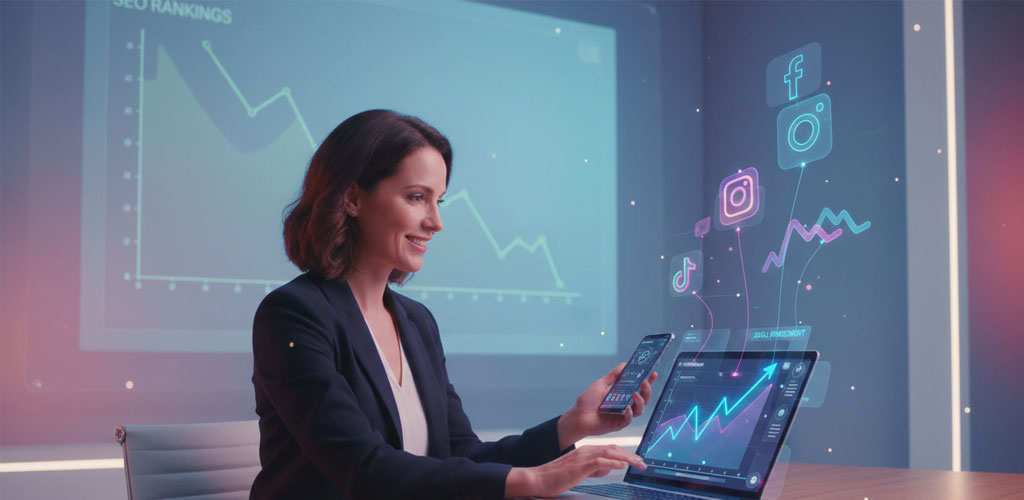
In today’s digital world, every small business wants more customers, more visibility, and more consistent traffic. For years, SEO was the main focus because ranking on Google meant steady visitors. But things have changed. Recent surveys show that social media is now bringing more traffic to small and medium-sized businesses than SEO. This shift is happening because customers are spending more time on social platforms and discovering brands through quick, engaging content.

How Social Media Took the Lead

Small businesses are seeing faster results from social platforms. When you post a reel, share a story, or create a trending short video, it can immediately reach hundreds or thousands of people. This instant visibility is something SEO cannot always match. SEO requires time, optimization, and patience before showing results, while social media offers real-time engagement.

Many small business owners are also investing in Social Media Marketing Service providers because they help create consistent content, run targeted ads, and build a community. This allows businesses to stay active and visible every day.

Why Small Businesses Prefer Social Media Over SEO

Small businesses love channels that show quick results. On social platforms, people can like, comment, share, and message instantly. This helps brands build a strong relationship with their audience. It also gives businesses a chance to show their personality through videos, behind-the-scenes content, and daily updates.

SEO is still important, but it doesn’t always give immediate traffic. Google’s algorithm changes, ranking competition, and long content requirements make it a longer process. Social media, on the other hand, offers a more direct path to reach and engage customers.

The Power of Direct Interaction

One of the biggest reasons social platforms are winning is the ease of direct communication. Customers can send a message, ask a question, or browse a product catalogue without leaving the app. This smooth experience increases trust and drives faster conversions.

Businesses using a strong Social Media Marketing Service also get creative strategies that help them stay active across platforms like Instagram, Facebook, and TikTok. These platforms make it easier for users to discover new brands through trends, recommendations, and short videos.

Does This Mean SEO Is Dead?

Not at all. SEO is still necessary for long-term growth. It helps businesses build credibility and appear in search results when customers need them. However, social media is currently providing faster and more interactive traffic, which is why small businesses are prioritizing it.

The smart approach is to balance both. Use social platforms for quick visibility and engagement while maintaining SEO for long-term online presence.

Conclusion

Social media has become the top traffic source for small businesses because it offers speed, visibility, and direct customer interaction. With engaging content and the right Social Media Marketing Service, small businesses can build a loyal audience and attract consistent traffic. While SEO remains important, social media is proving to be the most powerful channel for fast and meaningful customer reach in today’s digital landscape.

How Meta Is Changing the Game by 2026

Digital marketing is evolving at lightning speed, and one of the biggest revolutions on the horizon is the rise of fully automated advertising. Meta, the parent company of Facebook and Instagram, is leading this transformation, with plans to make ad creation almost completely autonomous by 2026. This shift promises to change how businesses of all sizes plan, design, and launch their ad campaigns. But what does this mean for brands, marketers, and everyday users who interact with these ads? Let’s dive deeper into how Meta’s automated advertising will redefine digital marketing and why you should prepare for it now.

The Move Toward Automation

Advertising on social media platforms has traditionally required multiple steps: designing creatives, writing ad copy, setting budgets, targeting audiences, and constantly optimizing campaigns. While tools like Meta Ads Manager have simplified this process over time, it still requires hands-on effort and expertise to achieve good results. Meta’s new approach to advertising takes this one step further by allowing artificial intelligence to handle nearly every stage of the process.

By 2026, businesses may only need to set their goals and budgets, and Meta’s AI will create, launch, and optimize ads without human intervention. The system will analyze millions of data points in real-time, predicting which creatives will work best for each audience segment. This level of automation could help businesses save time, reduce costs, and achieve better ad performance with minimal manual effort.

How Meta’s AI-Driven Ads Work

The foundation of Meta’s automated ads is generative AI. This technology allows machines to produce high-quality creative assets, from images and videos to ad copy that resonates with specific audiences. Instead of spending hours creating multiple versions of an ad, brands will be able to rely on Meta’s AI to instantly generate tailored creatives based on user preferences, browsing behavior, and engagement patterns.

Meta has already introduced early versions of AI-powered creative tools, such as automatic background generation and text suggestions for ads. Over the next year, these tools will evolve into a fully integrated ad creation engine. By 2026, businesses could potentially input a single product description and budget, and Meta’s AI will handle everything from design to targeting, delivering ads optimized for the best return on investment.

Why Automation Matters to Businesses

The promise of automated ads is not just about convenience; it’s about performance. Traditional digital marketing campaigns require extensive testing, tweaking, and budget allocation to determine what works best. With AI taking over these repetitive tasks, businesses can focus on strategy rather than execution. Meta’s AI will continuously learn from user interactions, adjusting ad placements, creatives, and targeting on the fly. This means businesses can get better results with fewer resources, making digital advertising more accessible to small businesses that might not have a full-time marketing team.

Automation has the potential to revolutionize small business ownership. Imagine a local bakery or clothing store that does not have the budget to hire a digital marketing expert. With automated ads, they could simply set their goals—such as increasing foot traffic or online sales—and let Meta’s system handle the rest. This could level the playing field between small businesses and large corporations, giving everyone a chance to run high-quality ad campaigns.

The Impact on Marketing Professionals

While automated ads may sound like they are replacing the need for marketers, the reality is quite different. Instead of handling technical tasks like ad placement and creative testing, marketing professionals will shift their focus to strategy, brand storytelling, and audience engagement. In other words, the human touch will still be vital.

Marketers will need to learn how to guide AI systems effectively by providing the right inputs and aligning ad campaigns with a company’s broader goals. They will also need to analyze AI-generated insights to understand consumer behavior and improve future campaigns. So, rather than eliminating jobs, automation is likely to create new opportunities for marketers to become more strategic and creative.

What It Means for Users

For everyday social media users, automated ads mean a more personalized experience. Since AI can analyze user behavior in real-time, the ads people see will be more relevant, engaging, and tailored to their interests. While this raises some privacy concerns, Meta has stated that it will prioritize user consent and transparency as part of its future ad strategy.

The upside for users is that irrelevant or repetitive ads will become less common. Instead, users will see ads that feel like they were made just for them—whether it’s a product they’ve been looking for or a service that matches their lifestyle. This shift could make ads less of an interruption and more of a helpful part of the online experience.

Preparing for the Future

As 2026 approaches, businesses should start preparing for this shift in advertising. While automation will simplify campaign management, the need for strong brand messaging, clear objectives, and high-quality content will remain. Businesses should focus on building a strong brand identity that AI tools can use as a foundation for creative generation.

It’s also important for companies to invest in learning how to work with AI. Understanding how automated ads function will help brands provide better input, interpret performance data, and ensure that campaigns remain aligned with business goals. When automated advertisements become commonplace, firms that adopt AI now will have a stronger chance of succeeding.

The Ethical Side of Automation

One challenge with automated ads is maintaining authenticity and trust. As AI takes over ad creation, there is a risk that campaigns could become too generic or impersonal if not guided properly. Brands need to ensure that their unique voice and values are not lost in the process. Transparency will also be key, as users will want to know when they are interacting with AI-generated content.

Meta is aware of these challenges and is expected to implement guidelines and tools to help brands maintain authenticity while using automated systems. Businesses that prioritize ethical marketing and user trust will likely gain a competitive edge in the AI-driven landscape.

The Future of Digital Advertising

The rise of automated ads is not just a trend—it’s the future of digital advertising. By combining the power of AI with the reach of platforms like Facebook and Instagram, Meta is aiming to make advertising smarter, faster, and more effective than ever before. Businesses that adapt to this new way of marketing will have a significant advantage, while those who resist may struggle to keep up.

Automation does not mean the end of creativity or strategy. Instead, it frees marketers to focus on the big picture: creating meaningful connections with their audiences. As we move closer to 2026, the businesses that embrace this change will not just survive—they will thrive.

meta ads ai

In a bold move to redefine how brands connect with audiences, Meta has introduced a suite of generative AI tools designed to streamline and enhance the creative ad process. From video generation to branding elements, these tools offer marketers the ability to scale their campaigns with speed, efficiency, and personalization — all powered by artificial intelligence.

This latest announcement marks another significant step in Meta’s strategy to integrate advanced AI across its advertising ecosystem. By doing so, the tech giant aims to support advertisers in producing high-performing content with minimal manual input, opening new possibilities for campaigns across Facebook, Instagram, and other Meta platforms.

The Shift Toward Automation in Ad Creative

Creating compelling ad creatives has traditionally been a time-consuming process. Brands often invest significant resources into ideation, production, testing, and optimization. Meta’s new AI-driven tools challenge that model by introducing automation at nearly every stage.

One of the most impactful innovations is automated video creation. Brands can now input basic campaign details, and Meta’s AI generates video variations tailored to different audience segments. These videos can include diverse visuals, messages, and branding elements, offering a dynamic way to test and scale what works best — without relying on large production teams.

Personalized Ads at Scale

AI personalization isn’t new, but Meta’s version takes it further by blending automation with real-time learning. The platform’s tools allow businesses to deliver custom video and image ads based on factors such as user behavior, interests, and demographics.

Imagine launching a campaign with 10 different creative variations — each designed by AI based on your target audience’s preferences. Not only does this maximize relevance and engagement, but it also helps reduce ad fatigue, as users are shown content that feels fresh and directly tailored to them.

Elevating Brand Identity Through AI

Meta’s generative AI doesn’t stop at producing ad creatives — it also plays a role in elevating brand presence. With features that assist in logo placement, color adaptation, typography alignment, and tone of messaging, brands can maintain consistency across various formats and devices.

This means marketers no longer need to worry about design inconsistencies or formatting issues. AI ensures that every creative asset remains visually aligned with the brand’s identity, whether it’s an Instagram Reel, Facebook ad, or Story placement.

A Win for Small Businesses and Agencies

For small businesses and marketing agencies, these AI tools are game changers. Limited resources often prevent smaller players from producing high-quality creatives at scale. Meta’s solution levels the playing field by offering access to powerful design and video production capabilities without needing a full creative team.

Agencies can now focus more on strategy and less on execution, while small businesses can run polished, professional ad campaigns that rival those of much larger competitors.

Ethical and Creative Considerations

Like any AI development, there are concerns about human creativity and originality. Will marketers become too reliant on machine-generated content? Will AI-generated ads feel impersonal over time?

Meta has addressed some of these concerns by emphasizing that AI tools are designed to assist human creativity — not replace it. The goal is to reduce repetitive manual work so that creative teams can spend more time on strategy, storytelling, and meaningful engagement.

Looking Ahead: The Future of Advertising Is Here

With these tools now rolling out across Meta’s platform, the advertising landscape is changing rapidly. Brands that embrace AI-powered creativity will likely gain a competitive edge through faster content creation, deeper personalization, and improved performance.

As generative AI continues to evolve, marketers can expect even more powerful features — from predictive audience targeting to emotion-based content variations. Meta’s announcement is just the beginning of a broader shift in how digital advertising is imagined, executed, and optimized.