Reinventing Your Content Strategy: Why Traditional SEO Tactics No Longer Work

Category Archives: Seo

seo-tips

Introduction

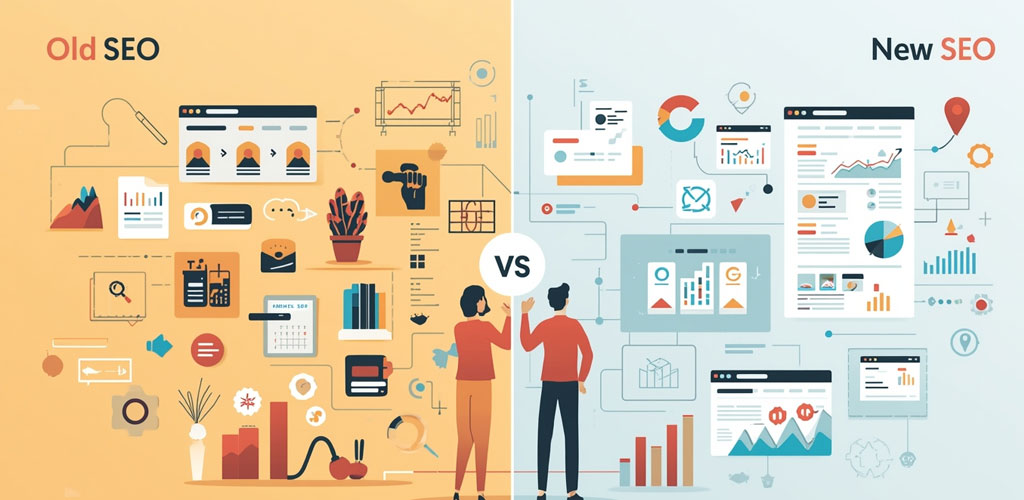
The world of digital marketing has undergone a seismic shift in recent years, and nowhere is this more evident than in the field of search engine optimization. Once considered the cornerstone of online visibility, traditional SEO practices have gradually lost their effectiveness. What worked five years ago—keyword stuffing, backlink farming, and rigid content structures—no longer holds the same weight in Google’s eyes. As user behavior evolves and search engines become more intelligent, brands and agencies must fundamentally rethink their approach to content. The era of robotic optimization is over; welcome to the age of meaningful engagement and authentic value.

The Fall of Formulaic SEO

For years, digital marketers followed a strict SEO playbook. The formula was simple: choose high-volume keywords, place them strategically in content, secure backlinks from various domains, and repeat the process until rankings improved. This method was often successful in the short term, but over time, it led to a web filled with mediocre and manipulative content. Search engines, particularly Google, caught on. Algorithm updates like Panda, Penguin, and most recently, helpful content updates, were specifically designed to penalize sites that focused more on gaming the system than helping users.

Today, content quality outweighs quantity, and keyword density is no longer the defining metric of success. Search engines now prioritize user intent, engagement, and topical relevance. This evolution demands that businesses produce content not just optimized for search engines but genuinely useful for human readers.

Audience Expectations Have Changed

Modern consumers are no longer passive searchers—they are informed, selective, and skeptical. They seek authentic, credible, and personalized content that directly addresses their needs. When they click on a blog or website, they expect a seamless experience, high-quality information, and quick answers. If they encounter generic, keyword-stuffed text with no real value, they leave.

This shift in user expectations has made it imperative for marketers and businesses to rethink their content strategies. Content is no longer just a tool for driving traffic; it is a key component of building trust and long-term relationships. Brands that understand this have already begun creating conversational, educational, and storytelling-driven content that resonates with audiences on a deeper level.

Private Label SEO Reseller India: Navigating the New Landscape

In this changing environment, agencies offering Private Label SEO Reseller India services are in a unique position. By adapting to the evolving landscape, these service providers can help businesses scale their digital presence more effectively. A modern SEO reseller understands that their role is no longer about merely building links or stuffing keywords into content—they are strategic partners that guide brands through the complexities of organic growth.

Private Label SEO Reseller India companies that adopt a content-first, audience-centered approach are setting themselves apart. By focusing on topical authority, search intent, and user experience, they deliver not just rankings but results that actually drive revenue. This is critical at a time when clients are more focused on return on investment than vanity metrics like traffic and impressions.

Content That Performs Is Content That Connects

Performance today isn’t just about how many people see your content, but how many engage with it meaningfully. Metrics like time on page, bounce rate, and scroll depth now serve as signals to search engines. If your content can’t hold a user’s attention, your rankings will eventually reflect that. The emphasis has shifted from writing for algorithms to writing for people.

This is where creativity, originality, and storytelling make all the difference. Rather than targeting ten loosely connected keywords in a 500-word blog post, a better approach is to explore a topic in-depth, answer common questions, and provide actionable insights. Blogs that read like conversations, offer real solutions, and reflect the brand’s personality tend to perform better across both search engines and social media.

SEO Is Now a Multi-Channel Industry

Another reason why the old SEO game is over is that organic search can no longer operate on its own.  It must now align with a more all-encompassing digital strategy. Content marketing, SEO, social media, and paid advertising all work best when coordinated.  For instance, a blog post that has been naturally optimized for search engines can also be transformed into social media snippets, email newsletters, or videos.

Private Label SEO Reseller India businesses who offer packaged services or collaborate closely with other digital teams can offer their clients more value. This comprehensive approach ensures increased cross-platform user activity tracking, consistent messaging, and brand consistency.

Search Engine Intelligence and AI

Another level of complexity has been introduced by artificial intelligence. Machine learning is increasingly used by search engines to evaluate sentiment, interpret context, and even comprehend idioms or slang. This implies that using strict keyword guidelines when generating content not only makes it seem archaic, but it also actively reduces your visibility. In order to better understand human language, Google’s BERT and MUM algorithms prioritize content that follows natural conversational patterns.

To stay relevant, content creators and SEO professionals must embrace natural language and semantic search. This requires deep audience research, topic clustering, and an emphasis on answering questions in ways that feel intuitive and human. Agencies like those involved in Private Label SEO Reseller India are beginning to leverage AI tools not just for automation but for deeper content insights, allowing them to stay ahead of the curve.

To stay relevant, content creators and SEO professionals must embrace natural language and semantic search. This requires deep audience research, topic clustering, and an emphasis on answering questions in ways that feel intuitive and human. Agencies like those involved in Private Label SEO Reseller India are beginning to leverage AI tools not just for automation but for deeper content insights, allowing them to stay ahead of the curve.

Thought Leaders Own the Future

Nowadays, being visible online involves more than just completing a list of technical SEO duties. The goal is to establish yourself as a respected authority in your field. Compared to formulaic blog entries, thought leadership content—original research, expert viewpoints, in-depth guides, and industry trends—earns more engagement, links, and trust.

Businesses who are aware of this change are increasingly emphasizing content strategy just as much as content execution. Together, they help their clients find original insights, craft gripping narratives, and create digital products that gradually garner interest. This is a long-term investment that yields returns in the form of organic growth, devoted customers, and improved brand recognition; it is not a quick win.

Conclusion

The rules of SEO have changed, and clinging to outdated methods will only hold your brand back. Success today requires a complete mindset shift—from manipulating search engines to genuinely serving your audience. This new era of SEO is defined by quality, relevance, and user experience. Whether you’re a brand looking to grow or a Private Label SEO Reseller India agency aiming to stay competitive, the path forward lies in reimagining your content playbook, embracing change, and prioritizing meaningful connections over mechanical optimization.


Mobile seo

As mobile internet usage continues to grow rapidly, having a website that performs well on mobile devices is no longer optional—it’s essential. Mobile SEO, or search engine optimization for mobile devices, plays a crucial role in ensuring that your website ranks well on search engines while providing a smooth and responsive experience for users browsing from smartphones and tablets. Whether you’re managing your own site or working with one of the Best SEO reseller companies, understanding the principles of mobile SEO is fundamental to online success.

Why Mobile SEO Is Important and What It Is

The practice of optimizing your website to make sure it is usable, accessible, and offers a positive user experience on mobile devices is known as mobile SEO. It includes technological, content, and design techniques that enhance the look and functionality of your website on smaller displays.  The mobile version of your website is seen as the primary version due to Google’s mobile-first indexing.  Your rankings may suffer even on desktop searches if your mobile site is unresponsive, difficult to use, or lacks important content.

Search engines have changed to reflect the movement in user habits toward mobile surfing. Mobile usability is emphasized by Google in particular as a ranking element. Fast-loading and mobile-friendly websites are more likely to rank higher than those that don’t. Because of this, mobile SEO is essential to any successful digital marketing plan.

Mobile SEO is based on responsive design.

One of mobile SEO’s most crucial components is responsive web design. It guarantees your website will adapt to any screen size, be it desktop, tablet, or smartphone. By eliminating the need to maintain distinct desktop and mobile versions of your website, this improves usability and streamlines maintenance.

Because it offers a consistent user experience, responsive design is preferred by search engines. A user may visit your website across many devices and experience uneven layouts or missing content, which may result in reduced engagement and greater bounce rates. According to Google’s own standards, the ideal option for mobile-friendly websites is responsive design.

Boost Site Speed for Better Mobile Experience  Performance

For mobile SEO, speed is a crucial ranking criteria. Websites must load fast for mobile visitors, and even a few seconds of delay can cause annoyance and page abandonment. By optimizing pictures, cutting out superfluous scripts, and utilizing browser caching, you may increase the speed of your website.

You can find performance problems on your website by using tools like Lighthouse or Google PageSpeed Insights. These tools offer recommendations based on the current configuration of your website.  Maintaining quick load times can have a direct effect on user happiness and search engine ranking.

The Key Is Mobile-Friendly Content

Although content is crucial to mobile SEO, the way it is displayed on mobile devices is different from that on desktops. Because mobile screens are smaller, lengthy text passages may be too much to handle. Rather, use headings to clearly divide content and keep paragraphs brief.

Additionally, font spacing and size should be adjusted for mobile viewing. Buttons and links should be simple to tap with the finger, and text should be readable without the need to zoom in. On mobile devices, stay away from utilizing pop-ups or invasive interstitials as these can detract from the user experience and result in search engine penalties.

Optimize Meta Tags for Mobile Search

Meta titles and descriptions should be crafted with mobile users in mind. On mobile devices, there is less screen space to display search results, so keeping your titles and descriptions short yet compelling can make a big difference in click-through rates.

Additionally, structured data can enhance how your site appears in mobile search results by enabling rich snippets. This can include things like star ratings, product availability, or FAQs, which help your listing stand out and attract more clicks.

Working with one of the best SEO reseller companies can help you implement these advanced SEO techniques effectively, especially if your in-house team lacks the resources or expertise.

An Important Aspect of Mobile Optimization Is Local SEO

Location is a major factor in mobile searches, particularly when users are trying to find nearby companies, goods, or services. Thus, local SEO optimization is a crucial component of mobile SEO.

Make sure your Google Business Profile is current and accurate, including the right categories, contact details, and operating hours. Throughout the content of your website, naturally incorporate your location and pertinent keywords. Additionally, you can improve your presence in mobile search results by including localized metadata and including a map.

Service-based companies that depend on local clients benefit even more from location-specific search optimization. You want to be the first company that appears when someone searches for a service in your area.

The Technical Aspects of Mobile SEO

There are several technological factors that affect how well your website works on mobile devices.  Another is mobile crawlability. Ensure that the resources and material on your website are fully accessible to search engine crawlers. Your robots.txt file should not block important image, JavaScript, or CSS files.

Usability on mobile devices is another important factor. Use Google Search Console to identify usability errors, such as content that is too large for the screen or clickable elements that are too close to one another.  Resolving these issues improves user experience while adhering to search engine guidelines.

Keep an eye on, evaluate, and adjust

Lastly, mobile SEO is a continuous process rather than a one-time setup.  Use tools like Google Analytics and Search Console to regularly check how well your website performs on mobile devices. These platforms give you information about how people use your website, which pages work best, and where you need to make changes.

Monitor data such as mobile conversions, average session length, and bounce rate. Utilize this information to inform your choices and gradually improve your approach.  Deeper insights and help for continuous optimization efforts can be obtained by collaborating with seasoned experts or the top SEO reseller businesses.

Conclusion

In today’s digital landscape, mobile SEO is not just a best practice—it’s a necessity. With most users accessing the internet via mobile devices, optimizing your website for mobile is crucial for visibility, engagement, and conversions. From responsive design and fast load times to mobile-friendly content and technical improvements, each aspect of mobile SEO plays a role in creating a successful online presence.

Whether you’re managing your SEO in-house or working with a trusted partner, keeping mobile optimization at the forefront of your strategy will ensure you stay competitive in search engine rankings and meet the expectations of your mobile audience.

search engine optimization

Synopsis: The Changing Digital Landscape

Because of shifts in technology, customer behavior, and search engine algorithms, the discipline of digital marketing is constantly evolving. Search engines may penalize something that functioned a few years ago or it may not work as well anymore. For businesses trying to increase their online presence, it is essential to comprehend how these developments affect search engine optimization (SEO). Businesses seeking long-term success are increasingly turning to professionals, such as an SEO reseller agency in India, to stay competitive in a market that is ever changing.

Automation and Artificial Intelligence’s Ascent in Marketing

Automation and artificial intelligence (AI) have fundamentally changed how marketers interact with consumers.  AI-powered solutions, such as automated customer journeys and predictive analytics, are assisting companies in reaching the right people at the right time.  This change has implications for SEO since it shows that search engines are getting better at comprehending context and human intent in addition to keywords.  High-quality information that provides comprehensive and lucid answers to users’ queries is given priority by Google’s algorithms, especially updates like BERT and MUM. This emphasizes how important it is to produce material that is both structured for semantic search and helpful.

The Function of Conversational Queries and Voice Search

The way people look for information has been completely transformed by the growing use of voice-activated gadgets. People now speak naturally into their smartphones, asking inquiries and using complete phrases, rather than inputting keywords. This trend compels SEO experts and digital marketers to concentrate more on conversational content and long-tail keywords. To increase visibility in featured snippets and voice search results, an SEO reseller agency in India must adjust by concentrating on user intent, optimizing for natural language, and integrating schema markup.

User Experience and Indexing for Mobile First

This shift to mobile-first indexing by Google highlights how important mobile user experience is becoming. For ranking purposes, the mobile version of a website is now regarded as the primary version. With this shift, companies need to make sure their websites are responsive, load fast, and work well on all devices. The focus of SEO has expanded to include site speed, design, readability, and ease of navigation in addition to keyword placement. Mobile optimization is becoming more and more important to agencies and companies who collaborate with Indian digital specialists as part of their SEO strategy.

The Increasing Importance of Content Quality and E-A-T

When assessing material, Google gives a lot of weight to Expertise, Authoritativeness, and Trustworthiness (E-A-T). For sectors like finance, healthcare, and legal services, where inaccurate information can have practical repercussions, this has become especially important. Content must be thoroughly researched, written by reliable sources, and backed up by authority backlinks in order to meet these standards. By creating excellent content and obtaining trustworthy backlinks using moral link-building techniques, an SEO reseller agency in India can play a significant role in assisting companies in establishing domain authority.

The Indirect Effects of Social Signals on SEO

Social media signals like likes and shares have a subtle but significant impact on SEO even if they are not direct ranking considerations.  Gaining popularity on social media sites like Facebook, Instagram, or LinkedIn boosts visibility, interaction, and possible backlinks—all of which improve search engine rankings.  Additionally, a strong social media presence increases brand recognition, which can lead to greater search engine results page (SERP) click-through rates (CTR). For comprehensive outcomes, digital marketers must thus combine social media tactics with SEO initiatives.

Data-Driven Marketing and Content Personalization

Marketers are now able to provide highly customized experiences thanks to their extensive access to customer data.  Engagement rates can be considerably raised by using dynamic content that changes according to user preferences, location, and behavior. Personalization helps SEO because it more precisely matches content to user intent, which raises conversion rates. Brands may use sophisticated analytics tools and tactics to customize their content and monitor results in real time by working with a data-savvy SEO reseller agency in India.

Video Marketing’s Influence on Search Engine Optimization

One of the most captivating content formats nowadays is video, and its importance in SEO is only going to increase. Video material frequently appears in search engine results, particularly when people are looking for product evaluations, lessons, or how-to guides. There are good SEO prospects on sites like YouTube, the second-largest search engine. Visibility can be increased by optimizing video titles, descriptions, transcripts, and thumbnails. Furthermore, adding videos to landing pages can improve dwell time and decrease bounce rates, two behavioral indicators that raise search engine rankings.

The Transition to Hyper-Targeting and Local SEO

Local SEO has become more popular as customers look for companies “near me.” For small and medium-sized businesses looking to draw in local clients, Google My Business SEO, location-based keywords, and locally relevant content are crucial. Strong local SEO foundations can be built by businesses with the assistance of an SEO reseller agency in India, particularly when aiming to reach regional markets in the US, UK, or Australia. Businesses can more successfully engage with their desired audience with hyper-targeted marketing that are backed by geo-specific data.

Technical SEO’s Function in Assuring Crawlability

Technical SEO makes ensuring that there are no barriers to search engines’ ability to crawl and index a website.  This covers elements like safe HTTPS protocols, XML sitemaps, canonical tags, clean code, and appropriate URL structure. As Google places more emphasis on user experience and website performance, technical SEO has become as important as content strategy.  If the website has crawl issues or slow load times, even the best-written content won’t rank.  Agencies that specialize in technical SEO, such as those in India, provide thorough audits and solutions to improve the backend structure of websites.

Sustainable SEO Techniques and Ethical Link Building

Purchasing backlinks and using unethical SEO techniques are things of the past.  Google’s algorithms have improved their ability to identify spam.  Ethical link-building strategies like guest posting, digital PR, and joint content are necessary for sustainable SEO.  These tactics build trust and long-term brand value in addition to improving rankings. Working with a reputable SEO reseller agency in India guarantees that link-building initiatives adhere to Google’s guidelines while producing quantifiable increases in domain authority and referral traffic.

Conclusion: Getting Ready for the Future of SEO and Digital Marketing

SEO and digital marketing are becoming closely related elements of a comprehensive web strategy rather than distinct fields.  Businesses need to stay flexible and proactive as user expectations and technology change.  The road to digital success necessitates constant learning and smart execution, whether that means adopting AI, optimizing for mobile, or placing a high priority on content quality.  Businesses may keep ahead of their rivals in the global market and successfully manage these changes by working with an experienced SEO reseller agency in India.

Seo Keyword Research

One of the most hotly contested issues in search engine optimization (SEO) is whether to focus on keywords with a large search volume or ones with less competition.  Both approaches have unique benefits and drawbacks, and the choice to prioritize one over the other frequently comes down to your objectives, available resources, and the type of organization you run.  In order to assist you decide how best to optimize your website, this blog article will examine the benefits and drawbacks of both approaches.

Recognizing Search Volume and Competition

The term “search volume” describes how frequently a specific keyword is searched for during a specified period of time, usually a month.  An opportunity to draw a sizable audience to your website is presented by a high search volume, which shows that many people are looking for that keyword.  Conversely, less popular terms are looked for less often, although this does not always imply that they are not useful.  Targeting these can occasionally result in more specialized, specialty traffic.

Competition, on the other hand, refers to how many other websites are competing for the same keyword. High competition means that many businesses or websites are trying to rank for the same keyword, making it harder to achieve a top position on the search engine results pages (SERPs). Low competition suggests that fewer websites are vying for that keyword, which could give you a better chance of ranking higher.

The Argument in Favor of Keywords with High Search Volume

Without a doubt, focusing on terms with a large search traffic will greatly expand your website’s potential audience. Theoretically, you may draw in more visitors by ranking for a term that more people are searching for. Businesses hoping to produce a lot of leads, sales, or website traffic may find this especially alluring.

Broader terms that are appealing to a large audience are typically high-volume keywords. For instance, a keyword like “buy shoes online” would probably have a large search volume if you were operating an online shoe business. You might attract a lot of visits if you were to rank for this term.

The fierce competition, however, is the largest obstacle to focusing on high-volume terms.  Since many well-known websites and big companies already rank for certain keywords, it is more difficult for new or smaller websites to become noticed. Because of this, optimizing for high-volume keywords frequently necessitates a substantial investment of time and resources, which may not be possible for everyone, particularly small enterprises or startups with tight budgets.

The Argument in Favor of Low Competition Keywords

Low competition keywords, sometimes known as “long-tail keywords,” are extremely focused and typically have fewer searches. These keywords typically target a specific population with a high conversion rate due to their obvious search intent.  In contrast to “buy shoes online,” a long-tail term such as “buy vegan leather shoes for women size 8” may have a significantly lower search volume, but it is more focused and caters to a specific consumer demographic.

The main advantage of concentrating on low-competition keywords is that ranking for them is frequently simpler. Because there is less competition due to fewer websites focusing on these terms, you have a better chance of achieving a high ranking in the SERPs with less work and expense. Furthermore, because these keywords are more focused, the traffic they bring in is usually more qualified, increasing the likelihood that visitors will complete a form, make a purchase, or subscribe to a newsletter.

Targeting low-competition keywords has the drawback that their search volume is frequently smaller.  Even if there will be fewer visitors overall, it’s crucial to remember that high-quality traffic is frequently more lucrative. Targeting long-tail keywords may prove to be a more viable long-term approach for companies operating in fiercely competitive sectors since it enables you to establish authority and carve out a niche.

Keeping Low Competition and High Search Volume in Check

For most organizations, a balanced approach may be the best course of action rather than concentrating only on keywords with low competition or high search volume. You may increase your chances of generating both huge traffic numbers and well quality leads by focusing on both kinds of keywords.

Using high-volume keywords is one strategy to build brand awareness and draw in a large audience.  In the end, these keywords might help position your website as a trustworthy resource in your sector, even though it could take longer to rank for them. Targeting long-tail, low-competition keywords, on the other hand, can increase the amount of qualified traffic that is immediately available and more likely to convert.

This can be achieved by optimizing for both primary and secondary keywords.  Your high-volume aims may be primary keywords, while your long-tail, low-competition searches may be secondary keywords.  They combine to create a comprehensive plan that offers you the best of both worlds.

How to Choose the Appropriate Website Keywords

Understanding your audience and matching your keyword approach to your business objectives are essential for SEO success.  To begin, find keywords that are pertinent to your business by performing in-depth keyword research. To identify keywords with a good balance of search volume and competitiveness, use tools like as Ahrefs, SEMrush, or Google Keyword Planner.

After determining your target keywords, research the competitors. Determine whether you have the resources necessary to contend with bigger competitors for high-volume keywords. Look for keywords that fit your demographic and niche to find low-competition terms.

Keep in mind that SEO is a long-term endeavor, and outcomes might not appear right away.  For both high-traffic and low-competition keywords, your results will progressively improve if you consistently provide high-quality content and work on your on-page SEO (such as optimizing titles, meta descriptions, and header tags).

In conclusion

There is no one-size-fits-all solution in the argument between optimizing for keywords with low competition and those with high search traffic. Both approaches present particular advantages and difficulties. While low-competition keywords are easier to rank for and frequently generate more qualified leads, they may have a smaller search volume than high-volume keywords, which can generate substantial traffic but are quite competitive.

The best course of action for the majority of organizations is to develop a comprehensive keyword strategy that incorporates both kinds of phrases. Targeting both low-competition and high-volume keywords can help you draw in a large audience and generate high-quality, conversion-oriented traffic.  You’ll be well on your way to long-term success as long as you concentrate on providing value to your audience and continuously improving your SEO strategy.