4 Simple Ways to Get Better Support for Technical SEO

Category Archives: Seo

Why Technical SEO Needs Team Support

Technical SEO is one of the most important parts of improving a website’s search performance. It helps search engines crawl, understand, and rank a website properly. But many businesses struggle to move technical SEO tasks forward because developers, managers, and stakeholders may not fully understand its value.

Sometimes technical fixes look small on the surface, but they can create a big impact on rankings, traffic, and user experience. To get technical SEO work approved and completed faster, it is important to build trust and explain the benefits clearly.

Focus on Business Results Instead of Technical Terms

One of the biggest mistakes SEO professionals make is using too much technical language. Terms like crawl budget, schema markup, or canonical tags may confuse decision-makers who are focused on revenue and growth.

Instead of explaining only the technical side, connect SEO improvements to business results. Show how faster website speed can improve conversions or how fixing indexing problems can increase organic traffic.

When people understand how SEO changes can support sales, leads, or customer experience, they are more likely to support the work. Clear communication always creates stronger buy-in.

Use Real Data to Show the Problem

People trust numbers more than opinions. If you want approval for technical SEO tasks, use data to explain the issue and its impact.

For example, if important pages are not indexed, show how much traffic those pages could generate. If the website is slow, share bounce rate or mobile performance data. Comparing current performance with competitors can also help stakeholders understand why action is necessary.

Data makes technical SEO feel less like a theory and more like a real business opportunity. It also helps teams prioritize SEO tasks more seriously.

Break Large SEO Tasks Into Smaller Steps

Technical SEO projects can sometimes feel overwhelming. Large website migrations, page structure changes, or Core Web Vitals improvements may require time and development resources.

Instead of presenting everything at once, divide the work into smaller tasks. Small wins are easier to approve and complete. Once teams start seeing positive results from smaller fixes, they usually become more open to bigger SEO improvements later.

For example, start with fixing broken pages, improving page speed for key landing pages, or optimizing mobile usability. Gradual progress builds confidence across teams.

Build Better Communication With Developers

Technical SEO work often depends on developers. If communication is weak, SEO tasks may get delayed or ignored. That is why collaboration is important.

Instead of only sending long SEO reports, try to explain tasks in a simple and organized way. Mention what needs to be fixed, why it matters, and how urgent it is. Screenshots, examples, and short explanations can make the process smoother.

It also helps to respect the developer’s workload and priorities. SEO works best when developers and marketers work together instead of separately. Strong teamwork leads to faster implementation and better website performance.

Final Thoughts

Technical SEO is not only about fixing website errors. It is about improving visibility, user experience, and business growth. But even the best SEO strategy can fail if teams do not understand its importance.

By focusing on business value, using real data, simplifying projects, and improving communication, it becomes much easier to gain support for technical SEO work. Technical SEO becomes more than simply another marketing duty when everyone recognizes the long-term advantages.

In today’s digital world, most people search online before choosing a lawyer or legal consultant. Whether someone needs help with divorce cases, property disputes, criminal defense, or corporate legal services, they usually begin with a Google search. You risk losing important clients to rivals if your legal practice is not listed on the first page. This is where a Law Firm SEO Company India can help your business grow.

What is Law Firm SEO?

Law Firm SEO is the process of improving a legal website so it ranks higher on search engines like Google. SEO helps law firms attract people who are actively searching for legal services online. A strong SEO strategy can increase website traffic, improve brand visibility, and generate quality leads for lawyers.

SEO is more concerned with long-term growth than paid advertising. Once your website starts ranking for important legal keywords, you can continue receiving traffic without spending money on ads every day.

Why Law Firms Need SEO Services

The legal industry is highly competitive. Many law firms offer similar services, which makes it difficult to stand out online. A professional Law Firm SEO Company India understands how to improve your website visibility and attract the right audience.

When potential clients search for terms like “best divorce lawyer,” “corporate lawyer near me,” or “criminal attorney services,” SEO helps your website appear in front of them. Higher rankings build trust because users often believe top-ranking websites are more reliable and professional.

SEO also improves user experience. A well-optimized legal website loads faster, works smoothly on mobile devices, and provides useful content that helps visitors understand legal services clearly.

Benefits of Hiring a Law Firm SEO Company India

One major advantage of working with an Indian SEO company is cost-effective service. Many businesses choose Indian SEO agencies because they provide quality digital marketing solutions at competitive pricing.

An experienced SEO company can help law firms with keyword research, content optimization, technical SEO, local SEO, and link-building strategies. They understand how to target keywords related to legal services and create content that attracts potential clients.

Another benefit is local SEO optimization. Many people search for lawyers within their city or region. A professional SEO team can optimize your Google Business Profile, local citations, and location-based keywords so your law firm appears in local search results.

Importance of Content in Law Firm SEO

Content plays a major role in legal SEO success. Informative blogs, service pages, and legal guides help users understand their legal problems while improving search engine rankings.

For example, if a law firm publishes articles about property disputes, business law, family law, or immigration services, Google recognizes the website as a valuable source of information. This increases website authority and improves ranking opportunities.

Simple and easy-to-understand content is especially important because many users searching for legal help may not understand complex legal terms. Clear explanations build trust and encourage visitors to contact your law firm.

Choosing the Right SEO Partner

When selecting a Law Firm SEO Company India, look for experience in legal marketing, transparent reporting, and ethical SEO practices.

A good SEO company will focus on long-term growth instead of quick shortcuts. They should provide regular updates, keyword tracking, and clear strategies to improve online visibility.

Communication also matters. Your SEO partner should understand your legal services, business goals, and target audience before creating a strategy.

Final Thoughts

People now rely on Google to find trusted lawyers and legal advisors. Investing in Law Firm SEO can help your practice attract more clients, improve credibility, and increase long-term business growth.

Choosing a reliable Law Firm SEO Company India gives law firms the opportunity to compete online effectively while building a strong digital presence. With the right SEO strategy, your law firm can reach more potential clients and grow consistently in the competitive legal market.

Understanding Generative Engine Optimization

Digital marketing is changing faster than ever. Earlier, websites only focused on ranking higher on search engines through traditional SEO methods. Today, artificial intelligence is transforming the way people search for information online. This shift has introduced a new concept called Generative Engine Optimization.

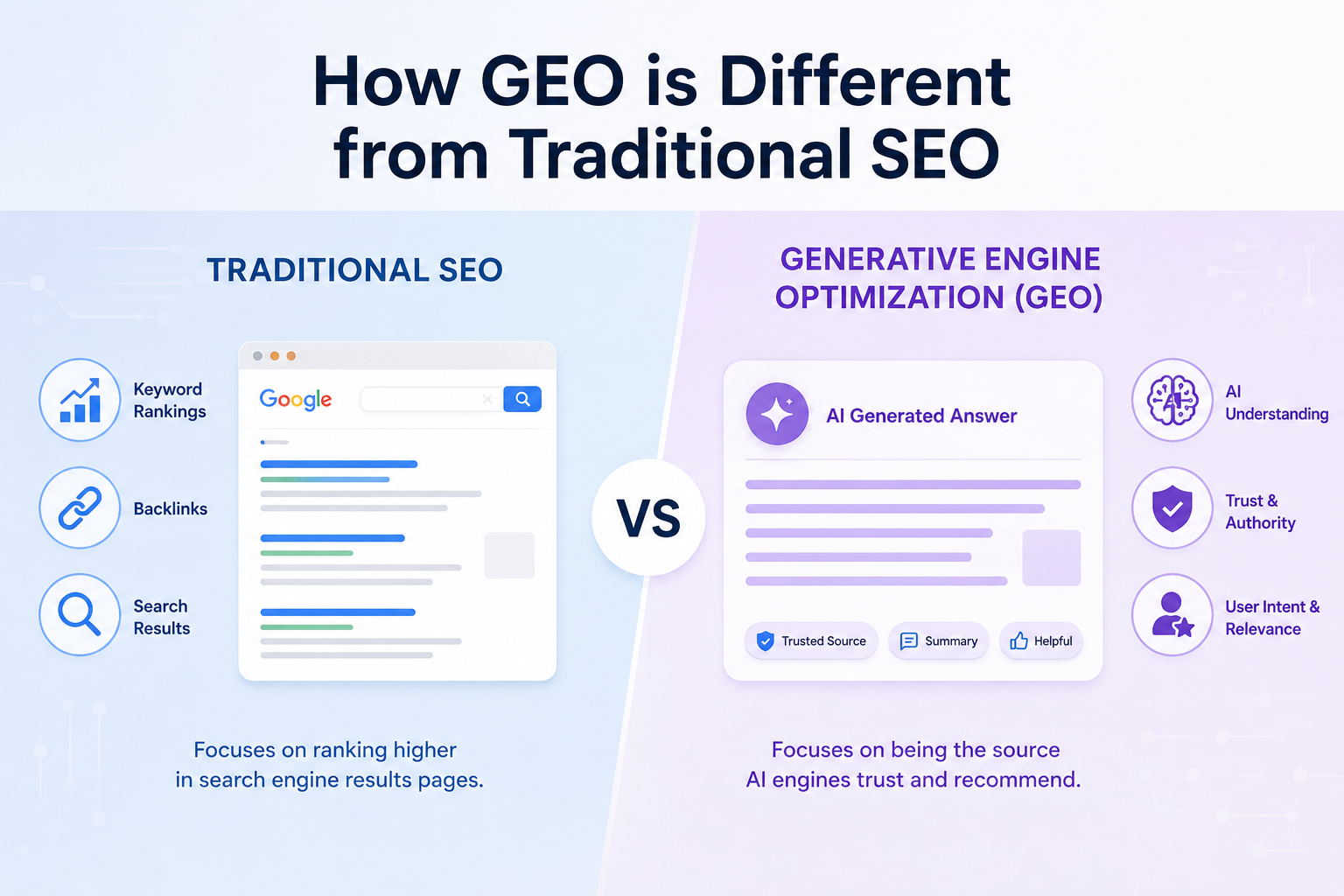
Generative Engine Optimization is the practice of creating content that AI-powered search platforms can easily understand and use while generating answers for users. Instead of simply showing website links, AI systems now provide direct responses by collecting information from multiple online sources.

Because of this change, businesses need content that is clear, informative, and naturally written. Websites that provide real value have a better chance of appearing inside AI-generated responses.

Why GEO Matters in Modern Search

Search behavior is evolving every day.Instead of entering brief keywords, users increasingly ask in-depth questions. AI-driven search tools analyze these questions and generate conversational answers within seconds.

This means websites must focus on delivering meaningful information rather than only targeting keywords repeatedly. Content that solves user queries directly is more useful for AI systems.

Generative Engine Optimization helps brands improve their chances of becoming part of these AI-generated answers. When content is easy to understand and relevant to user intent, AI platforms are more likely to reference it.

How GEO Changes Content Strategy

Traditional SEO mainly concentrates on backlinks, rankings, technical setup, and keyword placement. GEO takes a different approach by focusing heavily on quality, context, and readability.

AI systems prefer content that sounds natural and answers questions in a simple way. Long paragraphs filled with unnecessary keywords are becoming less effective. Instead, well-structured explanations and informative writing are gaining more importance.

For example, if a user asks about improving website visibility through AI search, platforms may select content that provides a direct and helpful explanation. Content written only for search rankings may not perform well in AI-based results.

Creating Content for AI-Powered Search

Content designed for Generative Engine Optimization should feel human, useful, and trustworthy. Clear headings and conversational language help AI tools understand the topic more effectively.

Fresh and updated information also matters. AI platforms often favor content that reflects current trends and accurate details. Businesses that regularly improve their website content can strengthen their online presence over time.

Another important factor is authority. Websites that consistently publish valuable information build stronger trust with both users and AI systems.

The Future of Digital Marketing

Artificial intelligence is reshaping online search experiences. People now expect quick, precise, and conversational answers instead of browsing multiple webpages.

Generative Engine Optimization is becoming an important strategy for businesses that want to stay competitive in this changing digital landscape. It allows brands to improve visibility not only on search engines but also across AI-powered platforms.

As AI technology continues to expand, websites that focus on useful and original content may gain stronger online recognition. GEO is not just a trend; it is becoming a major part of the future of digital marketing.

Why AI Search Is Changing SEO

Search engines are changing fast. Today, people are not only searching on traditional search engines, but also asking questions in AI tools. Instead of typing short keywords, users now write complete prompts like “best digital marketing strategy for local businesses” or “how to improve website speed for SEO.”

This shift means businesses need a new SEO approach. Prompt-level SEO is the process of testing how your content appears when people ask AI-powered search tools different questions. It helps brands understand what type of content AI systems prefer and how websites can become more visible in AI-generated answers.

What Is a Prompt-Level SEO Experiment?

A prompt-level SEO experiment means testing different prompts in AI search platforms to see whether your website, content, or brand appears in the results.

For example, if you own a software company, you may test prompts such as:

“Best mobile app development company for startups”

“Affordable website development services”

“Top digital marketing agencies for small businesses”

By testing these prompts, you can check if AI tools mention your brand, use your content, or recommend your website. This gives valuable insights into how AI search understands your content.

Start With Real User Questions

The first step is understanding how people naturally ask questions. Traditional SEO mostly focused on keywords, but AI search focuses more on conversations and intent.

Instead of targeting only “SEO services,” create content around questions people actually ask. Think about customer problems, buying intent, and informational searches.

Good prompt-based content usually sounds natural and provides direct answers. AI systems often prefer content that is simple, clear, and helpful.

Create Content That AI Can Understand Easily

AI search tools scan content differently from traditional search engines. Long and confusing paragraphs may not perform well.

To improve visibility, use simple headings, short paragraphs, and direct explanations. Add FAQs, examples, and conversational language.

For example, if your page explains Google Ads services, clearly mention what the service does, who it helps, pricing information, and expected results. AI systems prefer structured and informative content because it is easier to summarize in generated answers.

Test Multiple Prompt Variations

One important part of prompt-level SEO is experimenting with different styles of prompts. Small wording changes can create different AI results.

For example:

“Best CRM software for small companies”

“Affordable CRM tools for startups”

“Which CRM is easy for beginners?”

All three prompts have similar intent but may produce different answers. Testing variations helps you understand which topics and content formats perform best.

Track whether your website appears, which competitors are mentioned, and what type of content AI tools prefer.

Improve Topical Authority

AI search platforms trust websites that consistently publish useful information on a specific topic. This is called topical authority.

Instead of creating random blogs, focus on one industry or niche. If your company provides digital marketing services, publish content regularly about SEO, Google Ads, Meta Ads, website optimization, and lead generation.

When your website covers a topic deeply, AI systems are more likely to recognize it as a trusted source.

Monitor and Update Content Regularly

AI search changes quickly, so SEO experiments should continue regularly. Test prompts every month and review how your visibility changes over time.

Update older blogs with fresh information, improve readability, and answer new user questions. AI systems often prefer updated and accurate content.

The Future of SEO Is More Conversational

Prompt-level SEO is becoming an important strategy because online search behavior is changing. Businesses that understand how users interact with AI search tools can gain better visibility and stronger brand awareness.

Ranking for keywords is no longer the exclusive objective. The real focus is creating useful, conversational, and trustworthy content that answers real questions clearly. When your content helps users naturally, AI search systems are more likely to recommend it.

Search is changing faster than ever. People are no longer typing only short keywords into search engines. Today, users ask complete questions through voice search, AI chatbots, and smart assistants. Because of this shift, businesses now need to focus on AEO, which stands for Answer Engine Optimization. AEO helps your content become the direct answer people see in AI-generated results, voice searches, and featured snippets.

Traditional SEO still matters, but it is no longer enough on its own. Businesses that want visibility in AI-driven search platforms need tools that help them understand user intent, optimize content structure, and improve authority. The good news is that several modern tools are making AEO easier and more effective.

Why AEO Matters More Than Traditional SEO

Search engines are becoming smarter. Platforms powered by AI now try to provide instant answers instead of just showing a list of websites. If your content is clear, trustworthy, and structured properly, it has a better chance of appearing in these AI-generated responses.

This is where AEO becomes important. Instead of only targeting keywords, AEO focuses on answering questions in a natural and conversational way. Businesses that adapt early can gain more visibility, traffic, and trust from users.

ChatGPT Helps Discover Real User Questions

One of the most useful tools for AEO today is ChatGPT. Businesses can use it to discover how real people ask questions online. Since AI-driven search relies heavily on conversational language, understanding these patterns is extremely valuable.

You can use ChatGPT to generate content ideas, create FAQ sections, improve readability, and rewrite complex information into simple answers. It also helps marketers understand what kind of responses users expect from AI search platforms.

Google Search Console Reveals Search Intent

Another important tool is Google Search Console. It helps website owners see which queries are already bringing traffic to their websites. This information is extremely useful for identifying question-based searches that can be optimized for AEO.

By analyzing impressions and clicks, businesses can discover which topics people are searching for most often. This allows them to improve existing content and create new pages that directly answer user questions.

Semrush Helps Find Question-Based Keywords

Semrush is another powerful platform for businesses focusing on AEO. It helps identify long-tail keywords and question-focused search terms that people frequently use online.

AEO works best when content mirrors the exact way users speak or type questions. Semrush helps uncover these patterns and also provides competitor analysis. This allows businesses to create more targeted and informative content that performs better in AI-driven search environments.

AlsoAsked Makes Content More Conversational

One of the biggest changes in search behavior is the rise of follow-up questions. Users often ask related questions after receiving an answer. AlsoAsked helps marketers understand these question chains.

This tool visualizes how people expand their searches, which makes it easier to create detailed content that answers multiple related queries in a single article. This approach improves the chances of appearing in featured snippets and AI-generated search summaries.

Surfer SEO Improves Content Structure

Good AEO content is not only informative but also properly structured. Surfer SEO helps writers create content that search engines and AI systems can understand more easily.

The platform analyzes headings, content length, keyword placement, and readability. A well-structured article increases the likelihood that AI systems will pull information directly from your page when answering user questions.

Schema Markup Generators Improve AI Understanding

Tools like Merkle Schema Markup Generator allow businesses to add schema markup without technical complexity.

Schema tells search engines important details about your content, such as FAQs, reviews, articles, and business information. This increases the chances of appearing in rich results and answer boxes.

Ahrefs Helps Build Authority and Trust

AI-powered search engines prefer content from trustworthy sources. Ahrefs helps businesses improve website authority through backlink analysis and content research.

AEO is not just about answering questions. Search engines also evaluate whether the source is reliable. Ahrefs helps identify content gaps, monitor backlinks, and improve overall domain strength, which supports better visibility in AI-generated search results.

The Future of Search Is Answer-Focused

AEO is no longer just a trend. It is becoming a necessary strategy for businesses that want to stay visible in modern search experiences. As AI continues to reshape how people discover information, businesses must create content that is clear, conversational, and trustworthy.

The tools mentioned above can help businesses understand search intent, improve content quality, and increase visibility in answer-based search results. Companies that adapt now will have a stronger chance of staying ahead as AI-driven search continues to grow.

The future of digital marketing will not belong only to websites that rank well. It will belong to websites that provide the best answers.