Paid Media Marketing in 2026: 8 Changes Marketers Must Make

Category Archives: Google Ads

Paid Media Marketing

Introduction

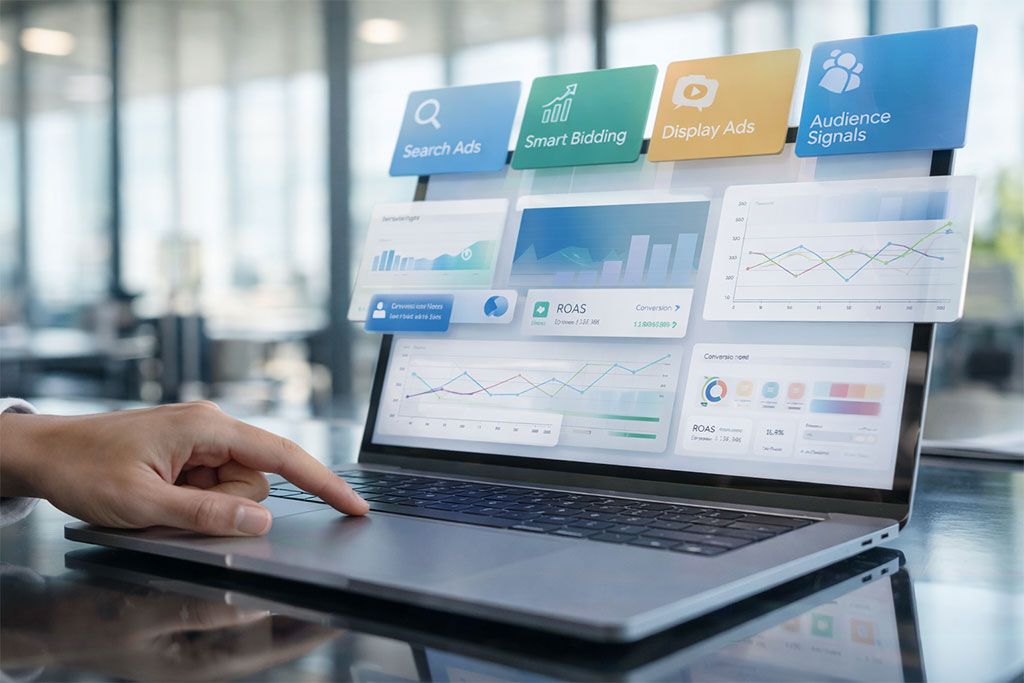
Paid media marketing is changing fast as we move into 2026. New technologies, stronger data privacy rules, and smarter platforms are reshaping how ads are created, shown, and measured. Marketers who continue to follow old methods may see declining results. To stay competitive, it is important to adapt to the new way paid advertising works. Here are eight key changes marketers should make in 2026.

Embracing Conversational AI for Ad Creation

In 2026, ads are no longer just promotional messages. People expect ads to sound natural and helpful. Conversational AI helps create ad copy that feels more like a real conversation than a sales pitch. These ads answer user questions directly and feel more personal, which builds trust and improves engagement.

Refining Ad Targeting With Data Privacy in Mind

Data privacy has become a major concern for users and platforms alike. With fewer cookies and stricter regulations, marketers must change how they target audiences. Using first-party data such as website visitors, email subscribers, and customer lists is now essential. Privacy-friendly targeting helps brands stay compliant while still reaching the right audience.

Optimizing for AI-Driven Search Ad Placements

Search advertising is now powered heavily by artificial intelligence. Platforms decide where and when ads appear based on user intent, behavior, and relevance. Marketers must focus on clear messaging, strong landing pages, and intent-based content. When ads align well with user needs, AI systems reward them with better placements.

Integrating Campaigns Across Multiple Channels

Today’s users move across many platforms before making a decision. They might see a brand on social media, search for it on Google, and then watch a video review. In 2026, successful paid media campaigns connect all these channels. A consistent message across platforms creates a smoother user experience and increases conversion chances.

Using AI Image Editing for Creative Customization

Creative content plays a big role in ad performance. AI-powered image editing tools make it easier to customize visuals for different audiences. Marketers can quickly adjust images, formats, and styles without starting from scratch. Personalized creatives feel more relevant and often perform better than generic designs.

Improving Attribution Tracking and Updating KPIs

Measuring ad success has become more complex. Relying only on last-click conversions no longer shows the full picture. In 2026, marketers need better attribution tracking to understand the complete customer journey. Key performance indicators should focus on quality leads, engagement, and long-term value instead of just clicks.

Including Influencers in the Paid Media Strategy

Influencers are becoming an important part of paid media marketing. People trust recommendations from real individuals more than traditional brand ads. Working with influencers, especially niche or micro-influencers, helps brands connect with audiences in a more authentic way. When combined with paid ads, influencer content can boost both reach and conversions.

Investing in Brand-Owned and Emerging Media Channels

Depending only on paid platforms can be risky and expensive. In 2026, brands should invest more in channels they own, such as websites, email lists, and messaging platforms. Exploring new and emerging media channels also opens fresh opportunities. Brand-owned media provides long-term stability and better control over audience relationships.

Conclusion

Paid media marketing in 2026 is smarter, more privacy-focused, and deeply influenced by AI. Marketers who adapt to these changes will see better performance and stronger brand growth. By focusing on conversation-driven ads, ethical targeting, creative personalization, and integrated strategies, businesses can stay ahead in an increasingly competitive digital landscape.

Conversion Data Access

Understanding the Recent Google Ads API Update

Google has updated its Google Ads API to apply stricter rules around how conversion data is accessed and shared. This change is mainly focused on user privacy and data protection. Earlier, advertisers and third-party tools could access detailed conversion information more freely through the API. Now, Google wants to ensure that sensitive user actions are handled in a more controlled and secure way.

Why Google Is Tightening Conversion Data Rules

The main reason behind this update is growing global privacy regulations and user expectations around data safety. Google is aligning the Google Ads API with privacy laws and its own platform policies. This means advertisers will still be able to track performance, but not at the cost of exposing personal or sensitive user data. The goal is to balance useful insights with responsible data usage.

What Has Changed in Conversion Tracking

With the new rules, access to certain conversion data fields through the API is limited unless specific requirements are met. Advertisers and developers may notice that some user-level details are no longer available in the same way as before. Aggregated conversion data remains accessible, but highly granular or sensitive information is now restricted. This ensures that conversion tracking continues without compromising privacy.

How This Impacts Advertisers and Agencies

For most advertisers, daily campaign optimization will not be heavily affected. Metrics like total conversions, conversion value, and performance trends are still available. However, agencies and developers using custom dashboards or automation tools may need to update their API integrations. If a tool depends on detailed conversion signals, it may now receive less data than before.

What Developers Need to Do Next

Developers using the Google Ads API should review their current implementation and ensure it follows the latest API documentation. Google recommends using supported conversion fields and avoiding reliance on deprecated or restricted data points. Updating API versions on time will help avoid data gaps and reporting issues.

How to Stay Compliant and Data-Smart

To adapt smoothly, advertisers should focus more on first-party data, consent-based tracking, and modeled conversions. Using tools like enhanced conversions and Google’s privacy-safe measurement solutions can help maintain accurate reporting. Staying updated with Google Ads announcements will ensure your campaigns remain compliant and effective.

Final Thoughts

Google’s tighter conversion data rules are a clear signal that privacy-first advertising is the future. While access to some detailed data is reduced, the overall impact on campaign performance tracking remains manageable. By understanding the changes and adjusting strategies early, advertisers and agencies can continue running successful Google Ads campaigns with confidence.

Google Ads Search Terms Privacy Policy

Google Ads is one of the most powerful platforms for lead generation and sales, but recently many advertisers running campaigns in the USA have noticed a big change in the Search Terms Report. Clicks are visible in the overview, conversions are coming in, but many actual search terms are missing. This change is not a bug or a campaign issue. It is the result of Google Ads’ updated privacy policy.

What Changed in Google Ads Search Terms Reporting

Earlier, advertisers could see almost every search query that users typed into Google before clicking on an ad. This helped marketers add negative keywords, understand user intent, and optimize campaigns easily. However, Google has now limited the visibility of search terms, especially for users in the USA and other regions with strict privacy regulations.

Due to this update, some search terms are no longer shown in reports. Google displays a message stating that certain queries are hidden because of privacy reasons. This means advertisers can no longer access 100 percent of search term data.

Why Google Introduced This Privacy Policy

Google’s main reason for this change is user data protection. Privacy laws and regulations in the USA and globally require platforms to avoid sharing information that could potentially identify users. Some searches are personal, sensitive, or low in volume, and showing them could risk user privacy.

To comply with these regulations, Google decided to restrict access to certain search queries while still allowing advertisers to see overall campaign performance.

How This Affects Your Google Ads Campaign

Many advertisers worry when they see fewer search terms in reports, but this change does not affect how ads perform. Campaigns continue to run normally, ads still get impressions and clicks, and leads or sales still happen. The limitation is only in reporting, not in delivery or targeting.

This is why clicks and conversions may appear higher in the campaign overview, while the Search Terms Report shows fewer queries. This gap is expected and is now part of Google Ads reporting.

What Data Is Still Available to Advertisers

Although some search terms are hidden, advertisers can still access high-level and high-volume queries. Generic, commercial, and industry-related searches are usually visible. Keyword-level performance, conversion data, cost metrics, and audience insights remain fully available.

This means advertisers still have enough data to make smart optimization decisions without relying on every single search term.

How to Optimize Campaigns After This Update

Since complete search term visibility is no longer possible, advertisers need to shift their focus. Instead of relying only on search queries, it is better to analyze conversions, cost per lead, return on ad spend, and keyword performance.

Using smart bidding strategies like Maximize Conversions or Target CPA helps Google’s algorithm optimize ads based on real results rather than individual search terms. Adding strong and logical negative keywords based on experience and industry knowledge is also important.

Google Analytics and GA4 can further help by showing user behavior, landing page engagement, and conversion paths, which support better decision-making even with limited search term data.

Is This Change Permanent

Yes, this privacy-focused approach is expected to continue and may become even stricter in the future. Google is clearly moving towards automation, machine learning, and privacy-first advertising. Advertisers who adapt early will have a competitive advantage.

Final Thoughts

The Google Ads Search Terms privacy update in the USA is not something to worry about. It is a policy-driven change designed to protect user data. While advertisers no longer see every search query, campaign performance remains unaffected.

By focusing on conversions, smart bidding, and overall account health, businesses can continue to generate high-quality leads and sales through Google Ads. Understanding and adapting to this change is the key to long-term success in paid advertising.

Google Ads Tests New “Website Optimizer” Tool

Google Ads is rolling out a new experimental feature called the “Website Optimizer,” and it’s generating a lot of excitement among advertisers. This tool is designed to help businesses improve their landing pages directly inside the Google Ads platform, making campaign performance stronger without needing complex technical work. For companies looking to stay ahead in the digital advertising game, especially those partnering with a PPC Management Company in India, this update can be a powerful advantage.

What is the Google Ads Website Optimizer?

The Website Optimizer is a new built-in tool that helps advertisers create, edit, and enhance landing pages. Google is testing it with select accounts, but early insights show that it provides a simple editor where marketers can adjust layouts, add or remove elements, and improve the overall user experience. The goal is to reduce the bounce rate and increase conversions by ensuring that the landing page matches the user’s intent and loads quickly.

Why is Google Testing This Feature?

Google Ads wants to solve a major problem that many businesses face: poor landing page performance. Even with perfect targeting and great ads, conversions drop when users land on slow, cluttered, or confusing pages. Website Optimizer aims to fix this by giving advertisers a tool to optimize pages without needing a developer. This test phase helps Google understand how advertisers use the tool and how it impacts ad performance.

How This Tool Can Improve Ad Campaigns

A well-optimized landing page plays a crucial role in Quality Score, which directly influences cost-per-click and ad ranking. By using the Website Optimizer, advertisers can test different layouts or content structures and make real-time improvements. Pages that load faster and provide a clearer message create a better user experience, resulting in more conversions. This tool also aligns ads and landing pages more closely, something that Google rewards with better performance metrics.

Why Businesses Should Care About This Update

This update matters because it simplifies a part of digital marketing that many businesses struggle with. Instead of outsourcing every landing page change or waiting for a developer, advertisers can make smart adjustments instantly. For growing companies or startups, this flexibility saves time and boosts campaign efficiency. Even established brands can benefit from faster optimization cycles and improved conversion rates.

Role of a PPC Management Company in India

Working with a PPC Management Company in India becomes even more valuable with tools like Website Optimizer. Such companies already understand ad performance, user behavior, and landing page best practices. With access to this new tool, they can enhance campaigns even more efficiently. They can create better-performing pages, run experiments faster, and optimize for results without adding technical complexity. This helps businesses achieve higher returns from their ad spend while staying aligned with Google’s best practices.

Conclusion

The new Website Optimizer from Google Ads has the potential to change how businesses manage their landing pages. By simplifying page improvements and connecting them directly with ad performance, Google is making optimization easier than ever. As the tool continues to be tested and refined, advertisers can expect better campaign results and a smoother workflow. Partnering with an experienced PPC Management Company in India will help businesses make the most of this innovation and stay ahead in a competitive digital world.

future of PPC marketing

Introduction

Pay-Per-Click (PPC) advertising is evolving faster than ever before. As businesses compete for audience attention in a crowded digital world, 2026 marks a major turning point for how brands approach paid advertising. Artificial Intelligence (AI), automation, and the constant struggle for visibility are reshaping the future of PPC marketing. The brands that adapt early will enjoy better performance, improved ROI, and stronger audience connections.

AI is Transforming PPC Campaigns

Artificial Intelligence has become the foundation of modern PPC campaigns. In 2026, AI is not just a buzzword — it’s a powerful tool that helps advertisers make smarter decisions. Google Ads, Microsoft Ads, and other platforms now rely heavily on AI algorithms to predict user intent, identify high-performing keywords, and optimize ad placements automatically.

AI analyzes massive amounts of data to understand what kind of ads work best for each user. From browsing history to search behavior, it studies patterns to deliver more personalized ad experiences. This means that instead of guessing what might work, advertisers can trust data-driven insights to guide their campaigns.

For example, AI tools can detect trends in real time and adjust bids automatically. This ensures that your ad budget is always spent wisely — targeting the right audience at the right moment. Businesses partnering with the Best PPC Management Company in India can take full advantage of these AI tools to create high-performing campaigns that consistently deliver results.

Automation Simplifies Complex PPC Tasks

Automation has become a game-changer for PPC professionals. In earlier years, marketers had to manually adjust bids, select keywords, and review campaign performance daily. Now, automation tools handle many of these repetitive tasks with accuracy and speed.

Through automated bidding, ad rotation, and audience targeting, campaigns are optimized around the clock. This frees up marketers to focus on strategy and creativity rather than routine monitoring. Automation also reduces the chances of human error and ensures that campaigns perform efficiently at all times.

By using automation wisely, even small businesses can compete with larger brands. When managed by the Best PPC Management Company in India, these tools can be customized to match business goals — whether it’s lead generation, app installs, or online sales.

The Fight for Online Visibility

As more businesses move online, visibility is becoming harder to achieve. In 2026, brands are not just competing for clicks; they are competing for attention. Users are bombarded with ads across platforms — from Google Search and YouTube to Instagram and TikTok. To stand out, advertisers must deliver relevant, engaging, and visually appealing content.

AI and automation help in improving visibility by analyzing which platforms and ad formats deliver the best engagement. For example, video ads may perform better for one audience segment, while carousel ads might work best for another. The key is to use intelligent data and cross-channel strategies to appear where your audience spends their time.

A reliable PPC partner can ensure your campaigns don’t get lost in the crowd. The Best PPC Management Company in India uses advanced targeting, remarketing, and creative optimization to help your brand maintain a strong online presence across multiple channels.

Personalization Is the New Standard

Gone are the days of one-size-fits-all advertising. In 2026, personalization is at the heart of PPC success. Audiences now expect ads that speak directly to their needs and preferences. AI tools use real-time data to tailor ad messages, visuals, and offers to each user’s intent.

Whether someone is searching for a product, watching a tutorial video, or scrolling through social media, personalized PPC campaigns ensure they see the most relevant ad possible. This boosts engagement, increases conversions, and builds trust between brands and customers.

Businesses that invest in personalization will see higher returns from their ad budgets. With the support of the Best PPC Management Company in India, companies can implement deep audience segmentation and creative personalization that drive measurable growth.

Voice Search and Visual Ads Are Rising

Another important trend shaping PPC in 2026 is the rise of voice search and visual-based advertising. More people are using smart speakers and voice assistants to find products online. This shift requires advertisers to optimize for conversational keywords and natural language searches.

Similarly, visual content like shopping ads, product carousels, and short videos are gaining popularity. Platforms such as YouTube and Instagram are now key players in paid advertising strategies. The challenge lies in creating visually rich and interactive ads that attract attention in just a few seconds.

The Future Belongs to Data-Driven Strategies

As competition grows, guesswork has no place in PPC. Data-driven strategies will define success in 2026 and beyond. Businesses must track every click, impression, and conversion to make informed decisions.

AI and automation make this possible by collecting and interpreting campaign data instantly. This allows advertisers to adjust their strategies in real time, ensuring that campaigns stay profitable and effective.

Partnering with the Best PPC Management Company in India means having access to detailed analytics, transparent reporting, and continuous optimization — all essential for long-term success.

Conclusion

The future of PPC in 2026 is exciting and full of opportunities for those ready to embrace change. Artificial Intelligence and automation are revolutionizing how businesses reach and engage their audiences. But with growing competition and limited visibility, success will depend on smart strategies, personalization, and expert campaign management.

To stay ahead in this digital race, brands must work with professionals who understand the evolving landscape of PPC advertising. The Best PPC Management Company in India can help businesses harness the power of AI and automation to maximize their visibility, attract quality leads, and achieve exceptional results in 2026 and beyond.