Introduction
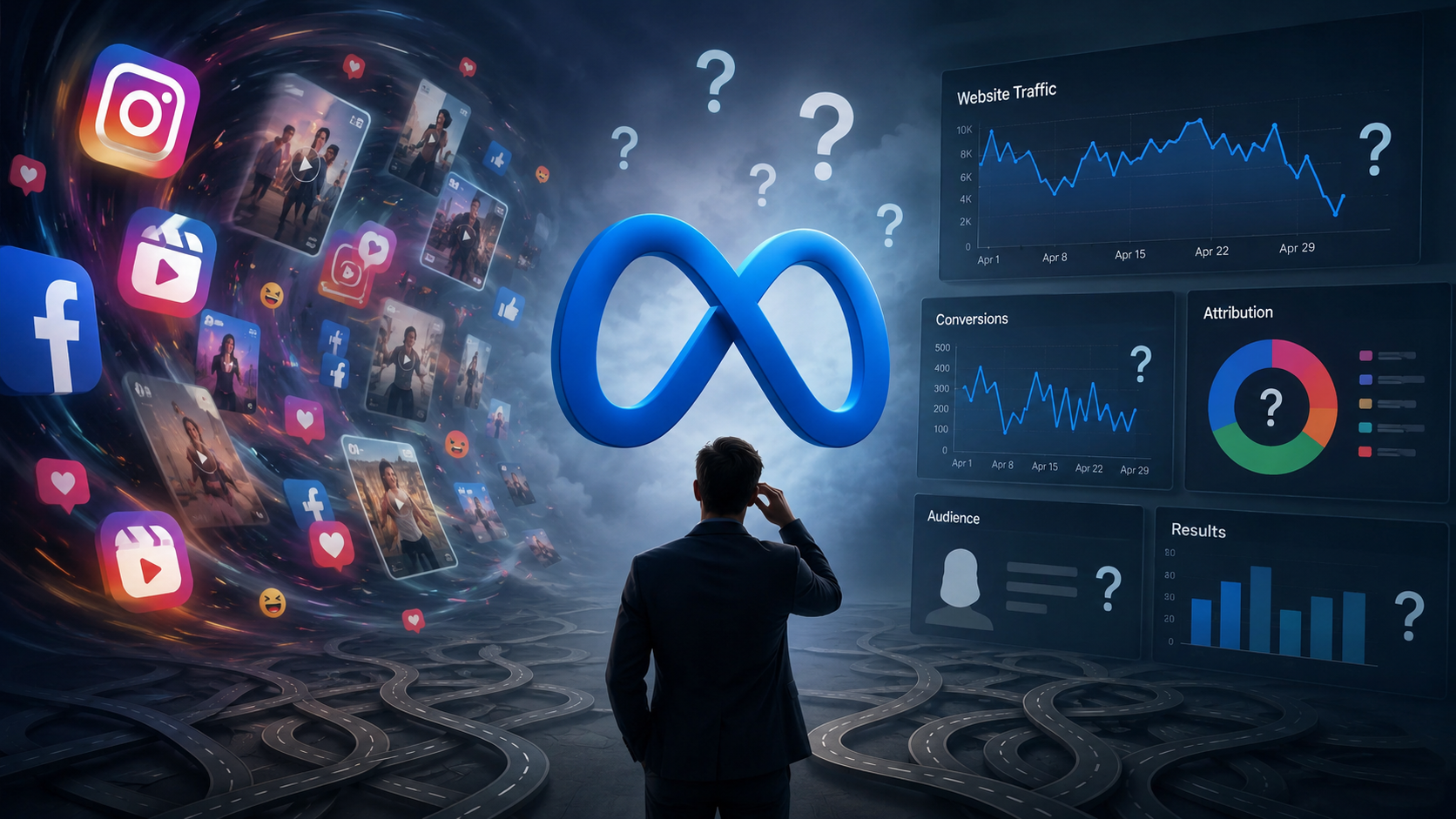
For years, businesses trusted Meta to deliver predictable results through digital advertising. Whether the goal was sales, leads, website traffic, or app installs, marketers believed the platform understood how to connect businesses with the right audience. But recently, many advertisers have started noticing something unusual. The traffic data coming from Meta campaigns often feels inconsistent, confusing, and sometimes disconnected from real business outcomes.
This has created an important discussion in the digital marketing world. Is Meta still an advertising platform focused on helping businesses grow, or has it become something completely different?
The Shift From Social Platform to Attention Machine
Meta originally built its success around social interaction. Platforms like Facebook and Instagram were designed to connect people, encourage conversations, and build communities. Advertising worked because users spent time engaging with content naturally.
Today, the platform feels more focused on keeping users scrolling for as long as possible. Short-form videos, endless recommendations, AI-generated content suggestions, and entertainment-first feeds now dominate the experience. Businesses are competing not only with other brands but also with creators, viral content, memes, and algorithm-driven distractions.
This change matters because the platform’s priorities directly affect advertising performance. When entertainment becomes the main focus, traffic quality can begin to suffer.
Why Traffic Data Feels Different Now
Many advertisers are seeing high click numbers but low-quality engagement once users land on their websites. Sessions may appear shorter, bounce rates may increase, and conversions sometimes fail to match campaign expectations.
This occurs as a result of Meta’s algorithm being more and more focused on participation within the platform rather than significant action outside of it. A user may click an ad out of curiosity, habit, or impulse without having genuine buying intent.
In the past, traffic often came from users actively exploring products or services. Now, a large percentage of clicks can come from passive scrolling behavior. That difference changes everything for marketers trying to measure return on investment.
The Rise of Automated Advertising
Meta has also pushed advertisers toward automation. Campaign types powered by AI promise easier setup, automatic targeting, and faster optimization. While automation can save time, it also reduces advertiser control.
Many businesses no longer fully understand where their ads are being shown, what audience segments are converting, or why performance changes suddenly. The system asks advertisers to trust the algorithm completely.
The problem is that automation works best when the platform’s goals match the advertiser’s goals. If Meta is optimizing for engagement, time spent, or cheaper clicks instead of profitable customers, businesses may receive traffic that looks good in reports but performs poorly in reality.
What Marketers Should Pay Attention To
The biggest mistake businesses make today is relying only on Meta dashboard metrics. High impressions, low CPCs, and strong click-through rates do not always mean campaign success anymore.
Smart marketers are paying closer attention to deeper website behavior. They are tracking how long visitors stay on pages, whether users explore multiple sections of a site, and how many visitors actually convert into paying customers.
First-party data has become more valuable than platform-reported data. Businesses that use tools like analytics platforms, CRM systems, and server-side tracking are getting a clearer picture of what is truly happening after the click.
The Future of Meta Advertising
Meta is not disappearing, and it still remains one of the largest advertising platforms in the world. However, businesses can no longer depend on it the same way they did years ago. The platform is developing into an AI-driven content ecosystem where attention and amusement frequently take precedence over advertiser transparency.
For brands, this means advertising strategies must evolve too. Creative quality matters more than ever. Landing pages must be stronger. Tracking systems must become smarter. Most importantly, marketers should stop treating traffic volume as the main success metric.
Quality traffic always matters more than cheap traffic.
Conclusion
The traffic data coming from Meta tells a larger story about the platform’s direction. Meta appears to be balancing multiple identities at once: a social network, an entertainment platform, an AI recommendation engine, and an advertising company. That identity conflict is starting to show in campaign performance data.
Businesses that understand this shift will adapt faster. Instead of chasing vanity metrics, they will focus on real customer behavior, meaningful engagement, and long-term profitability. In today’s digital advertising world, understanding traffic quality is no longer optional. It has become one of the most important skills a marketer can have.