Growth is a goal for almost every agency. More clients, bigger projects, and higher revenue often seem like signs of success. However, many agency owners believe that growth automatically requires hiring more employees. In reality, that approach can create new challenges, including higher costs, more management responsibilities, and reduced profitability.
In 2026, many successful agencies are proving that scaling does not always mean expanding payroll. Instead, they are finding smarter ways to increase output without significantly increasing team size.
The Shift From More People to Better Systems
One of the biggest mistakes agencies make is relying entirely on people to solve growth problems. When new clients arrive, they immediately think about hiring. While new talent can be valuable, adding employees is not always the most efficient solution.
High-performing agencies focus first on improving systems. Clear workflows, documented processes, and standardized project management help teams complete work faster and with fewer errors. When everyone knows exactly what needs to happen, productivity naturally increases.
A well-designed system can often do the work of several additional team members.
Automation Creates More Capacity
Many agency tasks are repetitive. Reporting, lead tracking, client onboarding, follow-ups, scheduling, and data collection can consume valuable hours every week.
Modern automation tools allow agencies to handle these activities with minimal manual effort. Instead of spending time on routine tasks, team members can focus on strategy, creativity, and client relationships.
The result is greater capacity without adding more salaries to the monthly budget.
Focus on High-Value Services
Not all services generate the same return. Some projects require significant effort while producing limited profit. Agencies that scale successfully regularly review their service offerings and identify where the greatest value exists.
By focusing on services that deliver strong results for clients and healthy margins for the agency, growth becomes more sustainable. This approach allows agencies to generate more revenue from the same team.
Sometimes scaling is less about doing more work and more about doing the right work.
Technology Is Becoming a Team Member
Artificial intelligence and advanced software tools are changing how agencies operate. Tasks that once required hours of manual work can now be completed much faster.
Content research, campaign analysis, data reporting, customer support, and workflow management can all be improved with technology. Agencies that embrace these tools often find they can handle a larger client base without significantly increasing headcount.
Technology is no longer just support for the business. It is becoming part of the growth strategy itself.
Strong Client Relationships Reduce Operational Pressure
Agencies often overlook the value of working with the right clients. Long-term relationships create predictable revenue and reduce the constant need for new client acquisition.
When agencies deliver consistent results and build trust, clients stay longer and often expand their engagement. This allows agencies to grow revenue without constantly increasing workload.
Scaling Smarter, Not Bigger
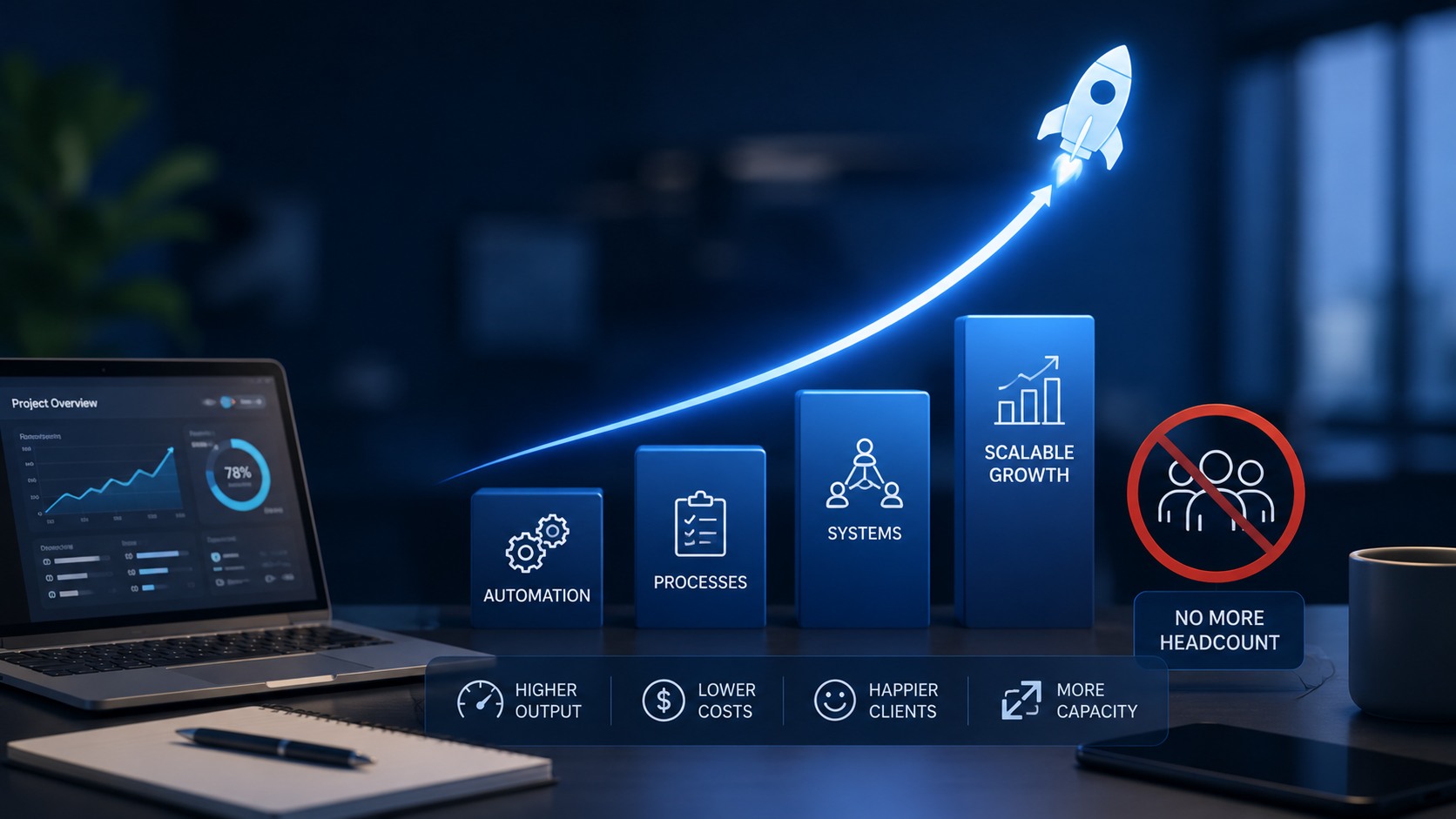
The future of agency growth is not simply about hiring more people. It is about creating efficient systems, using technology wisely, improving processes, and focusing on profitable opportunities.
The agencies that scale successfully in 2026 will not necessarily have the largest teams. They will be the ones that learn how to deliver more value with the resources they already have. In many cases, smart growth is not about increasing payroll—it is about increasing efficiency.