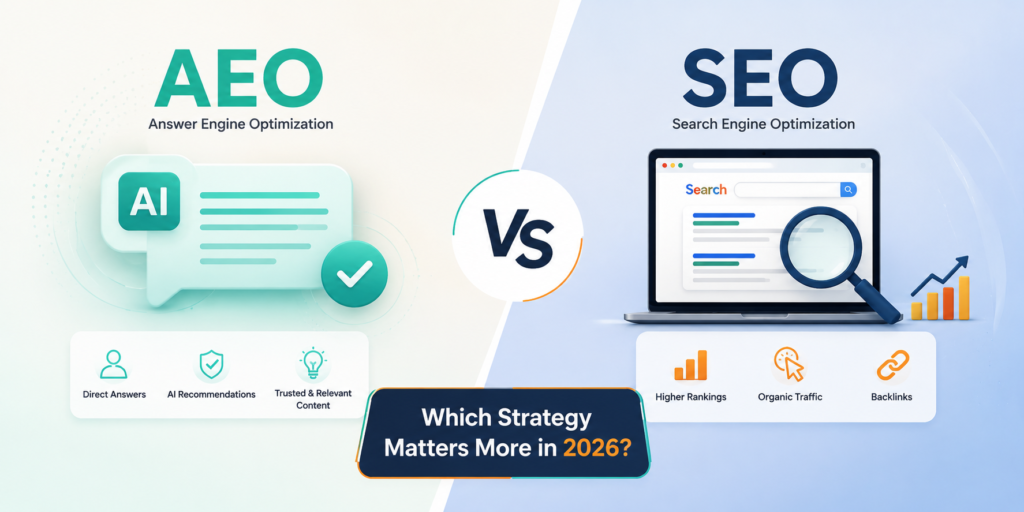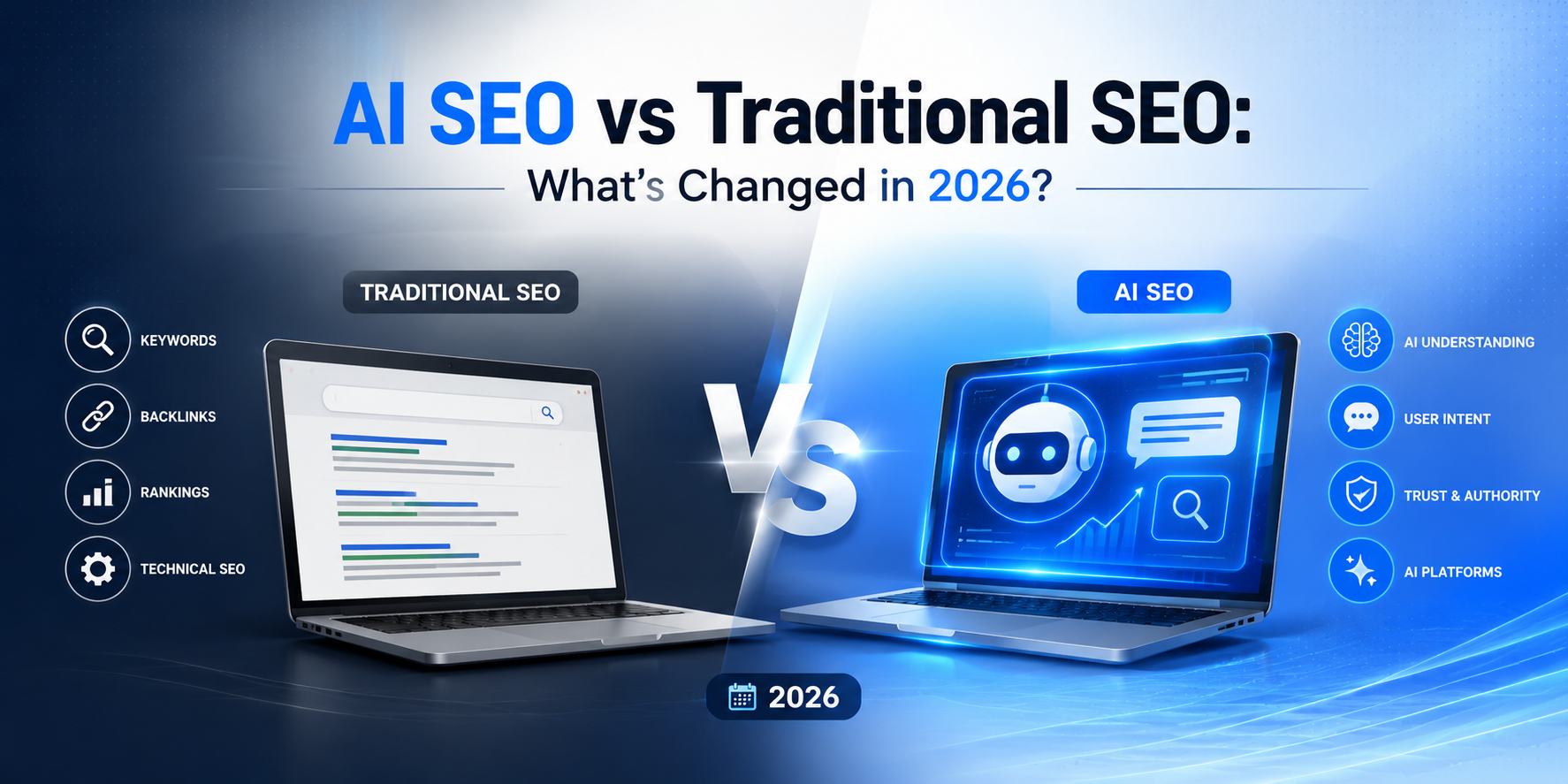
Over the past few years, search engine optimization has undergone significant shift. In 2026, businesses are no longer optimizing only for Google search results. They also need to appear in AI-powered search platforms like ChatGPT, Google AI Overviews, Gemini, and Perplexity. This shift has introduced a new way of thinking about SEO.
What distinguishes AI SEO from conventional SEO, then? Let’s understand it in simple words.
What is Traditional SEO?
Traditional SEO is the process of improving your website so it ranks higher in search engine results. The main goal is to attract more visitors through keywords, quality content, backlinks, and technical improvements.
For years, businesses focused on creating keyword-rich pages, earning backlinks, improving website speed, and optimizing meta titles and descriptions. These strategies still matter, but they are no longer enough on their own.
What is AI SEO?
AI SEO focuses on making your content easy for AI search engines to understand, trust, and recommend. Instead of only helping your page rank on Google, AI SEO helps your content become part of AI-generated answers.
AI systems look beyond keywords. They understand the meaning of your content, check whether it answers user questions clearly, and evaluate how trustworthy your website is.
The Biggest Changes in 2026
One of the biggest differences is how people search online. Users now ask comprehensive inquiries like “Which SEO strategy works best for small businesses in 2026?” rather than typing short phrases like “best SEO company.”AI search engines are made to directly respond to these in-depth queries.
Another major change is content quality. Earlier, adding the right keywords could help improve rankings. Today, AI gives more importance to helpful, well-structured, and easy-to-read content that genuinely solves user problems.
Website authority has also become more important. AI search platforms prefer content from websites that regularly publish accurate information and demonstrate real expertise.
| Traditional SEO | AI SEO |
| Focuses mainly on search rankings | Focuses on AI-generated answers and visibility |
| Heavy keyword optimization | Focuses on search intent and natural language |
| Relies on backlinks and technical SEO | Values authority, trust, and helpful content |
| Optimizes for Google search | Optimizes for Google AI, ChatGPT, Gemini, and other AI platforms |
| Targets website clicks | Aims to build visibility, trust, and brand recognition |
Yes, absolutely.
Traditional SEO remains the foundation of a successful website. Fast loading speed, mobile-friendly design, proper site structure, and technical optimization are still essential. However, combining these with AI SEO strategies gives your business a much better chance of being discovered in today’s search environment.
Final Thoughts
In 2026, SEO is no longer just about ranking on search engines. It’s about becoming a trusted source that both people and AI platforms can confidently recommend.
Businesses that create original, helpful, and easy-to-understand content while maintaining strong technical SEO are more likely to succeed. Instead of choosing between AI SEO and traditional SEO, the smartest strategy is to use both together.
As AI continues to shape the future of search, businesses that adapt early will gain a significant advantage over competitors who rely only on old SEO methods.