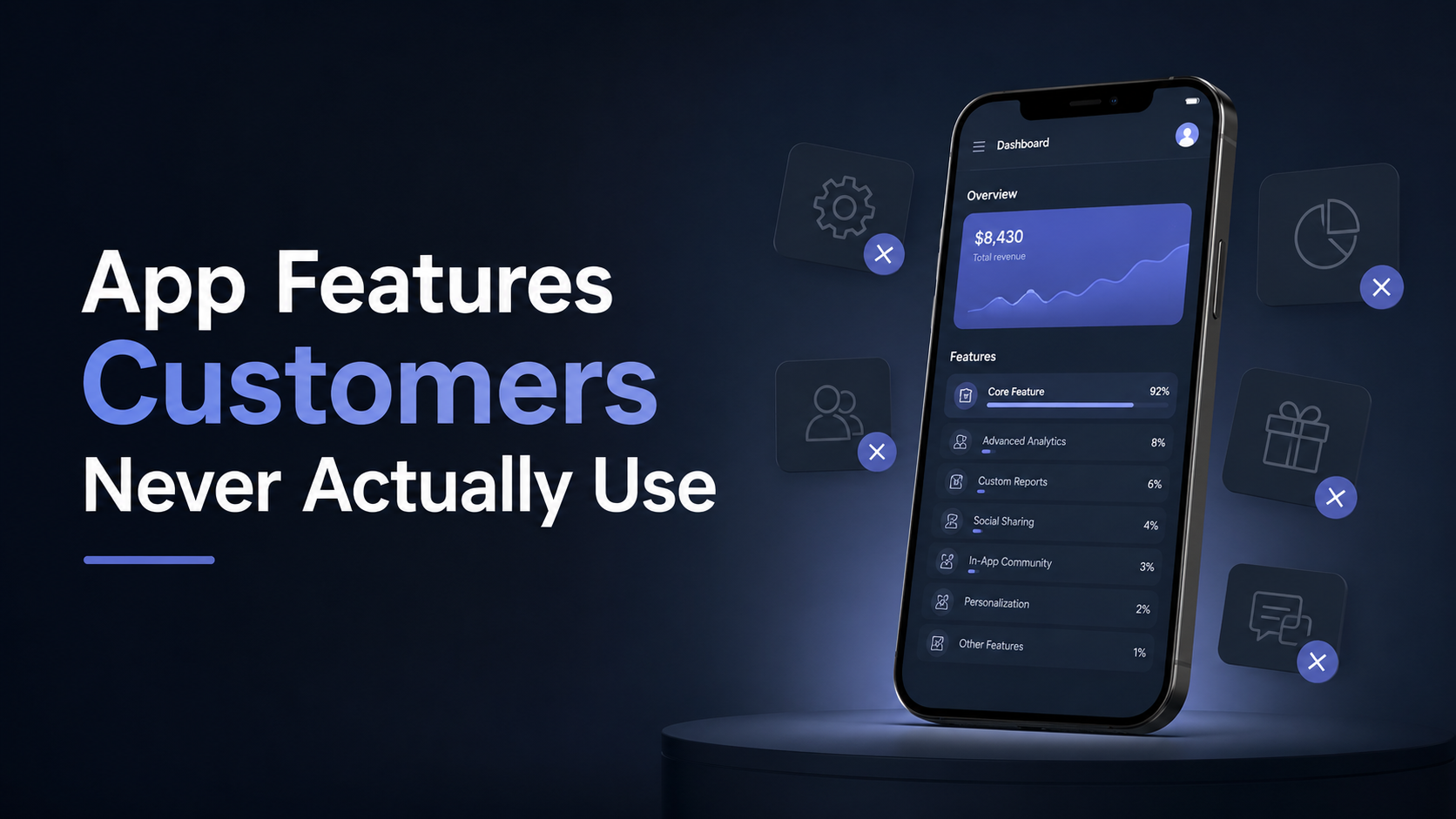
A few months after launching a new app, a company checked its analytics dashboard expecting to see customers actively using the features they had spent months building.
The results were surprising.
The most expensive feature had almost no activity. A complex dashboard that took weeks to develop was barely opened. Several advanced settings had been ignored completely.
Meanwhile, customers kept returning to use the same two or three basic functions.
This situation is more common than many businesses realize.
The Feature Trap
When planning an app, businesses often imagine everything users might want in the future. The project starts with a simple idea, but new suggestions quickly appear.
“What if we add rewards?”
“What if users can customize everything?”
“What if we include social sharing?”
Each idea sounds useful on its own. The problem is that they all get added before anyone knows whether customers actually need them.
As a result, the app becomes bigger, more expensive, and harder to use.
Customers Download Apps to Solve Problems
Most users don’t wake up thinking about app features.
They think about problems.
Someone downloads a fitness app because they want to track workouts. A food delivery customer wants to order dinner quickly. A business owner uses a project management app to stay organized.
People are focused on outcomes, not feature lists.
If a feature doesn’t help them reach their goal faster, many users simply ignore it.
Why Unused Features Can Be Dangerous
Unused features don’t just waste development money. They can also make the overall experience worse.
Every additional button, menu, and setting creates another decision for users. Too many choices can make an app feel overwhelming.
Instead of helping customers, extra functionality can slow them down.
Because of this, some of the most popular apps in the world seem very straightforward. Their creators focus heavily on removing unnecessary complexity.
What Analytics Often Reveal
Many businesses are shocked when they study real user behavior.
The features discussed most during planning meetings are not always the features customers value most.
Sometimes a simple search bar becomes the most-used part of the app. Sometimes a basic notification system drives more engagement than a sophisticated dashboard.
Real customer behavior often tells a very different story than internal assumptions.
Build Less, Learn More
A successful app is not a collection of every possible feature.
It is a tool that solves a specific problem better than the alternatives.
Before investing in new functionality, businesses should ask a simple question: “Will this help most users accomplish their goal more easily?”
It might be preferable to test the concept before developing it if the solution is unclear.
The best apps are rarely the ones with the longest feature list. They’re the ones that understand exactly what customers need and deliver it without distraction.
In the end, customers don’t remember how many features an app had.
They recall if it made things easier for them.