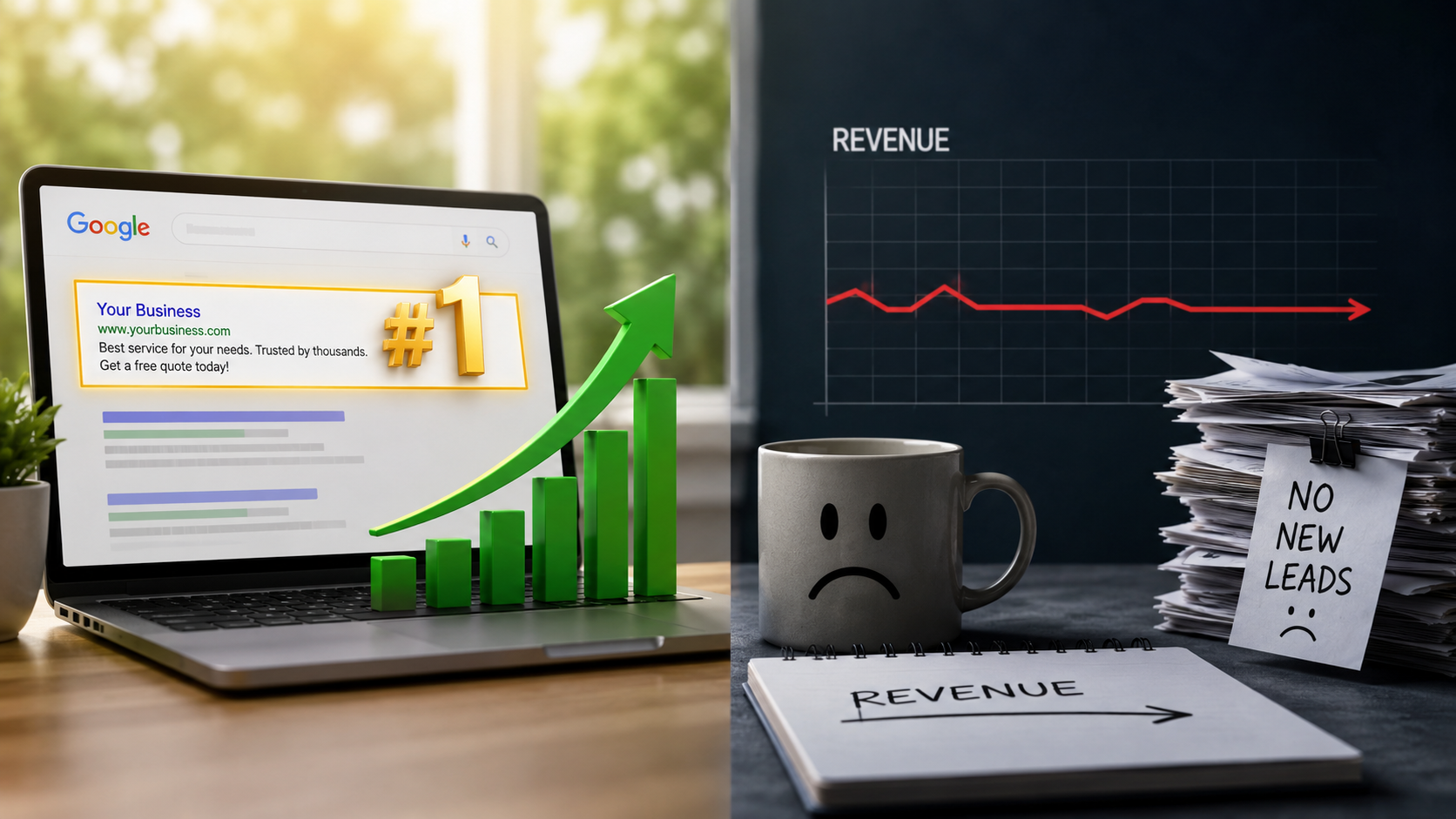
When High Rankings Don’t Bring More Customers
Many business owners believe that reaching the number one position on Google will automatically increase sales and revenue. While ranking at the top of search results is a great achievement, it does not always guarantee more leads or customers. Some businesses spend months improving their SEO, finally reach the top spot, and then wonder why their revenue has barely changed.
The truth is that rankings are only one part of the digital marketing puzzle. A website can receive a lot of traffic and still fail to generate meaningful business results.
Leads and Traffic Are Two Different Things
One of the biggest reasons revenue stays flat is that website traffic and leads are completely different metrics. A website may attract thousands of visitors every month, but if those visitors are not interested in the company’s products or services, they are unlikely to become customers.
For example, a roofing company may rank highly for a broad keyword like “roof types.” While that keyword can bring plenty of visitors, many of them are simply looking for information and are not planning to hire a roofing contractor. As a result, traffic increases but leads do not.
Ranking for the Wrong Keywords
Not all keywords have the same value. Some keywords attract people who are researching, while others attract people who are ready to buy.
A business may rank first for several informational search terms but remain invisible for keywords that indicate strong buying intent. If the website is not targeting the searches that potential customers use when they are ready to make a decision, top rankings will have little impact on revenue.
The goal should not be to rank for the most keywords. The goal should be to rank for the keywords that bring qualified prospects.
Website Experience Matters
Even if visitors arrive on the website, they may leave without taking action. A slow-loading website, confusing navigation, outdated design, or lack of clear contact information can prevent potential customers from converting.
Imagine a user searching for a service, clicking on a website, and struggling to find a phone number or contact form. In many cases, they will simply leave and visit a competitor’s website instead.
SEO can bring visitors to the door, but the website must convince them to stay and become customers.
Weak Calls to Action Reduce Conversions
Many websites don’t provide visitors with clear instructions on what to do next. If a business wants leads, it should make the next step obvious.
Strong calls to action such as requesting a quote, booking a consultation, or contacting the company can significantly improve conversion rates. Without these prompts, visitors may leave even if they are interested in the service.
A number one ranking cannot overcome a weak conversion strategy.
Measuring the Right Success Metrics
Businesses often celebrate rankings because they are easy to track. However, rankings by themselves are insufficient. Revenue, leads, phone calls, form submissions, and customer acquisitions are far more important indicators of success.
A business that ranks third on Google but generates consistent leads is usually in a better position than a business that ranks first but attracts visitors who never convert.
Conclusion
Reaching the top position on Google is valuable, but it should never be the final goal. Attracting the correct audience, developing a positive user experience, and turning visitors into paying customers are the main goals of successful SEO. Rankings can increase visibility, but visibility alone does not generate revenue.
The businesses that grow the fastest are not always the ones with the highest rankings. They are the ones that turn their website traffic into real leads, real customers, and real business growth.