Introduction: The Illusion of Growing Traffic
SEO success was easy to gauge for a long time. If your website traffic was increasing, your strategy was working. Businesses celebrated higher visitor numbers and focused mainly on ranking for high-volume keywords.
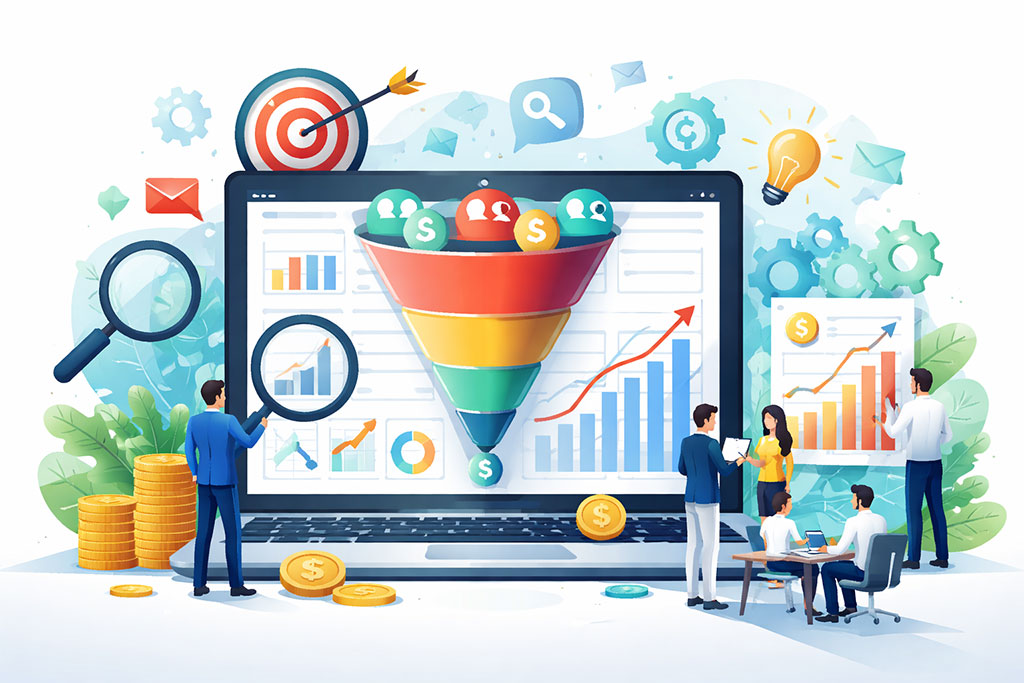
But the digital world has changed. Today, traffic alone does not guarantee leads, sales, or growth. You can have thousands of visitors and still struggle to generate revenue. This shift has created what can be called a hidden or “dark” SEO funnel — a customer journey that is not fully visible in analytics reports.
Understanding this new funnel is important if you want real business results from SEO.
How the SEO Funnel Has Changed
Earlier, the customer journey was more predictable. A user searched for something, clicked on a result, visited a website, and either converted or left. Traffic growth directly reflected visibility and performance.
Now, the journey is much more complex.
Users might see your brand name in search results but not click. They may read quick answers shown directly on the search page. They might visit your website once and return later by typing your domain directly. Some users check reviews, watch videos, or explore social media before contacting you.
Many of these interactions are not clearly tracked under organic search traffic. That is why the funnel feels “dark.” Influence happens, but it is not always measurable through simple traffic numbers.
The Problem With Focusing Only on Traffic
Traffic is often treated as the main KPI in SEO reports. However, high traffic does not always mean high performance.
For example, if your blog ranks for general informational keywords, you may attract a large audience. But if those visitors are not interested in your services or products, they will leave without converting.
In this case, traffic increases, but business growth does not.
On the other hand, a page targeting a specific, high-intent keyword might bring fewer visitors but generate more leads. This shows that quality matters more than quantity.
Measuring success only by sessions can create a false sense of progress.
The Rise of Zero-Click Searches
Another reason traffic no longer proves SEO success is the increase in zero-click searches.
Search engines now provide direct answers through featured snippets, quick definitions, and AI-generated summaries. Frequently, users obtain the information they require without going to any websites.
Your content might still be influencing them, but you do not get the click.
This means impressions and visibility may grow while traffic remains flat or even declines. If you only look at visitor numbers, you might think performance is dropping, even though your brand exposure is increasing.
User Intent Is More Important Than Ever
Modern SEO is focused heavily on search intent. Search engines aim to show results that perfectly match what users are looking for.
If your content aligns with strong commercial or transactional intent, you are more likely to generate conversions. These guests are getting closer to making a choice.
Chasing high-volume keywords without understanding intent can bring irrelevant traffic. That traffic increases numbers but does not improve revenue.
Instead of asking how many people visited your website, a better question is how many of them were genuinely interested in what you offer.
Brand Visibility and Trust Signals
SEO today is not just about keywords. It also involves establishing credibility and authority.
When users repeatedly see your brand in search results, they become familiar with it. Even if they do not click immediately, your brand stays in their mind. Later, they may search for your company name directly.
Direct searches, repeat visits, and branded queries are strong indicators of SEO impact. However, these actions are often not credited properly to organic search in standard reports.
This makes the funnel more complex and less transparent.
Multi-Channel Customer Journeys
Customers rarely interact with only one channel before making a decision. They may first discover your website through organic search, then follow you on social media, and later click a paid advertisement before converting.
In analytics, the final click often receives the credit. But SEO may have started the journey.
Because of this multi-channel behavior, traffic alone cannot capture the full value of SEO. The impact spreads across different touchpoints, making it harder to measure with simple metrics.
What Should You Measure Instead?
If traffic is not enough, what should you track?
Conversions, qualified leads, revenue, and engagement metrics provide deeper insight. Time spent on important pages, repeat visitors, and assisted conversions help you understand whether your content is attracting serious prospects.
If organic visitors are filling out contact forms, requesting quotes, or purchasing products, your SEO is working, even if total traffic is not growing rapidly.
The goal should be meaningful interaction, not just page views.
Redefining SEO Success
The hidden SEO funnel teaches us that influence is often invisible. Not every interaction results in a click. Not every click results in immediate conversion. And not every conversion is clearly attributed to search.
Success in modern SEO means aligning your strategy with business outcomes. It means creating content that solves real problems, targeting high-intent keywords, and building brand authority over time.
Although it is only one aspect of the picture, traffic is nonetheless crucial.
Conclusion: Focus on Value, Not Vanity Metrics
The idea that more traffic equals more success is outdated. In today’s search landscape, visibility, trust, intent, and conversions matter far more.
If you shift your focus from vanity metrics to real business impact, your SEO strategy will become stronger and more sustainable. The dark SEO funnel may hide parts of the customer journey, but with the right mindset and measurement approach, you can uncover true performance and drive long-term growth.