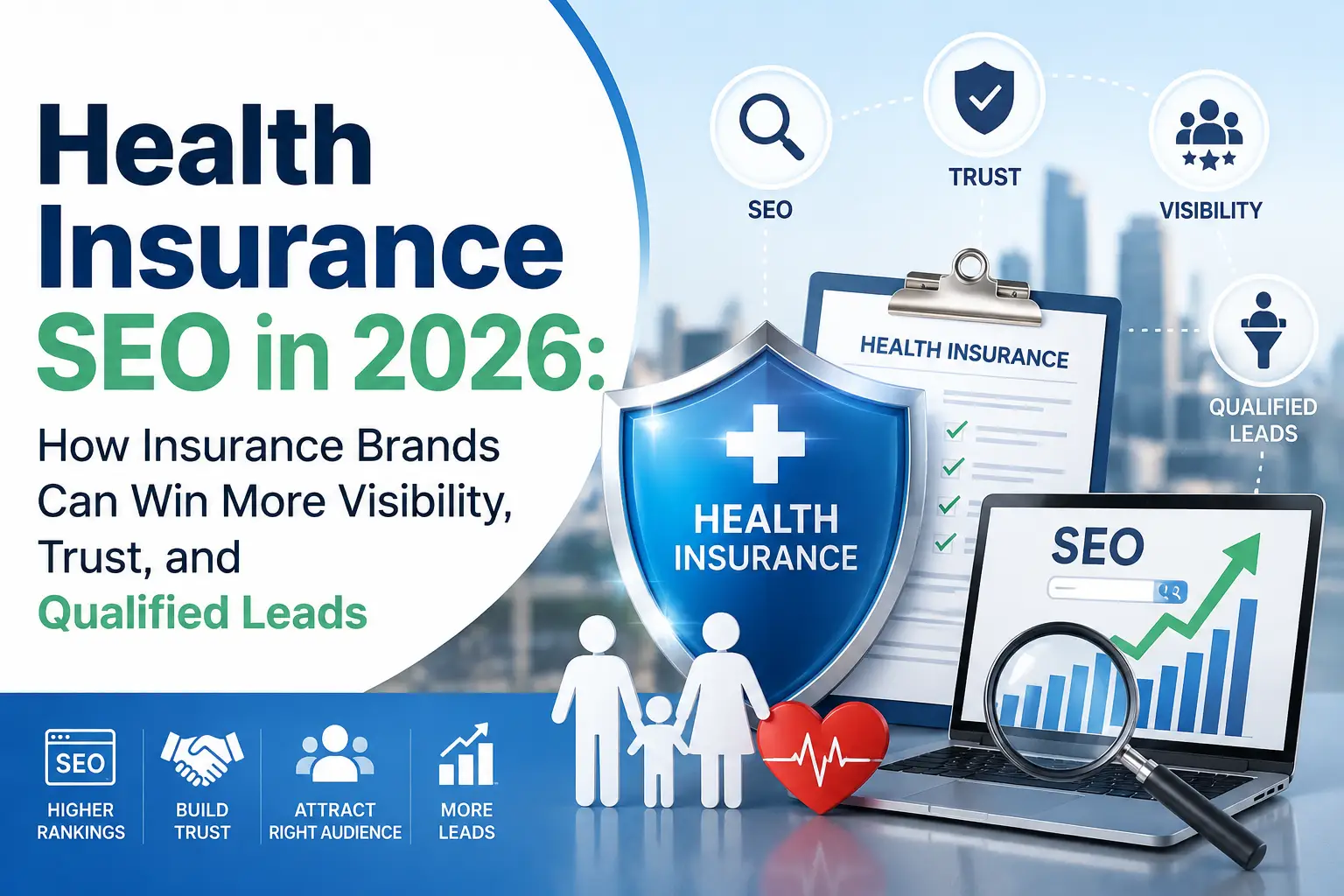
When someone needs health insurance, they rarely make a decision after seeing a single advertisement.
- They search.
- They compare.
They read reviews, explore coverage information, check costs, ask questions, and often visit several websites before deciding whom to trust.
That buying journey has become even more complex in 2026. Search is no longer limited to traditional Google results. People increasingly discover information through AI-generated answers, featured results, local search, videos, forums, and other search experiences.
For health insurance companies, this creates a significant opportunity—but also a serious challenge.
Being online is no longer enough. Your brand needs to be discoverable, credible, useful, and easy to choose.
That is where a modern SEO strategy can make a measurable difference.
The New Search Journey for Health Insurance Customers
The traditional idea of SEO was simple: rank a page for a keyword and receive a visitor.
That model is no longer enough.
A potential policyholder might begin with a question such as:
- What health insurance coverage do I need?
- How does a health insurance deductible work?
- What should I consider when comparing plans?
- How much coverage is appropriate for my family?
- What questions should I ask an insurance provider?
- How can I find health insurance options in my area?
The customer may then move from informational searches to comparison searches and eventually to high-intent searches such as finding a provider, requesting information, or exploring available plans.
A successful SEO strategy should support the entire journey, not just one search query.
From Rankings to Revenue: What Health Insurance SEO Should Actually Deliver
For an insurance business, a number-one ranking is not the final objective.
Imagine receiving thousands of visitors every month who are not looking for your services, cannot become customers, or leave your website without taking action.
That traffic may look impressive in an SEO report, but it does not necessarily help the business.
A stronger strategy focuses on attracting qualified organic visitors.
These are people who have a genuine interest in health insurance and are more likely to take a meaningful next step.
That could include:
- Requesting a quote
- Contacting an insurance representative
- Exploring available plans
- Calling the company
- Submitting an inquiry
- Downloading useful information
- Visiting a service or location page
- Returning to the website after researching options
This is the difference between traffic-focused SEO and business-focused SEO.
Build Content Around the Questions Customers Actually Ask
One of the biggest opportunities for health insurance companies is the enormous amount of information customers seek before making a decision.
Instead of producing content simply because a keyword has search volume, insurance brands should ask:
“What does our potential customer need to understand before they feel confident contacting us?”
That question leads to much stronger content.
A health insurance website might create resources explaining:
Understanding Health Insurance Costs
Customers often struggle to understand the relationship between premiums, deductibles, copayments, coinsurance, and out-of-pocket expenses.
Clear educational content can make these concepts easier to understand without overwhelming the reader.
Comparing Coverage Options
People want to know what factors they should consider when evaluating different insurance options.
A useful comparison guide can help them understand what to look for while naturally introducing the company’s services.
Individual and Family Coverage
Different customers have different priorities.
A young individual may have very different concerns from a family evaluating coverage for multiple members.
Dedicated resources can address these audiences more effectively than one broad page trying to speak to everyone.
Insurance Questions and Terminology
Insurance terminology can be confusing.
Creating a well-organized resource library around common questions gives potential customers a reason to visit the website before they are ready to make contact.
And when the information is genuinely useful, it can help establish the brand as a reliable source.
Why Trust Matters More Than Ever in Insurance Search
Health insurance is not an impulse purchase.
People are making decisions that can affect their finances, healthcare access, and families.
That means trust matters.
A website that contains thin articles, vague claims, outdated information, or poorly explained insurance concepts can quickly lose credibility.
On the other hand, a website that demonstrates expertise through accurate, transparent, well-maintained content gives visitors more reasons to stay and learn.
Insurance companies should therefore think beyond traditional on-page SEO.
Consider strengthening pages with:
- Clear information about the company
- Author or reviewer information where appropriate
- Updated content
- Reliable sources
- Transparent explanations
- Clear contact information
- Easy-to-find customer support options
- Consistent business information
- Helpful FAQs
- Strong privacy and security practices
The objective is simple:
Give people confidence before asking them to become customers.
SEO and AI Search Are Changing the Content Game
Search is evolving rapidly.
AI-powered search experiences can summarize information and provide users with answers without requiring them to visit multiple traditional search results.
That does not mean websites have become irrelevant.
It means the quality and structure of the information behind those answers matter even more.
Health insurance companies should create content that is:
Clear: Questions should be answered directly.
Comprehensive: Important context should not be omitted simply to make an article shorter.
Structured: Logical headings, concise explanations, FAQs, lists, and supporting information make content easier to understand.
Original: Content should demonstrate the company’s own expertise instead of repeating what dozens of competitors already published.
Trustworthy: Important insurance information should be accurate and responsibly presented.
The brands that consistently provide genuinely useful information have a better foundation for visibility across modern search experiences.
Your Service Pages Should Do More Than Describe Services
Many insurance websites make the same mistake: they create a service page, list a few benefits, add a contact button, and expect visitors to convert.
A high-performing landing page needs to answer the questions a prospective customer is already asking.
For example:
- Is this service relevant to me?
- What does the company actually provide?
- Why should I consider this provider?
- What should I do next?
- How can I get more information?
The page should guide the visitor naturally from understanding the service to taking action.
Calls to action should also match the user’s intent.
Someone who is still researching may prefer an educational resource, while someone with strong purchase intent may be ready to request information or contact an agent.
Don’t Ignore Local Search
For insurance providers serving specific markets, local visibility can be extremely valuable.
A person may search for an insurance provider, agent, or health coverage option within a particular city or region.
Local SEO can help companies become more visible during these searches.
A strong local strategy can include:
- Accurate Google Business Profile information
- Consistent business details
- Location-specific service pages
- Localized content
- Relevant customer reviews
- Location-based internal linking
- Strong local relevance throughout the website
The goal isn’t to create hundreds of nearly identical city pages.
The goal is to create useful local resources that genuinely serve people in the markets you operate in.
Technical SEO Is the Foundation Customers Never See
Customers may never know whether a website has technical SEO problems.
Search engines do.
A website can have excellent content and still struggle if important pages cannot be properly crawled, indexed, or understood.
Health insurance websites should regularly review areas such as:
- Page speed and Core Web Vitals
- Mobile usability
- Crawlability
- Indexing
- Broken links
- Duplicate content
- Canonicalization
- Structured data
- Internal linking
- XML sitemaps
- HTTPS and website security
- Website architecture
Technical SEO isn’t about impressing customers with technical terminology.
It is about removing obstacles between valuable content and the people searching for it.
The Most Valuable SEO Strategy Is Built Around Business Intent
Every health insurance company has different goals.
One provider may want more quote requests.
Another may want greater visibility in specific states or cities.
Another may be focused on growing organic traffic to educational resources.
A strong SEO campaign should begin with the business objective and work backward.
Instead of asking:
“Which keywords can we rank for?”
Ask:
“Which searches can introduce the right customers to our business?”
That shift changes everything—from keyword research and content creation to landing page optimization and reporting.
What a Modern Health Insurance SEO Strategy Should Include
A comprehensive strategy can bring several disciplines together:
Search Intent Research
Understand what potential customers want when they search—not just the words they type.
Content Strategy
Create useful resources that answer important questions at every stage of the customer journey.
On-Page Optimization
Improve titles, headings, content structure, internal links, images, and other page elements.
Technical SEO
Make sure search engines can efficiently crawl, understand, and index the website.
Local SEO
Improve visibility for location-based searches where the business serves specific markets.
Conversion Optimization
Turn relevant organic visitors into inquiries, calls, quote requests, or other meaningful actions.
Performance Analysis
Measure the metrics that matter to the business rather than focusing exclusively on rankings.
Choose an SEO Partner That Understands the Insurance Business
Health insurance companies don’t need content that simply sounds professional.
They need a search strategy that understands their customers, their competitive environment, and the importance of trust.
A specialized SEO partner should be able to connect technical SEO with content strategy, search intent, user experience, and conversion goals.
More importantly, the work should be transparent.
You should be able to understand:
- What is being optimized
- Why it is being optimized
- Which audiences are being targeted
- How content supports business goals
- Which pages are generating opportunities
- What is improving over time
- Where additional opportunities exist
SEO should feel like a growth strategy—not a monthly checklist.
The Bottom Line
The future of health insurance search isn’t about publishing more content or chasing every keyword.
It is about becoming the brand people can find, understand, trust, and contact when they need health insurance information or services.
Companies that invest in useful content, strong technical foundations, trustworthy information, local visibility, and conversion-focused experiences can build a much stronger digital presence over time.
The opportunity is bigger than Google rankings.
It is about owning more of the customer journey.
When someone begins searching for answers, your company should have a reason to appear.
When they need trustworthy information, your website should provide it.
And when they are ready to take the next step, your website should make that step simple.
That is what modern SEO should do for a health insurance business.