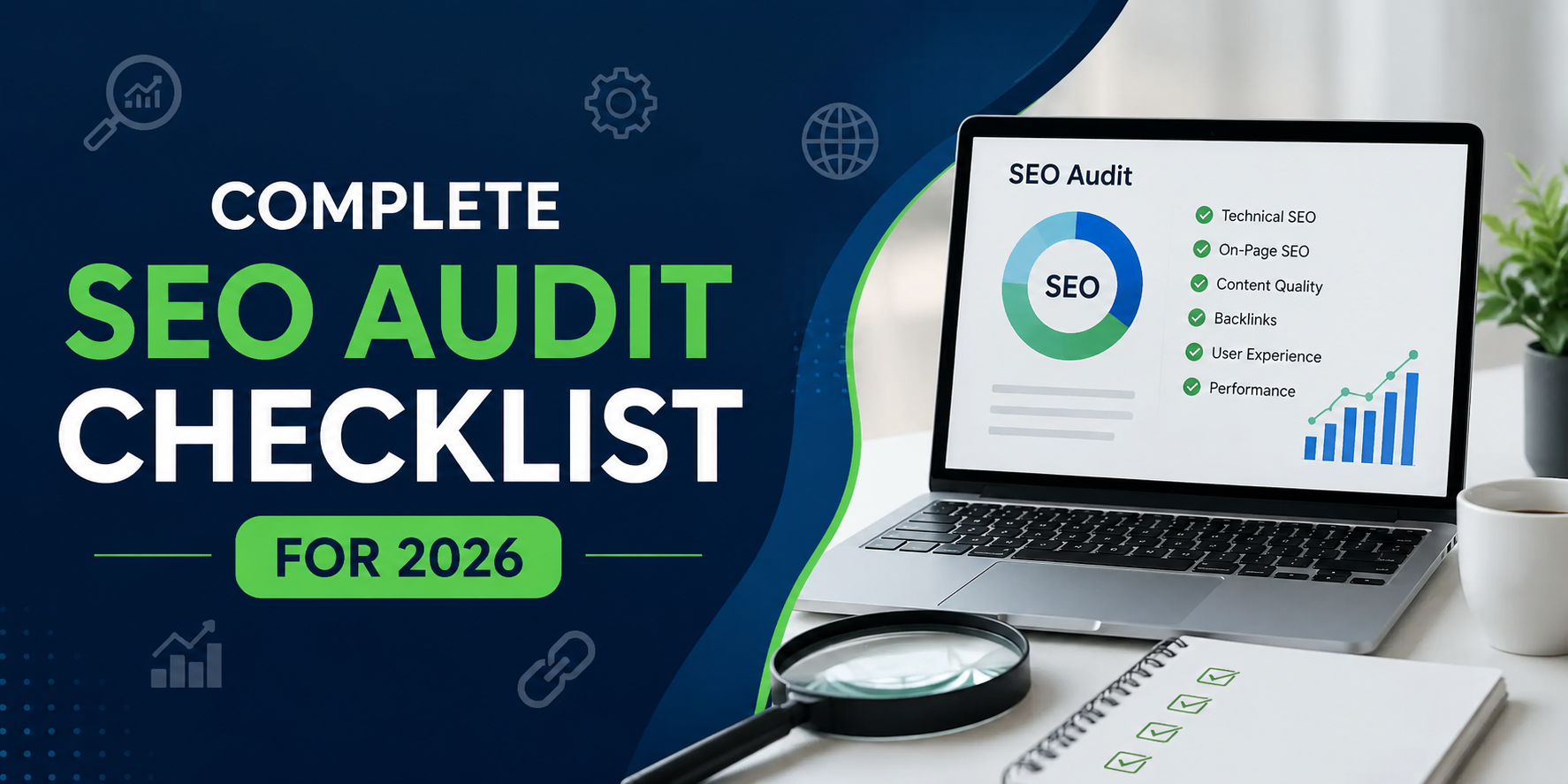
If your website is not getting enough traffic, an SEO audit is the best place to start. In 2026, SEO is no longer just about keywords. Search engines also look at website speed, user experience, content quality, and how well your pages answer people’s questions. A complete SEO audit helps you find problems that may be stopping your website from ranking higher.
Here is a simple SEO audit checklist you can follow.
- Check Website Performance
A slow website can reduce rankings and increase bounce rates. Ensure that your pages load rapidly on desktop and mobile platforms. Compress images, remove unnecessary scripts, and use browser caching whenever possible.
- Make Sure Your Website Is Mobile-Friendly
Most users now browse on mobile phones. Test your website on different screen sizes to ensure buttons, menus, and text are easy to use. A smooth mobile experience improves both SEO and user satisfaction.
- Review Your Technical SEO
Search engines should be able to crawl and index your website without issues. Check for broken links, missing pages, redirect errors, duplicate content, and XML sitemap problems. Also, make sure your robots.txt file is not blocking important pages.
- Audit Your Content
Every page should provide useful and original information. Remove outdated content, update old articles, and avoid publishing similar pages with the same topic. Write content that answers real user questions instead of focusing only on keywords.
- Optimize Titles and Meta Descriptions
Every page ought to have a distinct title and meta description. Keep titles clear and descriptive while naturally including your primary keyword. Good metadata can improve your click-through rate in search results.
- Check Keyword Relevance
Review whether your target keywords still match what users are searching for. Focus on search intent instead of keyword stuffing. Include related terms naturally throughout your content to improve topical relevance.
- Improve Internal Linking
To make it easier for users and search engines to traverse your website, link related pages together. Strong internal links help distribute authority across important pages and improve user engagement.
- Review Backlinks
Check the quality of websites linking to your domain. Remove or disavow harmful backlinks if necessary and continue earning links from trusted, relevant websites through valuable content.
- Optimize Images
Use descriptive file names and alt text for every image. Compress large images to improve page speed without reducing quality.
- Monitor User Experience
A good website should be easy to navigate. Improve page layout, reduce intrusive pop-ups, and make important information easy to find. Better user experience often leads to higher engagement and stronger SEO performance.
Final Thoughts
An SEO audit is not something you do once and forget. Search engines, competitors, and user behavior continue to change throughout the year. By reviewing your website regularly, fixing technical issues, updating content, and improving user experience, you can maintain better search visibility and attract more qualified visitors. Use this checklist every few months to keep your website optimized and ready for SEO success in 2026.