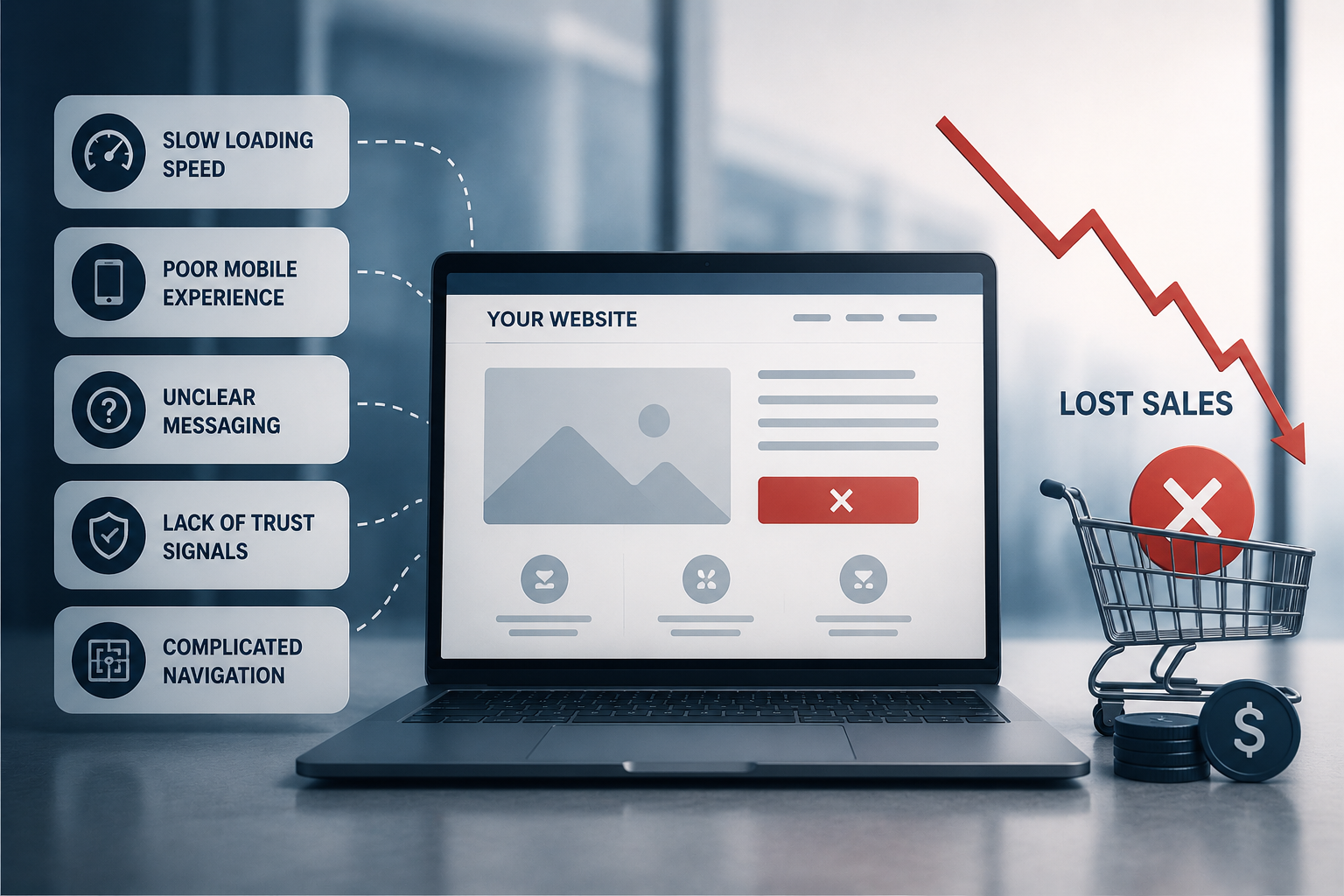
Many business owners assume that once their website is live, it will automatically help them generate leads and sales. Unfortunately, that isn’t always true.
A website can look attractive, have all the necessary pages, and still fail to convert visitors into customers. In fact, some websites quietly drive potential buyers away without the business owner even realizing it.
If your website gets traffic but sales remain low, your website might be part of the problem.
First Impressions Happen Fast
When someone lands on your website, they start forming opinions within seconds. Visitors don’t carefully analyze every page. They quickly decide whether your business looks trustworthy and relevant to their needs.
If the design feels outdated, cluttered, or difficult to navigate, many visitors leave before learning what you offer. Every person who leaves without exploring further is a potential sale lost.
A website should make visitors feel confident, not confused.
Visitors Shouldn’t Have to Guess
One of the biggest mistakes businesses make is assuming visitors already understand what they do.
If someone lands on your homepage and cannot immediately answer these three questions, you may have a problem:
What does this company offer?
How can it help me?
What should I do next?
The more effort people must spend figuring out your business, the more likely they are to leave and visit a competitor instead.
Slow Websites Create Fast Exits
Today’s customers expect speed. Whether they are browsing on a laptop or mobile phone, they want pages to load quickly.
A slow website creates frustration. Visitors often abandon a site before it fully loads, especially when they have many alternatives available. Even a few extra seconds can reduce engagement and hurt conversions.
Speed is a sales concern as well as a technological one.
Too Much Information Can Hurt
Many businesses try to impress visitors by putting everything on one page. They add long paragraphs, multiple offers, endless menus, and too many calls to action.
The result is information overload.
When people feel overwhelmed, they delay making decisions. Instead of encouraging action, a crowded website often causes visitors to leave without taking any action at all.
Simple messaging usually performs better than complicated messaging.
Mobile Users Expect a Better Experience
Nowadays, mobile devices account for a significant portion of website traffic. Yet many businesses still design websites primarily for desktop users.
If buttons are difficult to tap, text is hard to read, or pages don’t display correctly on phones, visitors may leave before contacting you.
A poor mobile experience can quietly reduce sales opportunities every day.
Trust Is Often Missing
People rarely buy from businesses they don’t trust.
Visitors look for signals that prove your company is legitimate and reliable. Customer reviews, testimonials, project examples, certifications, and clear contact information all help build confidence.
Without these trust signals, even interested visitors may hesitate to move forward.
Your Website Should Guide People
Many websites act like digital brochures. They provide information but don’t encourage action.
A successful website guides visitors toward the next step, whether that’s requesting a quote, booking a consultation, making a purchase, or contacting your team.
If visitors aren’t sure what to do next, they usually do nothing.
Conclusion
A website should be more than an online presence. It should work as a sales tool that attracts, engages, and converts potential customers.
If your traffic is growing but sales aren’t, don’t assume the problem is your marketing. Examine your website more closely. Results might be significantly impacted by minor problems like delayed loading times, ambiguous messaging, a bad mobile experience, or a lack of trust signals.
Sometimes the difference between more sales and fewer sales isn’t the number of visitors you get—it’s what happens after they arrive.