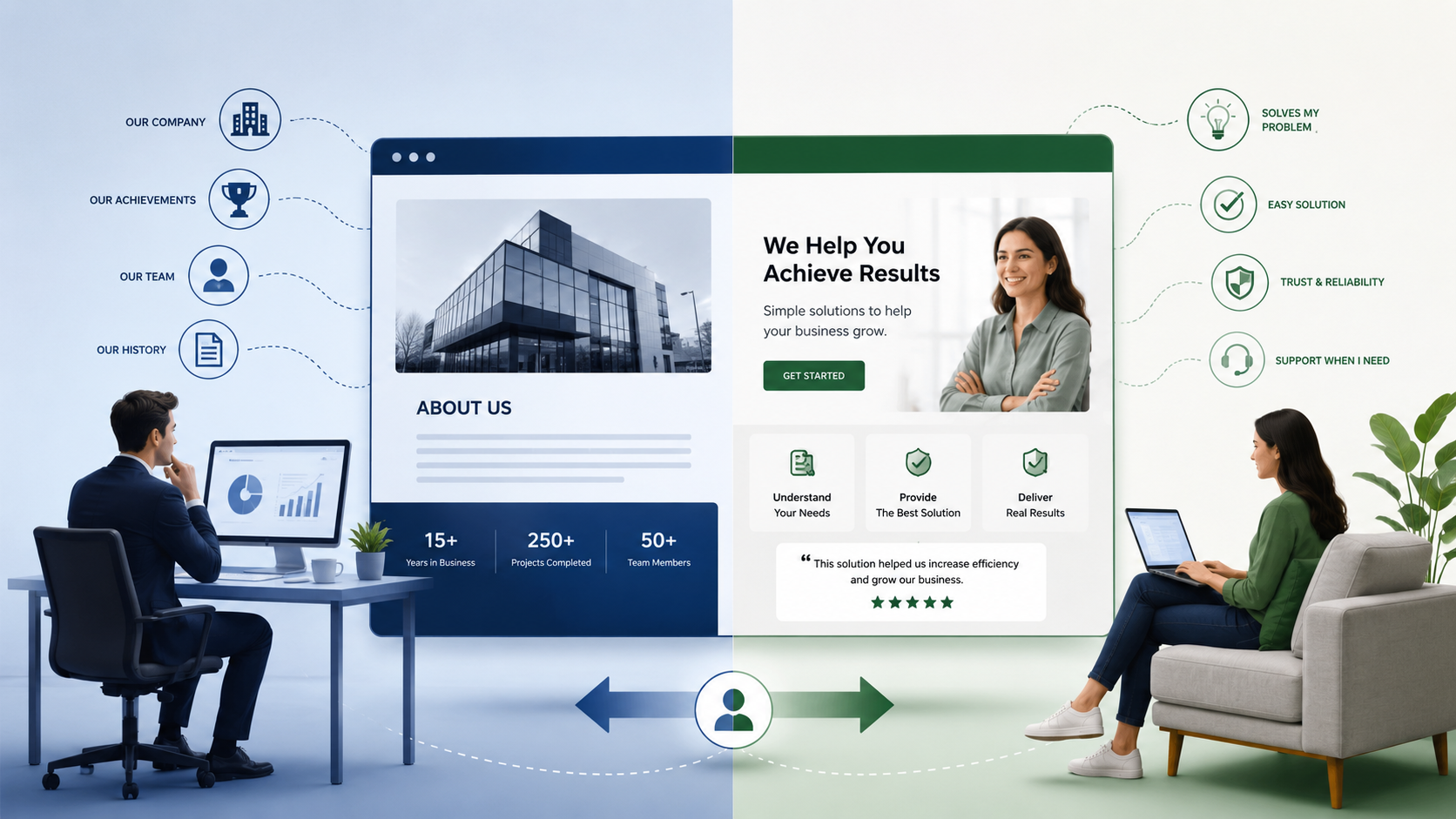
A lot of companies spend money and effort building a website. They choose attractive designs, add company information, and showcase their achievements. However, there is one common problem that often goes unnoticed: the website is built for the business owner instead of the customer.
A website should help visitors find answers, solve problems, and take action. When it focuses too much on the company and not enough on the user, it can miss opportunities to generate leads and sales.
The Problem with Owner-Focused Websites
Business owners are naturally proud of their journey, experience, and accomplishments. As a result, many websites are filled with company history, internal details, and lengthy descriptions about the business.
While these details may be important, most visitors arrive with a different mindset. They are not asking, “How long has this company existed?” They are asking, “Can this company help me solve my problem?”
When a website fails to answer that question quickly, visitors often leave and look elsewhere.
Customers Want Clarity, Not Complexity
People visit websites because they need information. They want to understand what a business offers, how it can help them, and what they should do next.
Unfortunately, a lot of websites use technical phrases, industry jargon, or complex messaging. What makes perfect sense to the business owner may confuse a potential customer.
Clear and simple communication builds trust. If visitors can immediately understand the value being offered, they are more likely to stay engaged and take action.
Your Website Should Guide Visitors
A good website acts like a helpful guide.Visitors should go from curiosity to confidence as a result.
Every page should answer important questions. What problem do you solve? Why should someone choose you? How can they get started?
When visitors can easily find these answers, they feel more comfortable moving forward. If they have to search for basic information, they may lose interest before becoming a customer
Design Should Support the User Experience
Many businesses focus heavily on appearance while overlooking usability. A beautiful website is valuable, but only if it helps visitors achieve their goals.
Customers should be able to navigate the site easily, read content without effort, and find contact information quickly. A clean design that supports the user’s journey often performs better than a flashy design that creates distractions.
The goal is not simply to impress visitors. The goal is to help them take the next step.
Think Like Your Customer
One of the easiest ways to improve a website is to view it from the customer’s perspective. Imagine visiting the site for the first time.
Would you immediately understand what the business offers? Would you know what action to take next? Would you trust the company based on the information presented?
If the response is negative, there is space for development.
Conclusion
A website is not just an online brochure. It is a tool for communication, trust-building, and business growth. When websites are designed around the needs of customers rather than the preferences of owners, they become far more effective.
The businesses that succeed online are often the ones that focus less on talking about themselves and more on helping their customers find solutions.