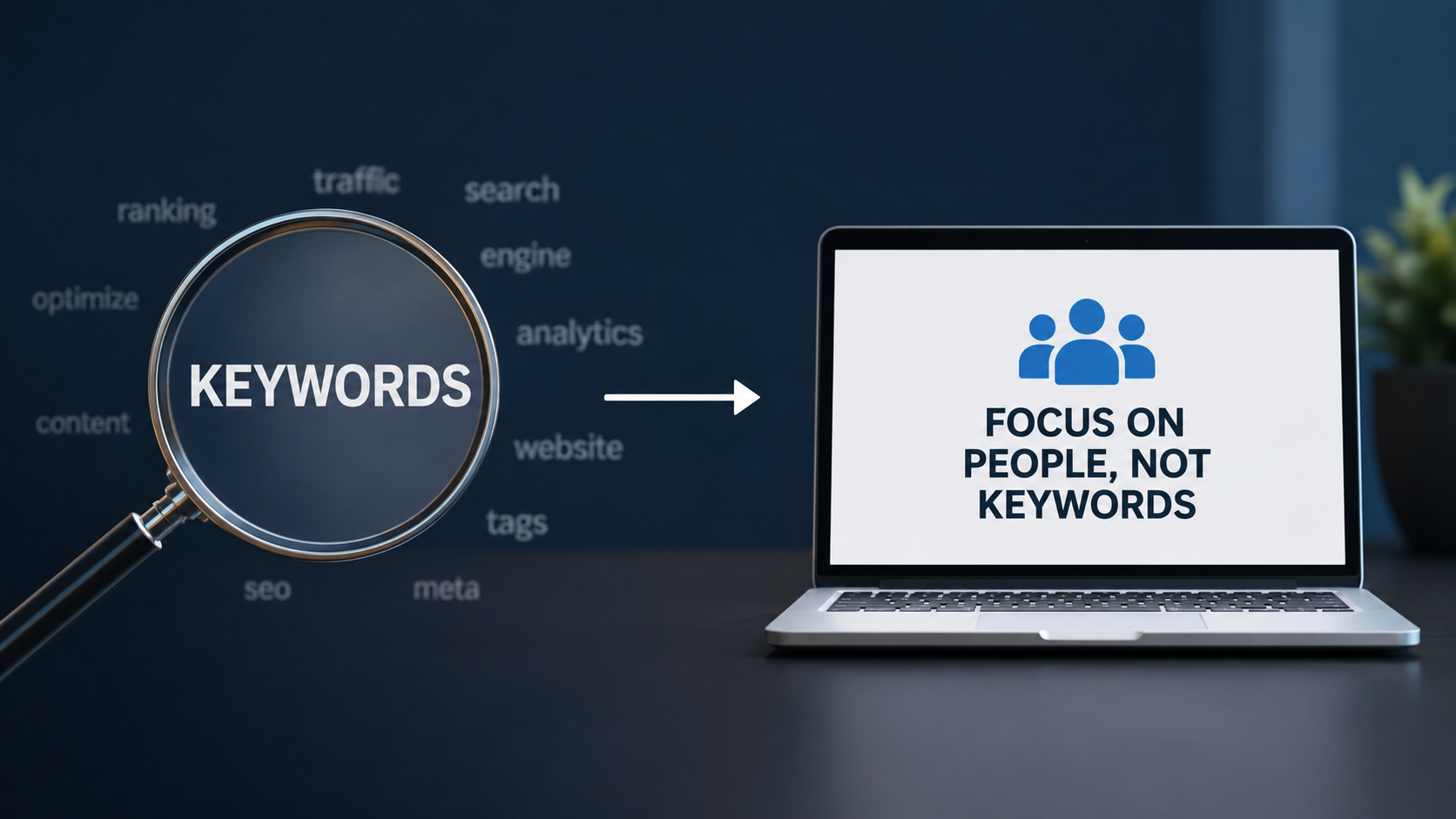
For years, keywords were treated as the foundation of SEO. Businesses carefully selected target phrases, inserted them into every page, and measured success by how often those words appeared in their content. We followed the same approach because it seemed like the right thing to do.
Then something unexpected happened.
We stopped focusing on keywords as our main strategy.
That does not mean we ignored SEO. Instead, we shifted our attention to something more important: understanding what people actually wanted when they searched online. we started asking, “What problem is the user trying to solve?”
This small change completely transformed the way we created content.
Instead of writing articles around a single keyword, we began creating content around questions, challenges, and real-life situations. We focused on providing useful answers and practical information. The goal was no longer to satisfy a search engine. The goal was to help a real person.
At first, it felt risky.
Keyword density, exact-match phrases, and ranking for particular search terms were still highlighted in many SEO manuals. However, we noticed that search engines were becoming smarter. They were getting better at understanding context, meaning, and user intent. Pages that genuinely helped people often performed better than pages that simply repeated keywords.
As we continued this approach, something interesting happened. Our content started appearing for a wider range of search terms. Articles that were not written around a single keyword began attracting visitors from dozens of related searches. Traffic became more diverse and more stable.
The quality of visitors also improved.
People spent more time reading our content because it answered their questions. They explored additional pages, engaged with our website, and were more likely to become customers. Instead of chasing rankings alone, we were building trust.
Another benefit was that content creation became easier and more natural. Uncomfortable phrases no longer had to be inserted into every paragraph. They could focus on clarity, value, and readability. The result was content that sounded human instead of robotic.
This experience taught us an important lesson. Keywords still matter, but they should not control the entire content strategy. They are useful clues that help us understand what people are searching for, but they are not the final goal.
The real goal is creating content that solves problems, answers questions, and delivers value. When content genuinely helps people, search engines often reward it naturally.
Today, our approach is simple. We start with the audience, not the keyword. We think about their needs, concerns, and goals. Then we create content that provides meaningful answers.
Ironically, our material did better than ever when we stopped worrying so much about keywords. Rankings improved, traffic grew, and engagement increased. Most importantly, we built stronger connections with the people we were trying to reach.
Sometimes the best SEO strategy is not focusing on search engines first. It is focusing on people.