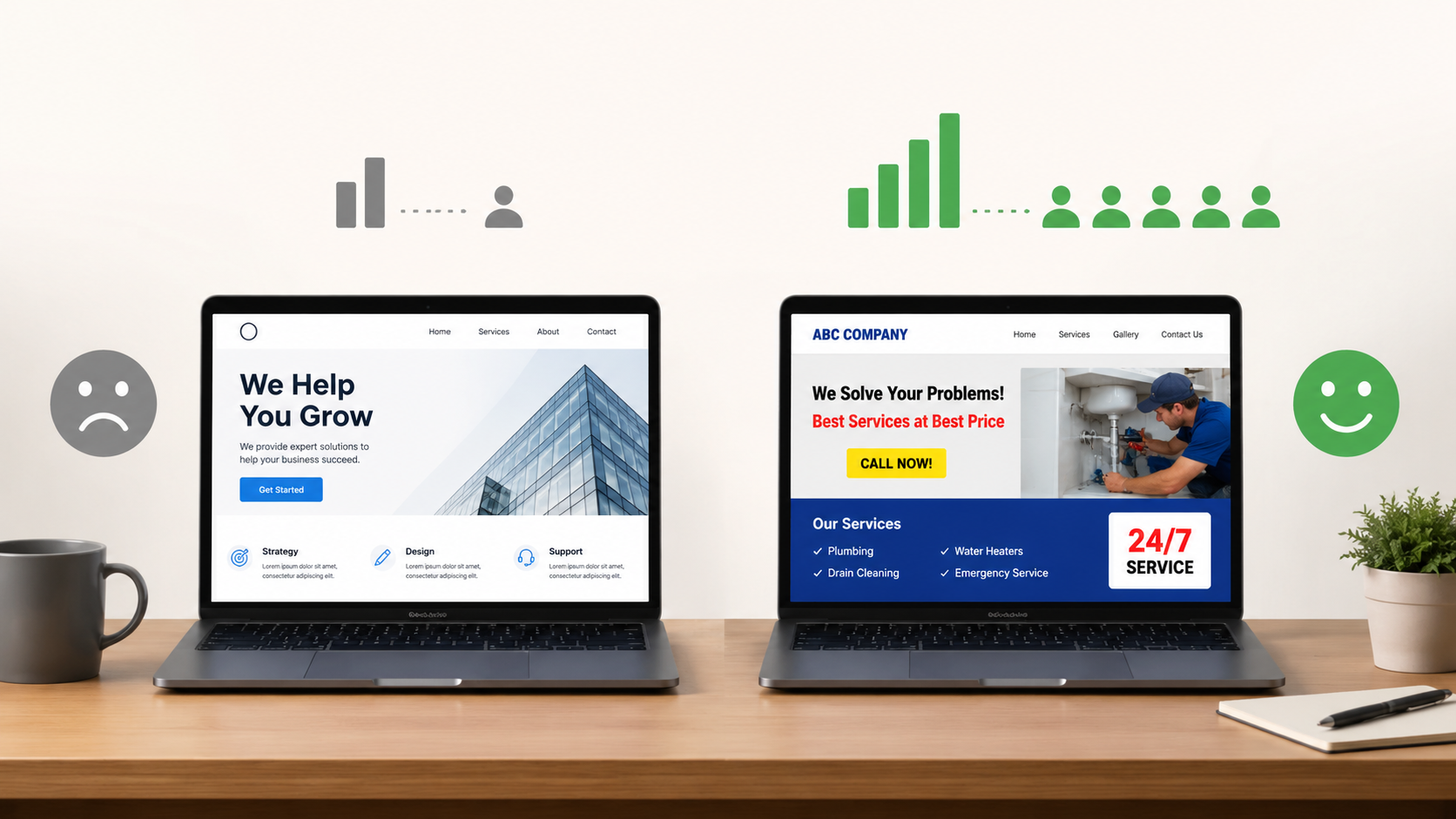
It is a situation many business owners struggle to understand at first. You spend time, money, and effort building a clean website. It looks modern, loads well, and explains your services clearly. But then you notice something confusing. A competitor with a worse-looking website is getting more leads, more calls, and more enquiries than you.
This feels unfair, but in reality, it is very common in digital marketing. Design is only one aspect of a website. It is about visibility, trust signals, speed, messaging, and how well it guides a visitor to take action. Most businesses only focus on the surface level, while winning competitors focus on how the system works behind the website.
Visibility Matters More Than Design
The first reason a “worse” website performs better is often visibility. A simple website that ranks on Google or runs strong ads will always beat a beautiful website that nobody sees.
Many businesses ignore SEO, keyword targeting, and local search optimization. Meanwhile, their competitor may have basic pages, but those pages are structured in a way that search engines understand. When clients are actively searching, they appear. That alone creates a steady flow of leads.
Even paid ads can change everything. A competitor might be running consistent Google Ads or Meta Ads, sending targeted traffic directly to their landing pages. So even if their website looks outdated, they are still in front of the right audience at the right time.
Clear Messaging Wins Over Fancy Design
Another important factor is clarity. Many websites try to look impressive but fail to explain one simple thing: “What problem do you solve, and why should I choose you?”
A competitor with a simple website often wins because their message is direct. When a visitor lands on their page, they immediately understand the service and what to do next. There is no confusion, no distraction, and no overthinking.
On the other hand, a modern-looking website can sometimes have too much design, too many animations, or unclear sections. This slows down decision-making. And when people feel even slightly confused, they leave.
Strong Call-to-Action Makes the Difference
Leads do not come from design. They come from action.
A competitor may have basic visuals, but their website is built with strong call-to-action placement. Buttons like “Get a Quote,” “Call Now,” or “Book a Demo” are placed in the right spots. The visitor is guided step by step without effort.
Many good-looking websites fail here. They assume users will figure it out themselves. But online users do not spend time exploring. If they do not see a clear next step within a few seconds, they leave.
Speed and Simplicity Convert Better
It is also possible that the “worse” website is actually faster. In lead generation, speed is crucial. A slow, heavy website with high-quality visuals can lose visitors before it even loads completely.
Simple websites often load quickly, especially on mobile devices. And since most traffic today comes from mobile, speed becomes more important than design quality.
A fast-loading page with a simple layout can outperform a visually rich but slow website every single time.
Trust Is Built in Small Details
Trust does not always come from design. It comes from consistency and signals. Reviews, testimonials, clear contact details, and real-world proof often matter more than how polished a website looks.
Real customer reviews, straightforward case studies, or even simple but sincere content that fosters trust could be used by a rival. Meanwhile, a high-end website may look professional but feel empty or impersonal.
People do not always choose the best-looking option. They select the choice that seems the safest.
The Real Lesson Behind It
When a worse website gets more leads, it is not luck. It is strategy.
It means the competitor is likely doing something right in terms of traffic, messaging, or conversion flow. It also highlights a common mistake many businesses make: focusing too much on appearance and not enough on performance.
A website is not a digital brochure. It is a sales system. If it is not bringing leads, then something in the system is not working, no matter how good it looks.
The real goal is not to have the best-looking website. The real goal is to have the website that converts the most visitors into customers.