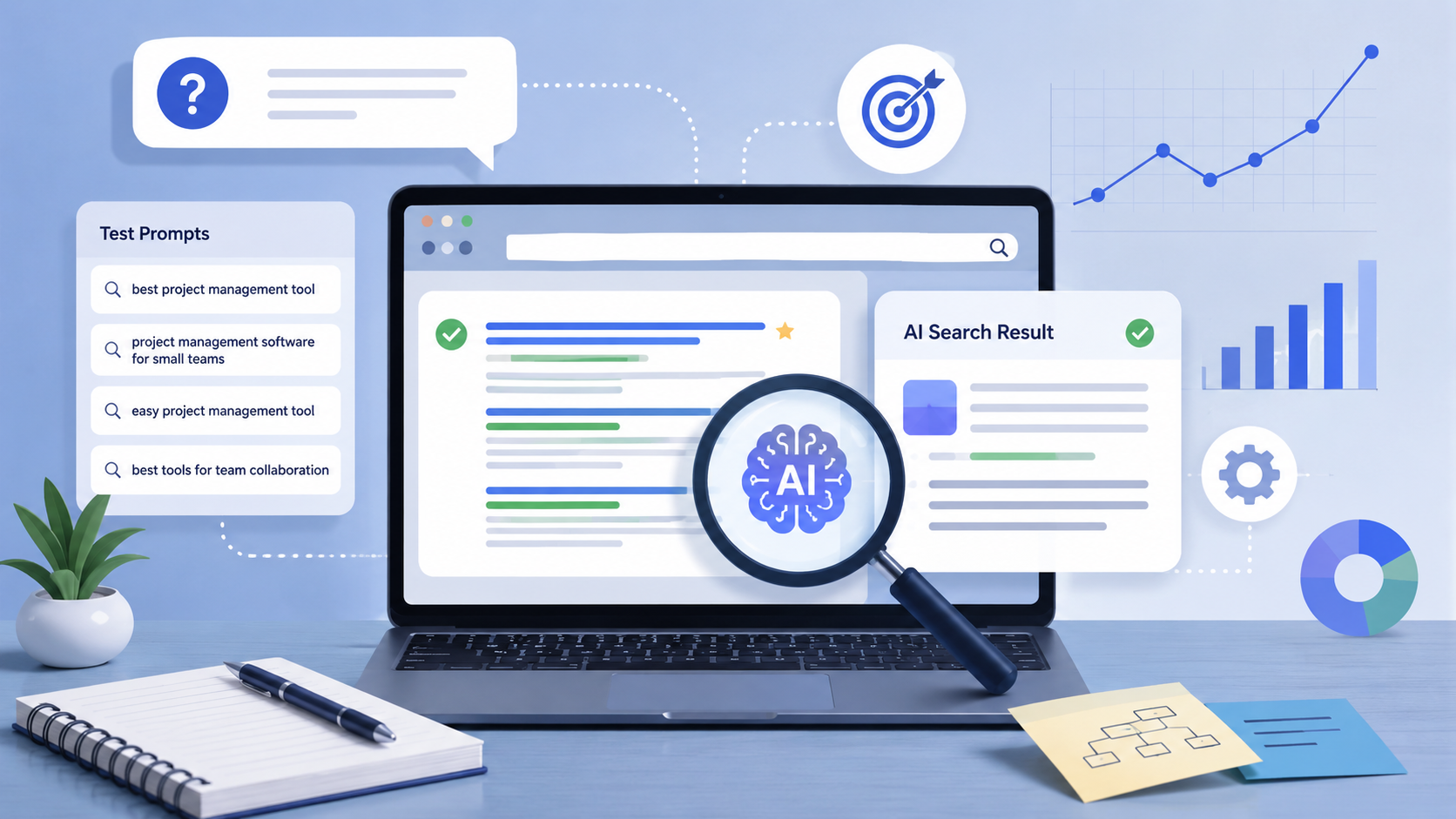
Why AI Search Is Changing SEO
Search engines are changing fast. Today, people are not only searching on traditional search engines, but also asking questions in AI tools. Instead of typing short keywords, users now write complete prompts like “best digital marketing strategy for local businesses” or “how to improve website speed for SEO.”
This shift means businesses need a new SEO approach. Prompt-level SEO is the process of testing how your content appears when people ask AI-powered search tools different questions. It helps brands understand what type of content AI systems prefer and how websites can become more visible in AI-generated answers.
What Is a Prompt-Level SEO Experiment?
A prompt-level SEO experiment means testing different prompts in AI search platforms to see whether your website, content, or brand appears in the results.
For example, if you own a software company, you may test prompts such as:
“Best mobile app development company for startups”
“Affordable website development services”
“Top digital marketing agencies for small businesses”
By testing these prompts, you can check if AI tools mention your brand, use your content, or recommend your website. This gives valuable insights into how AI search understands your content.
Start With Real User Questions
The first step is understanding how people naturally ask questions. Traditional SEO mostly focused on keywords, but AI search focuses more on conversations and intent.
Instead of targeting only “SEO services,” create content around questions people actually ask. Think about customer problems, buying intent, and informational searches.
Good prompt-based content usually sounds natural and provides direct answers. AI systems often prefer content that is simple, clear, and helpful.
Create Content That AI Can Understand Easily
AI search tools scan content differently from traditional search engines. Long and confusing paragraphs may not perform well.
To improve visibility, use simple headings, short paragraphs, and direct explanations. Add FAQs, examples, and conversational language.
For example, if your page explains Google Ads services, clearly mention what the service does, who it helps, pricing information, and expected results. AI systems prefer structured and informative content because it is easier to summarize in generated answers.
Test Multiple Prompt Variations
One important part of prompt-level SEO is experimenting with different styles of prompts. Small wording changes can create different AI results.
For example:
“Best CRM software for small companies”
“Affordable CRM tools for startups”
“Which CRM is easy for beginners?”
All three prompts have similar intent but may produce different answers. Testing variations helps you understand which topics and content formats perform best.
Track whether your website appears, which competitors are mentioned, and what type of content AI tools prefer.
Improve Topical Authority
AI search platforms trust websites that consistently publish useful information on a specific topic. This is called topical authority.
Instead of creating random blogs, focus on one industry or niche. If your company provides digital marketing services, publish content regularly about SEO, Google Ads, Meta Ads, website optimization, and lead generation.
When your website covers a topic deeply, AI systems are more likely to recognize it as a trusted source.
Monitor and Update Content Regularly
AI search changes quickly, so SEO experiments should continue regularly. Test prompts every month and review how your visibility changes over time.
Update older blogs with fresh information, improve readability, and answer new user questions. AI systems often prefer updated and accurate content.
The Future of SEO Is More Conversational
Prompt-level SEO is becoming an important strategy because online search behavior is changing. Businesses that understand how users interact with AI search tools can gain better visibility and stronger brand awareness.
Ranking for keywords is no longer the exclusive objective. The real focus is creating useful, conversational, and trustworthy content that answers real questions clearly. When your content helps users naturally, AI search systems are more likely to recommend it.