Search Is No Longer Limited to One Platform
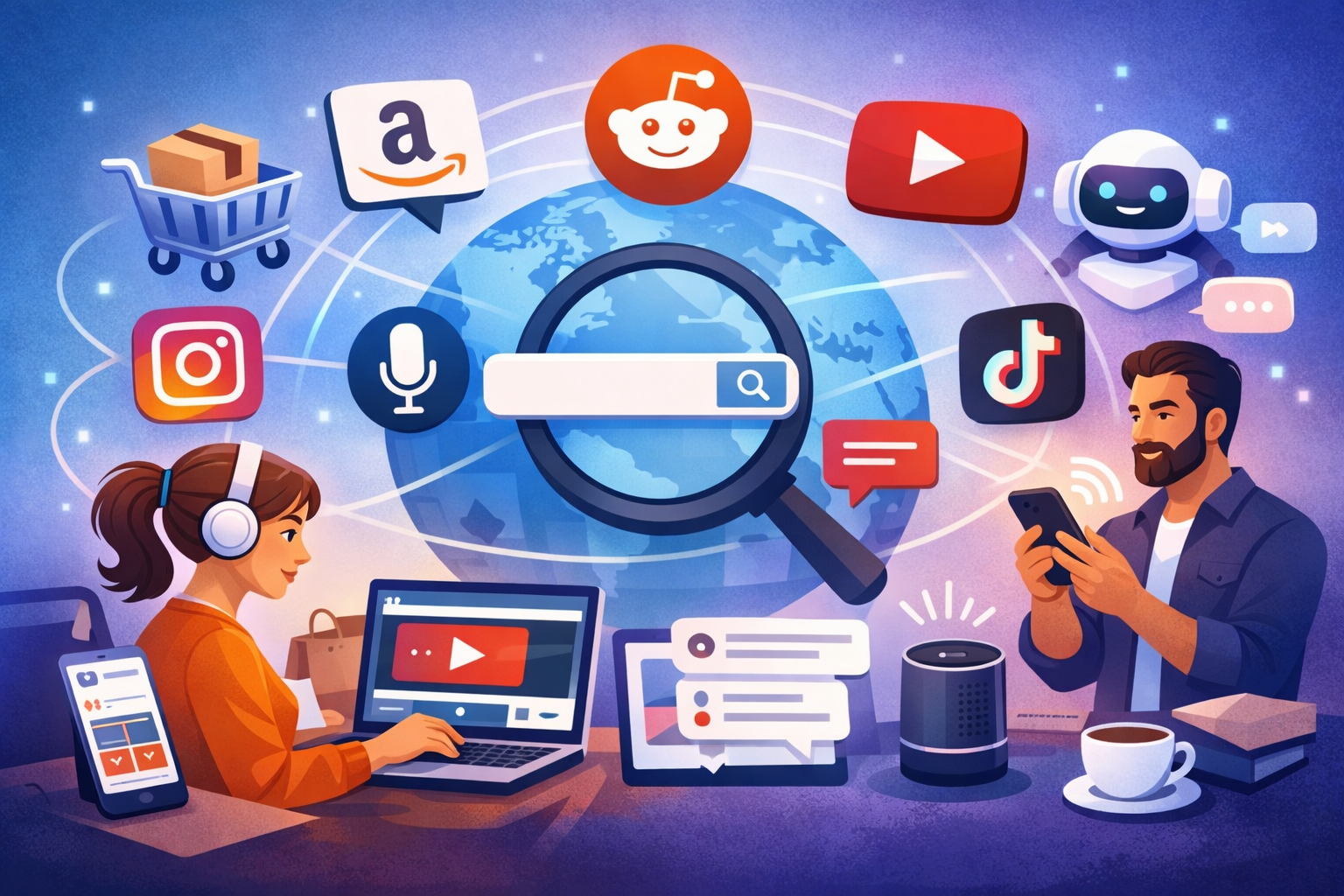
For a long time, SEO was mostly about one thing—ranking on Google. But today, user behavior has completely changed. People are no longer searching in just one place. Instead, they are exploring multiple platforms depending on what they need. This shift is what we call the “search everywhere” reality.
Now, someone looking for a product might search on Amazon, watch reviews on YouTube, check opinions on Instagram, or even ask questions on Reddit. This means your audience is scattered across different platforms, and your SEO strategy needs to adapt.
Why People Prefer Different Platforms
The main reason behind this change is convenience and trust. Users want quick, visual, and real experiences. For example, if someone wants to learn a skill, they may go directly to YouTube instead of reading blogs. If they want honest product reviews, they might prefer Reddit or social media over a traditional website.
Each platform offers a different type of content. Google is still important, but it is no longer the only source of information. People now choose platforms based on their intent, not just habit.
What This Means for SEO
This shift has changed how SEO works. It is no longer just about keywords and website rankings. Now, SEO is about visibility across multiple channels.
Your brand needs to appear wherever your audience is searching. This could include search engines, social media platforms, video platforms, marketplaces, and even AI tools. If you focus only on Google, you are missing a large part of your potential audience.
Content Needs to Be More Flexible
In this new reality, content plays a bigger role than ever. But the type of content matters. A blog alone is not enough anymore. You need videos, short-form content, images, and even interactive posts.
For example, a single topic can be turned into a blog, a YouTube video, Instagram reels, and LinkedIn posts. This helps you reach users on different platforms and increases your overall visibility.
The key is to adapt your content to each platform instead of using the same format everywhere.
Search Intent Is More Important Than Ever
Understanding what your audience wants is now the most important part of SEO. Since users are searching on different platforms, their intent can vary.
Someone searching on Google might want detailed information, while someone on Instagram may just want quick tips or visuals. If you match your content with user intent, you will naturally perform better across platforms.
Brands Need to Build Presence, Not Just Rankings
Earlier, businesses focused only on ranking higher in search results. Now, the goal is to build a strong presence everywhere. This means being active, consistent, and valuable across multiple platforms.
When users see your brand in different places, it builds trust. Even if they don’t click immediately, they remember you. This increases the chances of conversions in the future.
The Role of AI and Voice Search
Another reason for this shift is the rise of AI and voice search. People are now asking questions directly to AI tools or using voice assistants. These tools pull information from different sources, not just websites.
This means your content should be clear, helpful, and easy to understand so it can be picked up by these systems.
The Future of SEO Is Everywhere
SEO is no longer a single-channel strategy. It has become a multi-platform approach where visibility matters more than just rankings.
Businesses that understand this change will grow faster because they are meeting users where they are. Instead of focusing only on one platform, they are building a complete digital presence.
In simple terms, the future of SEO is not about being the best on one platform. It is about being present, useful, and visible everywhere your audience is searching.