A New Era in Digital Advertising
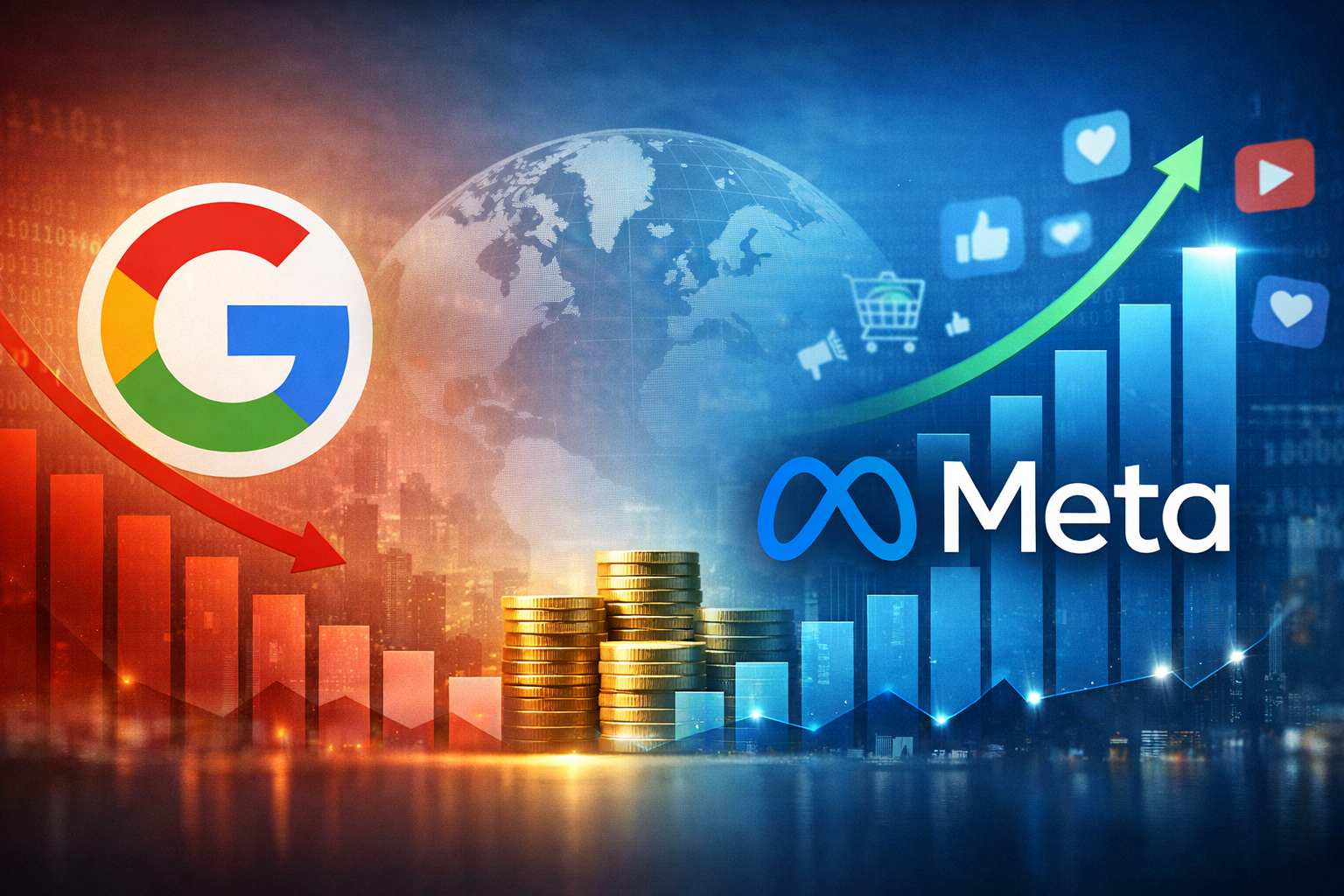
The digital advertising world is going through a major transformation. For a long time, Google held a dominant position because of its strong search-based advertising system. Businesses relied on it to capture users who were already searching for products or services. But now, the balance is beginning to shift. Meta is steadily growing and moving closer to becoming the top global advertising platform.
This change reflects how user behavior is evolving. People are no longer depending only on search engines to discover products. Instead, they are spending more time on social platforms where content drives interest and purchasing decisions.
The Power of Discovery-Based Advertising
One of the biggest reasons behind Meta’s rise is its ability to create demand instead of just capturing it. Platforms like Facebook and Instagram are designed to keep users engaged for long periods. During this time, users are exposed to products, services, and brands even when they are not actively searching.
This discovery-based approach is very powerful. It allows businesses to introduce their offerings to new audiences and influence buying decisions early in the customer journey. Unlike search ads, which depend on user intent, social ads can shape that intent.
Data and Personalization Advantage
Another key factor is personalization. Meta uses user behavior, interests, and interactions to deliver highly targeted ads. This makes campaigns feel more relevant to users, which increases engagement and improves conversion rates.
For advertisers, this level of targeting means better use of budget. Even with smaller investments, businesses can reach the right audience and achieve measurable results. This has made Meta especially popular among startups and small businesses.
The Role of AI in Ad Performance
Artificial intelligence is playing a big role in Meta’s growth. Its ad system uses machine learning to automatically optimize campaigns. From audience selection to ad placement, most decisions are handled by algorithms that continuously learn and improve.
This reduces the need for manual adjustments and allows marketers to focus more on creative strategy. As a result, advertising becomes faster, smarter, and more efficient.
Why Google Still Matters
Even with Meta’s growth, Google remains extremely important. Search advertising is still one of the most effective ways to capture high-intent users. When someone searches for a service or product, they are usually closer to making a decision.
Google also has strong assets like YouTube and its display network, which provide additional reach. These channels help businesses build awareness and support branding efforts alongside search campaigns.
However, the limitation is that Google mostly responds to demand rather than creating it. This is where Meta has an edge in today’s attention-driven environment.
The Influence of Content Trends
Short-form video content is another reason for Meta’s rapid rise. Features like reels and stories have changed how people consume content. These formats are quick, engaging, and highly shareable.
For advertisers, this opens up new creative opportunities. Instead of just showing products, brands can tell stories, build emotions, and connect with audiences in a more natural way. This type of engagement is difficult to achieve through traditional search ads.
What Businesses Should Learn
This shift in ad revenue is not about replacing one platform with another. Instead, it shows the importance of using both strategically. Meta is excellent for building awareness and generating interest, while Google is strong at converting that interest into action.
Businesses that combine both approaches can create a complete marketing funnel. They can attract users through social platforms and then capture them through search when they are ready to take the next step.
Conclusion
The rise of Meta in global ad revenue highlights a deeper change in digital behavior. People are discovering more, engaging more, and making decisions differently than before.
For marketers, the focus should be on adapting to these changes. The future of advertising will depend on how well businesses understand their audience and use the right mix of platforms to reach them effectively.