The way people search for cars online is changing. Today, many customers research different car models, compare prices, explore features, and read specifications before visiting a showroom. For automotive companies, this creates an opportunity to connect with potential buyers earlier in their decision-making process.
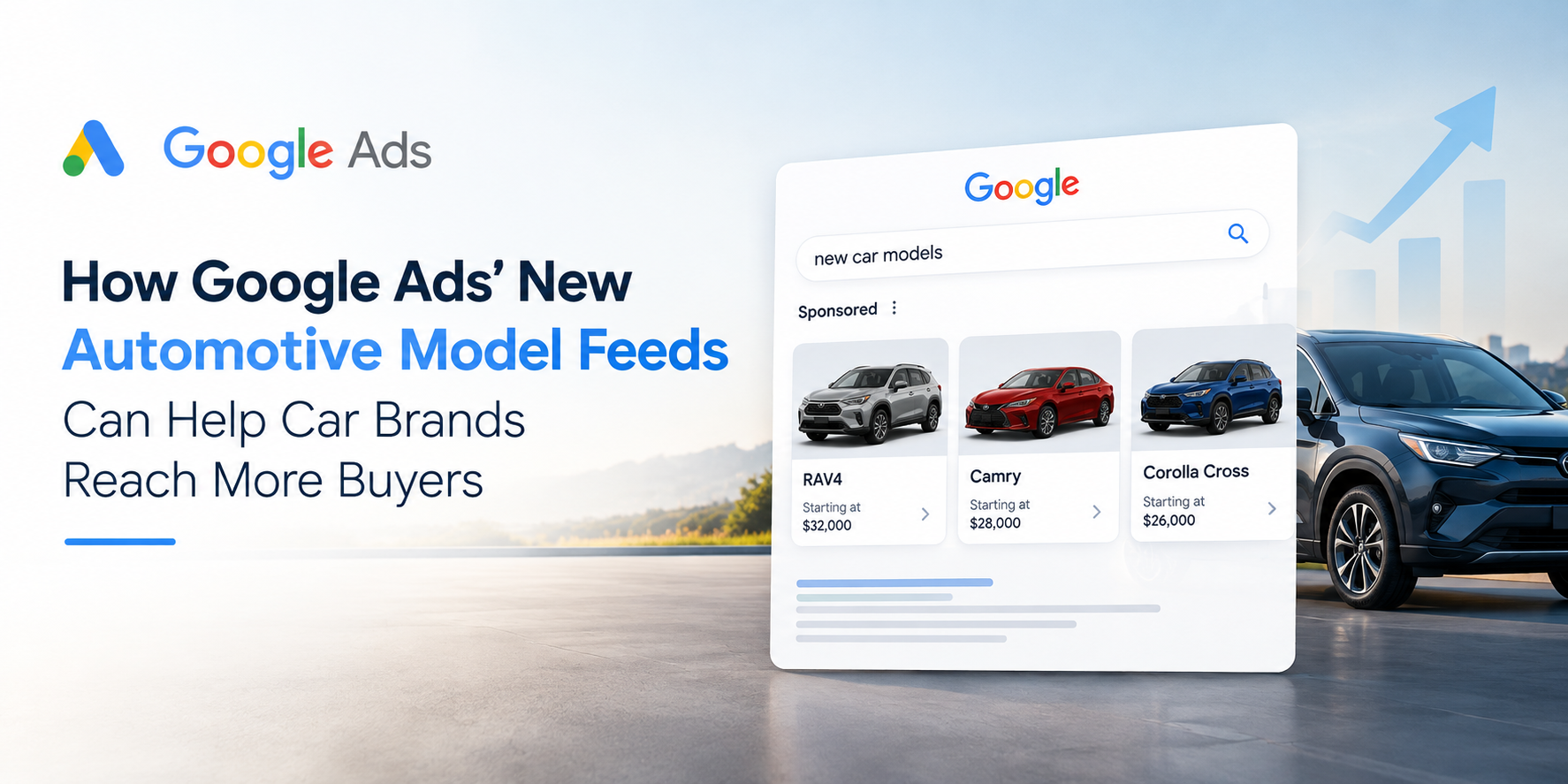
Google Ads is expanding its automotive advertising capabilities with **Automotive Model Feeds**, previously known as Vehicle Top Ads. This feature allows eligible vehicle manufacturers to showcase their car lineups directly in Google Search results through visual vehicle listings.
But how can this update help automotive companies attract customers and improve their digital marketing efforts? Let’s take a closer look.
What Are Google Ads Automotive Model Feeds?
Automotive Model Feeds are designed to help vehicle manufacturers display their car models more effectively on Google Search. Instead of relying only on traditional text ads, eligible advertisers can showcase vehicle images, model names, starting prices, and other relevant information.
For example, when someone searches for a particular car brand or explores SUVs, they may see an advertisement featuring multiple vehicle models. They can browse the available options and click on a model to learn more.
This makes it easier for customers to discover vehicles that match their interests while helping car manufacturers present their product range in a more engaging way.
- Help Customers Discover More Car Models
Customers do not always begin their search with a specific vehicle in mind. Some may be looking for a family car, while others may want an electric vehicle, an SUV, or a fuel-efficient sedan.
Automotive Model Feeds can help brands showcase several models within a visual advertising experience. Instead of promoting just one vehicle, companies can make more of their lineup visible to interested customers.
For automotive marketers, this creates an opportunity to introduce buyers to models they may not have considered before.
- Make Vehicle Advertising More Visual
Buying a car is a major decision, and customers often want to see what a vehicle looks like before exploring it further.
Images can make search advertisements more engaging by giving users a quick look at different models. When combined with clear model names and pricing information, these visuals can help customers identify relevant options more easily.
Automakers can take advantage of this chance to make a better first impression in search results by properly presenting their cars.
- Reach Customers With Strong Buying Intent
Not everyone looking for a car is prepared to buy one. Some are researching the market, while others are comparing specific models before contacting a dealership.
When a consumer clicks on a specific car in an advertisement, it may suggest that they are more interested in that particular model. Advertisers can direct these users to relevant vehicle pages where they can explore specifications, available variants, features, and pricing.
This helps create a more relevant journey from the initial search to the company’s website.
- Improve the Customer Journey From Search to Showroom
A customer’s buying journey often involves several steps. They might find a car on Google, evaluate its characteristics, compare it to other models, and then get in touch with a dealer to schedule a test drive.
Automotive Model Feeds can support the early stages of this journey by helping users find relevant vehicles directly through Search.
Companies can make the experience more useful by linking advertisements to dedicated model pages rather than sending every visitor to a general homepage. These pages can include clear calls to action, such as booking a test drive, requesting a quote, or finding a nearby dealership.
The easier it is for customers to find the information they need, the easier it becomes for them to take the next step.
- Create Better Opportunities for Campaign Optimization
Automotive companies can use their advertising performance data to understand how customers interact with their campaigns.
By tracking website visits, enquiry submissions, test-drive bookings, and other meaningful actions, marketers can identify which campaigns are contributing to business goals.
For instance, a business might find that some car models produce more qualified inquiries than others. This information can help its marketing team make better decisions about landing pages, advertising budgets, and campaign messaging.
However, actual results will depend on factors such as targeting, competition, pricing, website experience, and the quality of the advertising data.
- Prepare Vehicle Data for Better Advertising
Accurate product information is important for any feed-based advertising campaign. Vehicle manufacturers should ensure that their model names, images, pricing details, and landing pages are accurate and consistent.
Outdated prices or incorrect vehicle information can confuse potential customers and reduce trust in the brand.
Companies should also make sure their vehicle pages work well on mobile devices, as many customers research cars using their smartphones. A fast-loading website with clear information and simple enquiry options can help turn advertising clicks into meaningful leads.
What Should Automotive Companies Do Next?
Automotive Model Feeds are not a replacement for an entire digital marketing strategy. They are another opportunity for eligible manufacturers to present their vehicles to people searching on Google.
Before exploring this feature, companies should review their existing Search campaigns, website performance, conversion tracking, and vehicle information. They should also confirm eligibility and access requirements with their Google Ads representative.
It is important to remember that this feature is being made available in a limited beta, thus market and advertizer availability may differ.
Final Thoughts
Google Ads’ Automotive Model Feeds offer an interesting development for vehicle manufacturers looking to improve how they showcase their products online. By combining vehicle images, model information, and direct links to relevant pages, this advertising format can help customers explore available options more conveniently
For automotive companies, the real opportunity is to connect this new advertising experience with a useful website, accurate vehicle information, and a smooth enquiry process.
A successful automotive advertising strategy is not just about getting more clicks. It is about helping the right customers find the right vehicle and making iteasier forthem totake the next step.