Launching a mobile app that draws customers, enhances the customer experience, and generates new revenue prospects is a dream for many organizations. Excited by the possibilities, they often jump straight into development, believing that building the app is the biggest challenge.
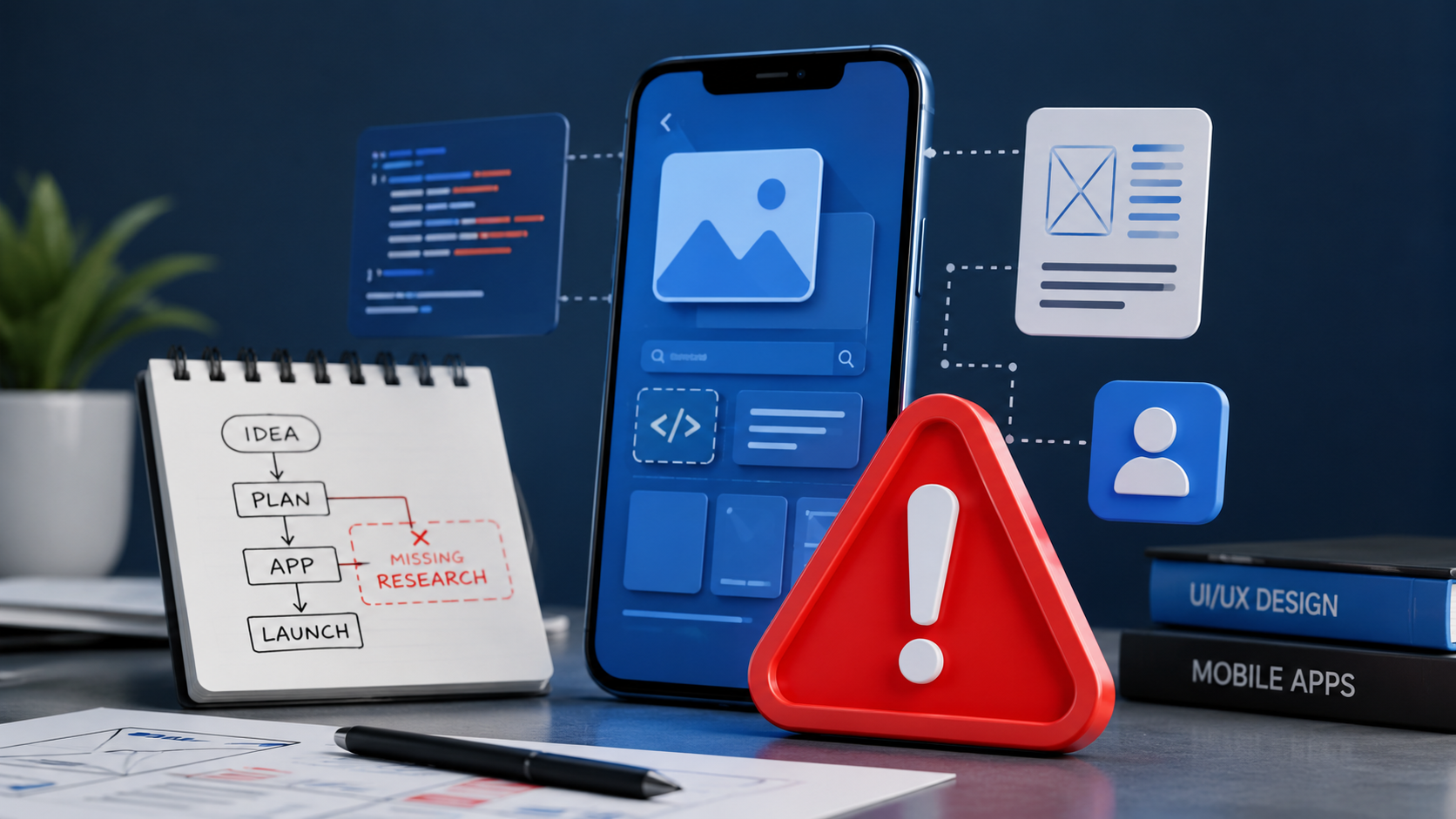
Surprisingly, the most common mistake happens before a single line of code is written.
Beginning with the Fix Rather than the Issue
Many companies feel they need an app because their rivals have one or because mobile apps seem like the next big thing. They focus on features, design ideas, and technology without first asking an important question: What problem will this app solve?
Rarely does an app succeed if it doesn’t address a real issue. Users download applications because they make life easier, save time, provide convenience, or offer something valuable. Even a well-designed software may have trouble gaining popularity if the goal is unclear.
Before development begins, businesses should clearly define the problem they want to solve and how the app will improve the user experience.
Trying to Build Everything at Once
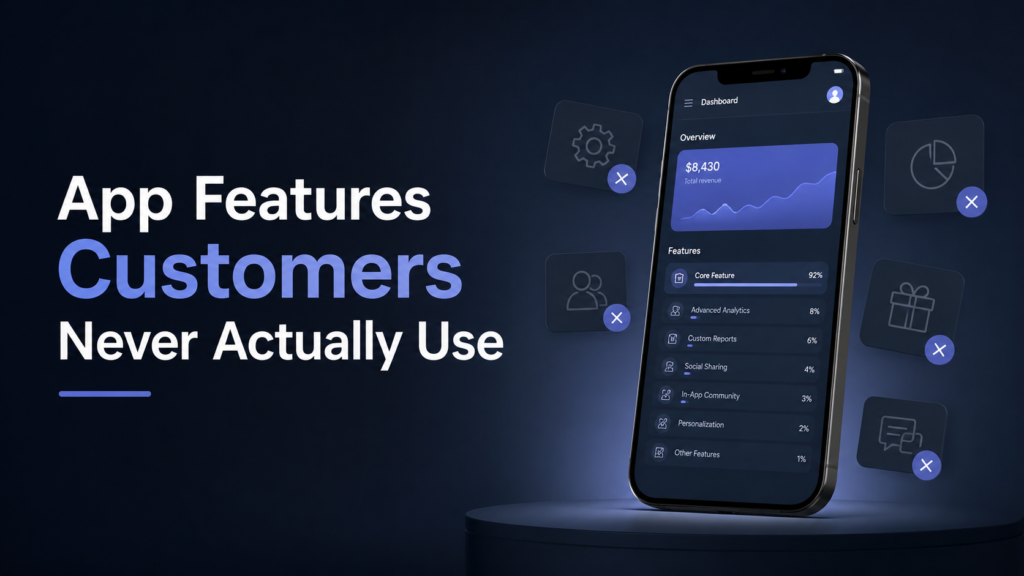
Another common mistake is attempting to include every possible feature in the first version of the app.
Owners of businesses frequently compile extensive lists of features they believe users could find useful. The result is a complex application that takes longer to develop, costs more money, and becomes harder to manage.
Successful apps often start simple. They focus on one core purpose and do it exceptionally well. Once users begin using the app and providing feedback, additional features can be added based on real needs rather than assumptions.
Ignoring the Target Audience
A mobile app is built for users, not for the business itself. Yet many companies spend more time discussing internal preferences than understanding customer expectations.
An app designed without researching the target audience may fail to meet user needs. Features that seem important to the business may not matter to customers at all.
Understanding who will use the app, what challenges they face, and how they interact with mobile devices can significantly improve the final product.
Underestimating User Experience
Businesses often focus heavily on functionality while overlooking usability. They assume that if the app works, users will stay.
In reality, people expect mobile apps to be simple, fast, and intuitive. If users cannot easily navigate the app or complete tasks without confusion, they are likely to abandon it.
A smooth user experience should be considered from the very beginning rather than being treated as a final adjustment before launch.
Forgetting About Long-Term Maintenance
Many organizations view app development as a one-time project. Once the app is launched, they expect the work to be complete.
However, mobile applications require ongoing updates, performance improvements, security enhancements, and compatibility adjustments as operating systems evolve. Ignoring these future requirements can lead to technical issues and poor user satisfaction.
Planning for maintenance early helps avoid unexpected challenges after launch.
Success Starts Before Development
The most successful mobile apps are not created by writing code faster. They are produced by making wiser choices prior to the start of growth.
Businesses that take time to understand their users, define clear objectives, prioritize essential features, and plan for long-term growth often achieve better results than those that rush into development.
Building an app is an investment. The quality of that investment depends not only on how well the app is developed but also on how well it is planned. In many cases, the biggest mistake is not in the coding process—it is in skipping the preparation that should happen before development even starts.
Businesses can develop apps that customers actually want to download, use, and retain when they prioritize strategy above technology.