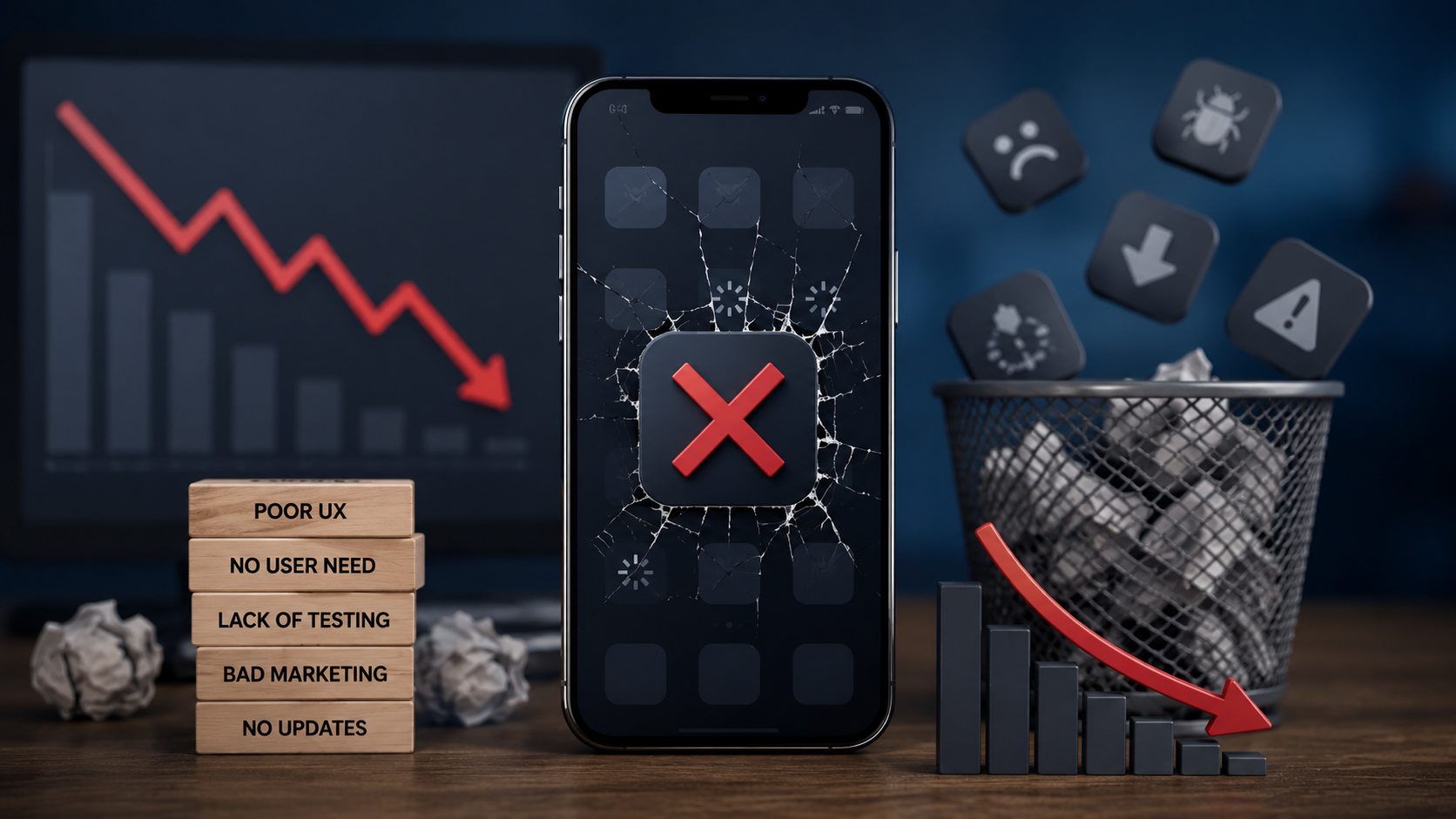
Launching a business app is an exciting milestone. Companies invest time, money, and effort into development, hoping the app will attract customers, improve operations, or generate revenue. However, many business apps struggle after launch and eventually fail to achieve their goals.
The surprising part is that failure usually doesn’t happen because of poor technology. More often, it happens because businesses overlook the needs of their users.
Building an App Without Solving a Real Problem
One of the biggest reasons apps fail is that they don’t address a real customer need. Businesses sometimes create an app because competitors have one or because they think it is a good idea.
Before developing an app, it’s important to understand the problem users are facing. If the app doesn’t provide a clear solution, people won’t have a reason to keep using it.
Poor User Experience
People anticipate that apps to be straightforward and user-friendly. If users feel confused during their first few minutes, they may uninstall the app immediately.
Complicated navigation, cluttered screens, and difficult processes can quickly drive users away. Successful apps focus on making every action as simple as possible.
Lack of Market Research
Many businesses launch apps without fully understanding their target audience. They assume they know what customers want, but assumptions are often wrong.
Research helps businesses discover user preferences, habits, and expectations. Without this information, it becomes difficult to create an app that people genuinely find useful.
Ignoring User Feedback
The journey doesn’t end with the release of an app. It is only the beginning.
Users often provide valuable feedback about bugs, missing features, and areas for improvement. Businesses that ignore this feedback miss opportunities to improve the user experience and increase customer satisfaction.
Regular updates show users that the company is committed to improving the product.
Weak Marketing Strategy
Even a great app can fail if people don’t know it exists. Some businesses spend heavily on development but very little on promotion.
An app needs visibility through digital marketing, social media, content marketing, app store optimization, and other channels. Without a strong marketing strategy, attracting users can be extremely difficult.
Performance and Technical Issues
Users have little patience for apps that crash, freeze, or load slowly. Technical problems can damage trust and create negative reviews.
Testing should continue before and after launch to ensure the app performs smoothly across different devices and operating systems.
A reliable app encourages users to return, while a buggy app often pushes them away.
Trying to Include Too Many Features
Some businesses believe that adding more features will make their app more valuable. In reality, too many features can overwhelm users.
The most successful apps often focus on doing a few things exceptionally well. Starting with core features and improving them over time is usually a better approach than trying to offer everything at once.
No Long-Term Improvement Plan
Technology and user expectations change constantly. An app that works well today may feel outdated in a year if it is not updated.
Successful apps evolve based on market trends, customer feedback, and business goals. Companies that stop improving their app often lose users to competitors who continue innovating.
Conclusion
Most business apps fail after launch not because the idea was bad, but because important factors were overlooked. Poor user experience, lack of research, weak marketing, technical issues, and failure to adapt can all contribute to disappointing results.
Opening an app is just the beginning. Long-term success comes from understanding users, solving real problems, and continuously improving the experience. Businesses that focus on these areas are far more likely to build apps that survive and grow after launch.