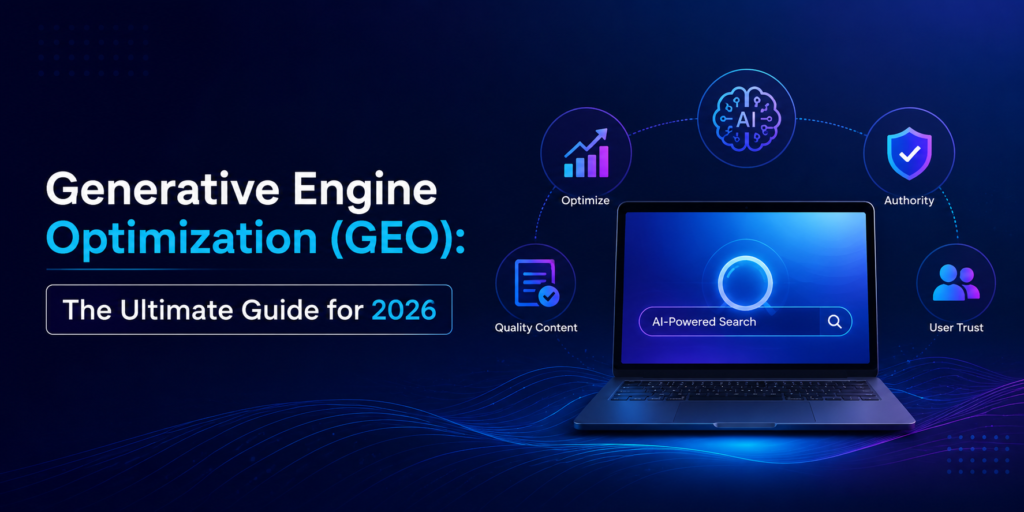
For more than two decades, searching online has followed a familiar pattern. You type a question into a search engine, browse through a list of links, and choose a website that seems helpful. This process has shaped how businesses build websites and how people find information.
But technology is changing quickly. The future of finding information may not involve searching at all. Instead of searching for answers, people are increasingly receiving answers directly from artificial intelligence.
From Searching to Asking
Traditional search engines require users to search, compare results, and decide which website to trust. AI tools are changing this experience by allowing people to ask questions in a natural way, just as they would ask another person.
Rather than showing ten blue links, AI systems can provide a direct response within seconds. Users no longer need to visit multiple websites to gather information. The answer often arrives immediately, saving time and effort.
This shift is changing how people interact with information online.
Why User Behavior Is Changing
People want fast and simple experiences. When someone needs information, they often prefer a direct answer instead of spending time reading several pages. AI-powered assistants are designed to provide exactly that.
Whether someone is looking for business advice, product recommendations, travel information, or technical guidance, AI can summarize information from many sources and present it in a single response. As these tools become more accurate, users are becoming more comfortable relying on them.
The result is a new digital habit: asking instead of searching.
What This Means for Businesses
Many businesses still focus only on ranking higher in search results. While SEO remains important, visibility is becoming a broader challenge.
In the past, success meant appearing on the first page of search results. Today, businesses also need to ensure that AI systems can understand their content, recognize their expertise, and trust their information.
If an AI assistant cannot find reliable information about your company, it may not mention your business when users ask related questions. This means that being searchable is no longer enough. Businesses must also be discoverable by AI.
The Rise of Answer Engines
Some experts describe AI platforms as “answer engines” rather than search engines. Their goal is not simply to help users find information. Their goal is to deliver the information directly.
This changes the role of websites. Instead of acting only as destinations for traffic, websites are becoming sources of knowledge that AI systems can learn from and reference.
Companies that publish clear, helpful, and trustworthy content are more likely to benefit from this shift. Quality information becomes more valuable than simply targeting keywords.
Building for the Next Generation of Discovery
Businesses should focus on creating content that genuinely helps people. Clear explanations, expert insights, detailed service pages, and useful articles make it easier for both humans and AI systems to understand what a company offers.
Strong online credibility also matters. Reviews, mentions on trusted websites, industry recognition, and consistent business information help establish authority. These signals make it easier for AI systems to identify reliable sources.
The companies that invest in trust and expertise today will be better prepared for the future.
Conclusion
The future of search is not just about finding links. It is about receiving answers. As AI continues to change how people discover information, businesses must adapt to a world where visibility depends on more than rankings.
Search engines are not disappearing, but their role is evolving. In the years ahead, the businesses that succeed will be the ones that create valuable information, build trust, and make it easy for both people and AI to understand who they are. The future of search may not be search at all—it may simply be conversation.