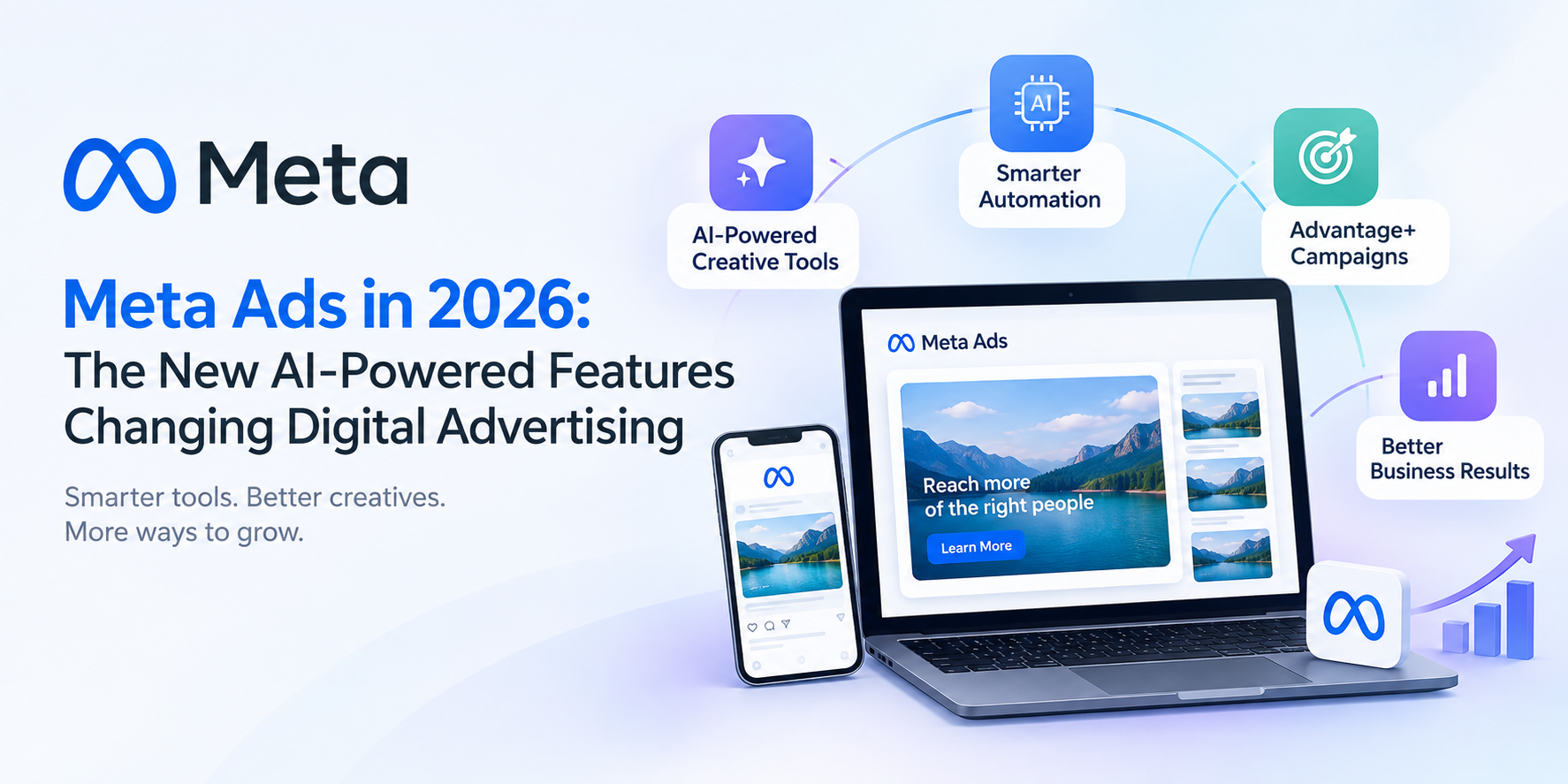
Meta Ads is changing quickly. In 2026, Meta is putting more focus on artificial intelligence, automated creative production, and smarter ad delivery.
For advertisers, this means creating campaigns is becoming less about manually controlling every setting and more about giving Meta the right creative, audience signals, and business information.
Here are some of the latest developments advertisers should know about.
- AI Is Becoming a Bigger Part of Meta Ads
Meta is using AI across its advertising system to help businesses create ads, find potential customers, and improve delivery.
The goal is simple: advertisers provide the campaign objective and creative assets, while Meta’s AI systems handle more of the optimization behind the scenes.
This makes AI knowledge increasingly important for advertisers who want to use Meta Ads effectively.
- AI-Powered Creative Generation Is Growing
Ad creative is undergoing one of the most significant transformations.
Meta introduced **Muse Image**, an AI image-generation technology designed to help create and transform visual content. Meta has also announced plans to bring Muse Image into Advantage+ creative for advertisers and agencies.
This could make it easier to produce different versions of an ad without designing every variation manually.
For example, advertisers may be able to create different visual concepts for the same offer and test which one attracts more attention.
- Advantage+ Is Becoming More Important
Meta continues to expand its Advantage+ approach, where AI helps automate parts of campaign setup and optimization.
Instead of manually deciding every audience or placement, advertisers can give Meta more flexibility to find people who are likely to take the desired action.
This is especially useful when advertisers have enough conversion data for Meta’s system to learn from.
- Creative Testing Is Changing
Traditional advertising often meant creating one ad and waiting for results.
Meta’s newer AI-focused approach makes it easier to think in terms of **multiple creative variations**.
Different images, videos, text and formats can be tested to understand what works best with different users.
This means advertisers should focus on producing a strong collection of creative assets rather than depending on only one advertisement.
- More Focus on Business Results
Meta’s advertising tools are increasingly designed around business outcomes rather than just clicks.
For example, an advertiser may care about leads, purchases, qualified customers or revenue instead of simply getting website traffic.
This makes accurate tracking and good-quality conversion data more important.
If Meta receives better information about which users become customers, its systems have more useful signals for optimization.
- What Advertisers Should Do Now
The biggest change is not simply a new button inside Ads Manager.
It is the shift toward **AI-assisted advertising**.
Advertisers should focus on:
- Creating different high-quality ad creatives
- Giving Meta enough conversion data
- Testing different messages and offers
- Using automation where it makes sense
- Tracking meaningful business results
- Reviewing AI-generated creatives before publishing
AI can help with speed and scale, but the strategy, offer and brand message still matter.
Final Thoughts
Meta Ads in 2026 is becoming more automated and AI-driven. From Advantage+ improvements to AI-powered creative tools such as Muse Image, Meta is giving advertisers more ways to create and optimize campaigns with less manual work.
The role of an advertiser is therefore changing. Instead of controlling every small setting, the focus is moving toward **better creative ideas, stronger data, clear business goals and smarter testing**.
Businesses that learn how to combine human creativity with Meta’s AI tools can be better prepared for the next stage of digital advertising.