Mobile apps are now a crucial component of company expansion. Whether you run a startup, an eCommerce store, or a service company, choosing the right app development approach can save time, money, and effort. In 2026, many businesses are still asking the same question: Should we build a Flutter app or a Native app?
Let’s understand both options in simple terms.
What is Flutter?
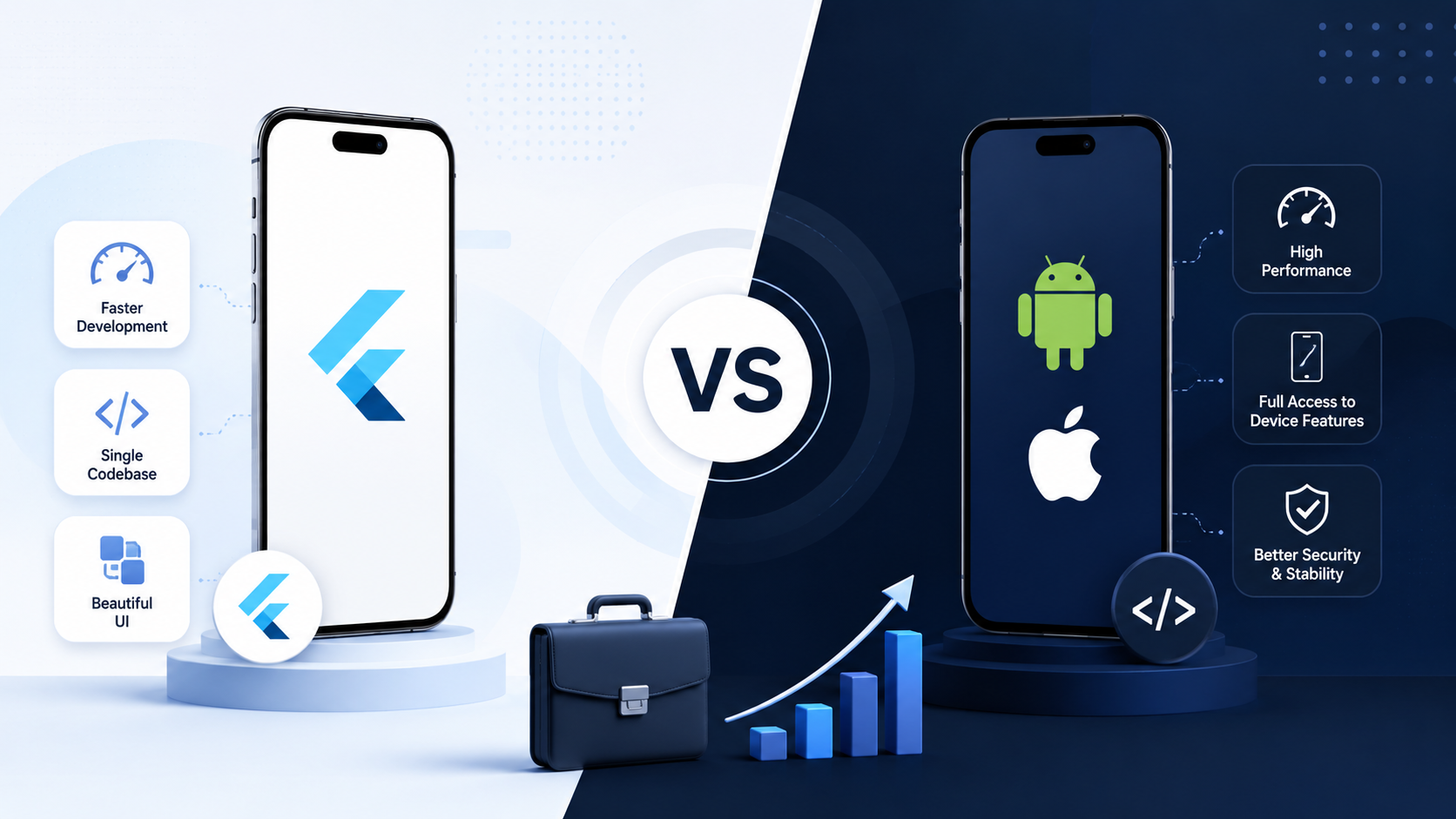
Flutter is a framework created by Google that allows developers to build one app for both Android and iOS using a single codebase.
Instead of creating separate apps for different platforms, businesses can develop one application and launch it on multiple devices. Development is accelerated and more economical as a result.
What are Native Apps?
Native apps are created especially for one platform. For example, Android apps are developed using Kotlin or Java, while iOS apps are built using Swift.
Since they are designed for a specific operating system, native apps can fully utilize the device’s features and performance capabilities.
Benefits of Flutter for Businesses
Faster Development
Once code is written, developers can utilize it on both iOS and Android. This reduces development time and helps businesses launch their apps sooner.
Lower Development Cost
Since only one codebase is required, businesses usually spend less on development and maintenance.
Consistent User Experience
Flutter provides a similar look and feel across different devices, helping maintain a strong brand identity.
Easy Updates
New features and bug fixes can be deployed faster because developers only need to update one codebase.
Benefits of Native Apps
Better Performance
Native apps often deliver the best performance, especially for graphics-heavy applications, gaming apps, and advanced mobile solutions.
Full Access to Device Features
Native development provides direct access to hardware features such as cameras, GPS, sensors, and biometric authentication.
Strong Platform Integration
Native apps are designed specifically for Android or iOS, which can result in a smoother user experience.
Which Option is Better in 2026?
For many businesses, Flutter is becoming the preferred choice because it offers faster development, lower costs, and excellent performance for most business applications.
Flutter works particularly well for:
* Business apps
* eCommerce apps
* Booking platforms
* Educational apps
* Healthcare applications
* Startup products
However, native development may still be the better option if your app requires:
* High-end gaming features
* Complex animations
* Advanced hardware integration
* Maximum performance optimization
Final Thoughts
There is no one-size-fits-all answer. The best option will rely on your company’s objectives, financial constraints, schedule, and app needs.
If you want to launch quickly and reach both Android and iOS users while keeping costs under control, Flutter is often the smarter choice in 2026. If your application demands the highest level of performance and deep device integration, native development remains a strong option.
Before making a decision, evaluate your long-term goals and choose the approach that delivers the best value for your business.