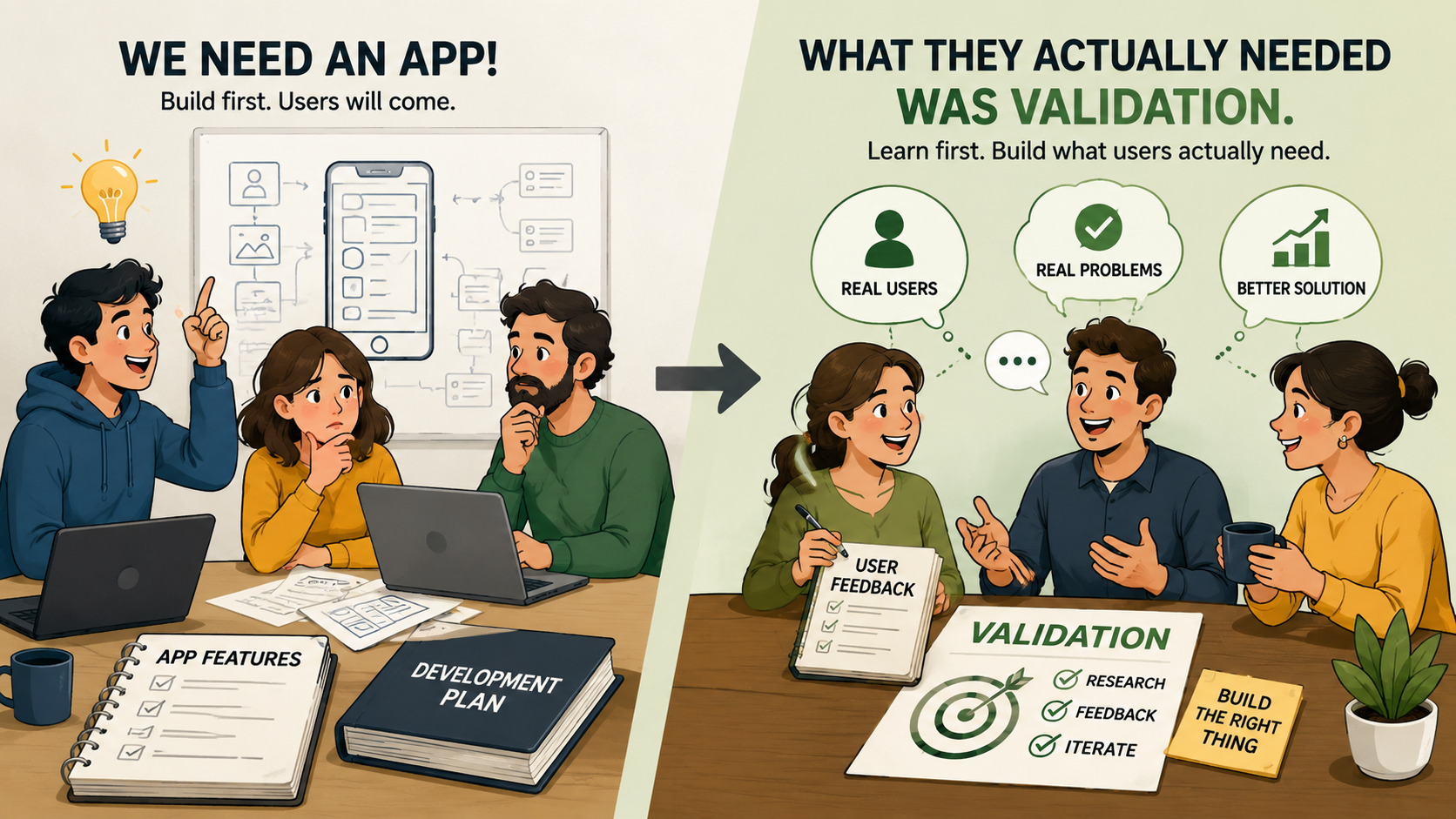
The Exciting Idea
Every startup begins with an idea. Sometimes it’s a new way to order food, manage finances, book appointments, or connect people online. The founders get excited and immediately start thinking about features, screens, and technology.
One startup team was convinced they needed a mobile app. They spent weeks discussing colors, layouts, and development costs. They believed that once the app was launched, customers would quickly start using it.
But there was one important question nobody had answered.
Would anyone actually want it?
Building Isn’t the Same as Solving
Many startups focus on creating a product before understanding the problem they are trying to solve. They invest time and money into development because they assume their idea is valuable.
The challenge is that customers do not pay for ideas. They pay for solutions to real problems.
A beautifully designed app means very little if it does not solve an issue that people care about. Without understanding customer needs, even the most advanced app can struggle to attract users.
The Cost of Skipping Validation
The startup moved forward and built its app. Months of work went into development. The launch day finally arrived, and the team expected a strong response.
Instead, downloads were disappointing.
People visited the app store page, looked at the app, and moved on. Some downloaded it but stopped using it after a few days. The startup had created a product, but it had not created demand.
The problem was not the technology. The problem was that the team never validated whether customers truly needed what they were offering.
What Validation Really Means
Validation is the process of testing an idea before investing heavily in it. It helps businesses discover whether real people are interested in a solution.
Validation does not always require a finished product. Sometimes it can be as simple as talking to potential customers, sharing a concept, creating a landing page, or collecting feedback from a target audience.
The goal is to learn before spending.
When startups validate their ideas early, they gain valuable insights about what customers want, what problems matter most, and whether people are willing to pay for a solution.
Listening Changed Everything
After the disappointing launch, the startup decided to speak directly with potential users. During those conversations, they discovered something unexpected.
Customers liked the general idea, but the app was solving the wrong problem. The team had spent months building features that users did not consider important.
Once they understood what customers actually needed, they adjusted their approach. Some features were removed, new ones were added, and the product became much more focused.
For the first time, users started finding real value in the solution.
The Lesson Every Startup Should Learn
Technology can be exciting, but building software should not be the first step. Understanding customers should come first.
Many startups believe they need an app, a website, or a complex platform. In reality, what they need is proof that their idea solves a genuine problem.
Validation reduces risk. It helps founders make better decisions and prevents them from investing resources in products that nobody wants.
Conclusion
The startup thought success depended on launching an app. What it actually needed was confidence that people would use it. That confidence comes from validation, not development.
Before writing code, designing screens, or hiring developers, take time to understand the market. Ask questions, gather feedback, and test assumptions.
The most successful startups are not always the fastest builders. They are the ones that learn what customers need before they start building.