A Big Change in Google Advertising
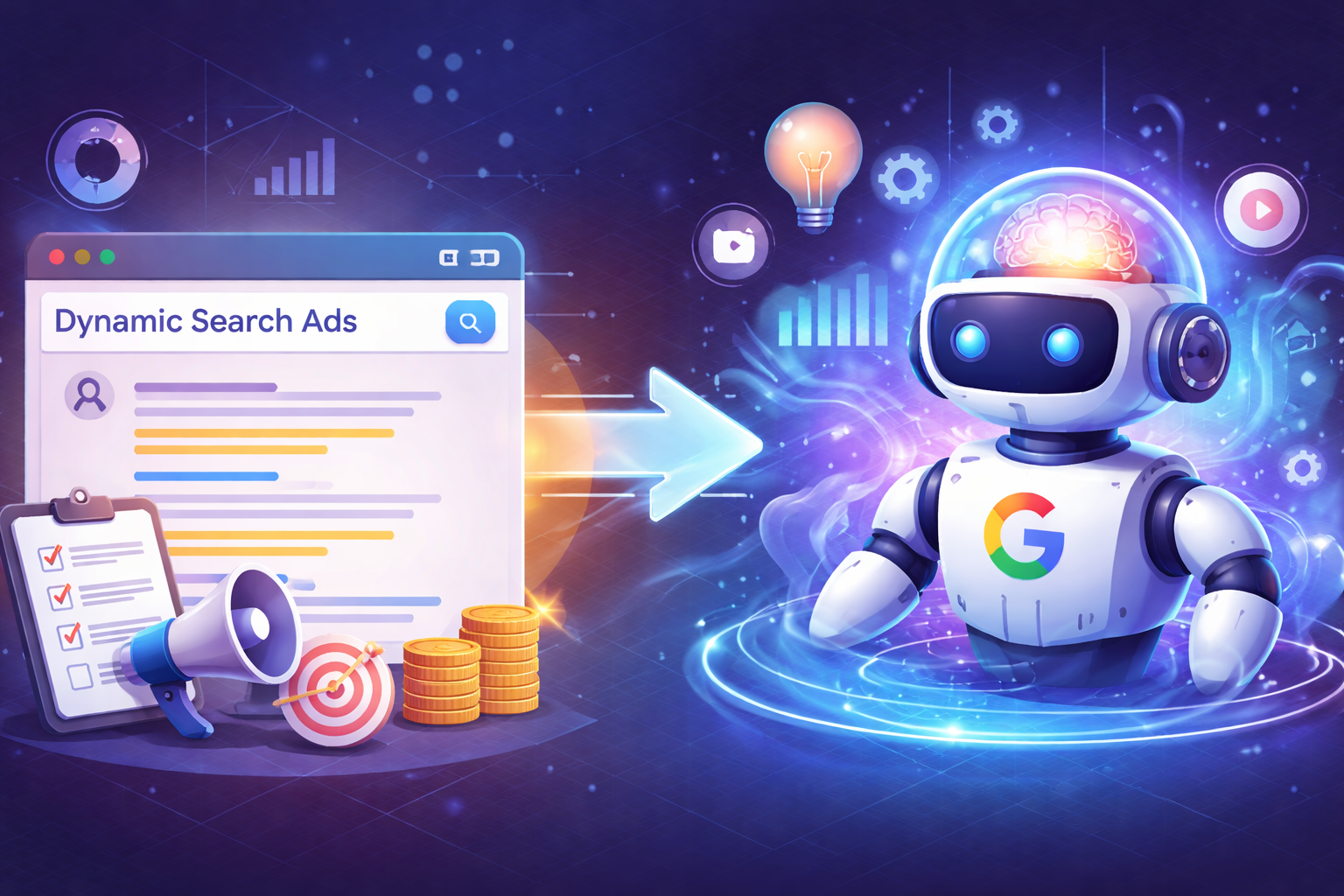
The digital advertising world is constantly evolving, and now Google is making another major shift. The company is planning to phase out Dynamic Search Ads (DSA), a feature many advertisers have relied on for years. In its place, Google is introducing a more advanced solution called AI Max, which is designed to make campaigns smarter and more automated.
This move reflects a bigger trend: advertising is becoming more driven by artificial intelligence rather than manual setup.
What Were Dynamic Search Ads?
Dynamic Search Ads were created to help advertisers show ads without needing to choose every keyword manually. Instead, Google would scan your website and match your ads to relevant search queries. It was especially useful for businesses with large websites or frequently changing products.
For many marketers, DSA saved time and helped capture extra traffic that traditional keyword campaigns might miss. However, it still required some level of control and optimization from the advertiser.
Why Google Is Moving Away from DSA
The main reason behind this shift is the growing power of AI. Google is focusing more on automation that can handle targeting, bidding, and ad creation all at once.
Dynamic Search Ads were a step toward automation, but they are now considered limited compared to what AI can do today. With increasing competition and more complex user behavior, Google wants advertisers to rely on systems that can learn and adapt in real time.
AI Max is designed to do exactly that. Instead of just scanning your website, it analyzes user intent, behavior, and signals to deliver more relevant ads.
What Is AI Max and How Does It Work?
AI Max is Google’s new approach to campaign automation. It combines multiple AI-driven features into one system, helping advertisers get better results with less manual work.
Rather than focusing only on keywords or website content, AI Max looks at a wide range of data. It understands what users are searching for, predicts what they might need next, and shows ads accordingly.
This means your campaigns can become more efficient over time, as the system continuously learns and improves performance.
What This Means for Advertisers
For advertisers, this change can feel both exciting and challenging. On one hand, AI Max promises better performance and less time spent managing campaigns. On the other hand, it also means giving up some control.
Marketers who are used to manually selecting keywords or structuring campaigns in detail may need to adjust their approach. Success with AI Max will depend more on providing high-quality inputs like strong ad creatives, clear goals, and well-optimized landing pages.
The focus is shifting from “how to run ads” to “how to guide AI.”
The Future of Digital Advertising
This move by Google shows where digital advertising is heading. Automation and AI are becoming the core of campaign management. Instead of managing every small detail, advertisers will need to think more strategically.
Understanding your audience, creating compelling content, and setting clear objectives will become more important than ever.
Final Thoughts
The transition from Dynamic Search Ads to AI Max is not just a feature update—it’s a major change in how advertising works. While it may take time to adapt, it also opens up new opportunities for businesses to grow more efficiently.
Those who learn how to work with AI, rather than against it, will have a strong advantage in the future of digital marketing.